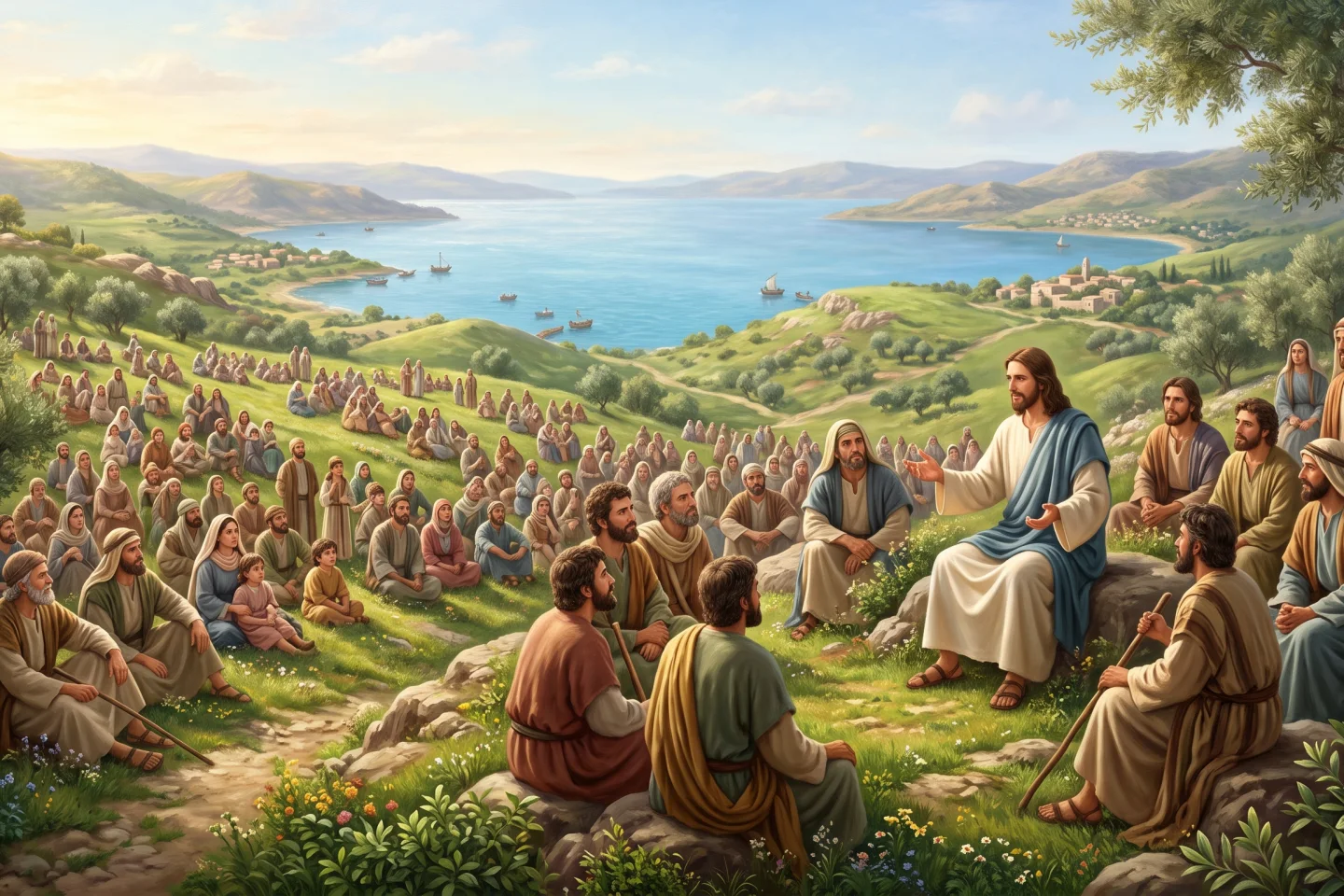
Matthew 5–7 gathers an extended body of Jesus’ teaching known as the Sermon on the Mount. The discourse begins with the Beatitudes and ends with the image of two houses built on different foundations. Between those points, Jesus addresses the law, human relationships, prayer, fasting, money, anxiety, judgment, and obedience. The whole sermon presses toward a righteousness that reaches the heart rather than settling for religious appearance.
The opening on the mount and the character of the disciple
Jesus goes up the mountain, sits down, and begins to teach his disciples while the crowds are present. The Beatitudes describe conditions and traits the world does not usually call blessed: poverty of spirit, meekness, hunger for righteousness, mercy, and purity. The disciples are then called the salt of the earth and the light of the world, images that connect character with witness.
Matthew 5:1–48
Fulfillment of the law and inward righteousness of the heart
Jesus declares that he has not come to abolish the Law and the Prophets. The teachings that follow deepen the moral demand: murder is related to anger, adultery to desire, righteousness to reconciliation, and love extends even to the enemy. Theologically, the sermon shifts attention from visible behavior alone to the inner disposition of the person.
Matthew 5:1–48
Secret devotion and paternal providence against anxiety
Matthew 6 contrasts displayed piety with devotion directed toward God. Giving, prayer, and fasting can become performances for recognition, but Jesus stresses the hidden dimension of these practices. The chapter also confronts anxiety through trust in the Father’s providence and calls disciples to seek first the kingdom and its righteousness.
Matthew 6:1–34
Right judgment, the narrow gate, and the parable of the two foundations
The final chapter addresses hasty judgment, discernment, the Golden Rule, the narrow gate, and false prophets. The conclusion compares the one who hears and practices Jesus’ words to a house built on rock. The authority of the teaching produces amazement. The final criterion is not an isolated verbal profession but obedience that stands when testing comes.
Matthew 7:1–29
Conclusion
The Sermon on the Mount does not separate devotion, ethics, and trust in God. The same teaching that calls for inward purity also speaks about reconciliation, secret prayer, generosity, freedom from anxiety, and concrete obedience. Its final image summarizes the call: hearing Jesus must lead to a life built on putting his words into practice.
Biblical references
- Matthew 5:1–48
- Matthew 6:1–34
- Matthew 7:1–29