Genesis introduces Abraham as a man called to leave his homeland and travel toward Canaan with a promise he could not yet measure. His biography joins migration, family, covenant, and difficult decisions, explaining why later biblical books return to his life.
Abraham Was the Patriarch of Calling and Promise
Abraham was originally called Abram. Genesis identifies him as a son of Terah and the brother of Nahor and Haran. Haran was Lot’s father, making Lot Abram’s nephew. Abram’s wife was Sarai, later renamed Sarah; at the opening of the patriarchal story, she had no children.
His importance begins with God’s initiative. Abraham did not establish the covenant by his own achievement; he received a call and a promise. God later changed his name from Abram to Abraham in connection with the promise that he would become the father of a multitude of nations. Sarah’s name was changed in the same covenant setting.
Genesis follows Abraham from his family’s movement out of Ur of the Chaldeans through Haran and into Canaan, where he lived as a resident alien. By the end of his life, he had received remarkable assurances from God, but held only a burial property in the promised land. That contrast is part of the force of his story: the promise was vast, while much of its fulfillment remained ahead.
Genesis 11:27–32 · Genesis 17:1–8 · Genesis 25:7–11
From Ur and Haran to Canaan: The Beginning of His Story
Terah set out from Ur of the Chaldeans with Abram, Sarai, and Lot, intending to go to Canaan, but the family settled in Haran. After Terah’s death, God called Abram to leave his country, relatives, and father’s household for a land God would show him.
The call carried promises that define Abraham’s place in Scripture. God promised to make him into a great nation, bless him, make his name great, and make him a source of blessing. The promise also looked beyond his immediate household: all the families of the earth would be blessed through him. When Abram arrived in Canaan, God further promised that the land would be given to his offspring.
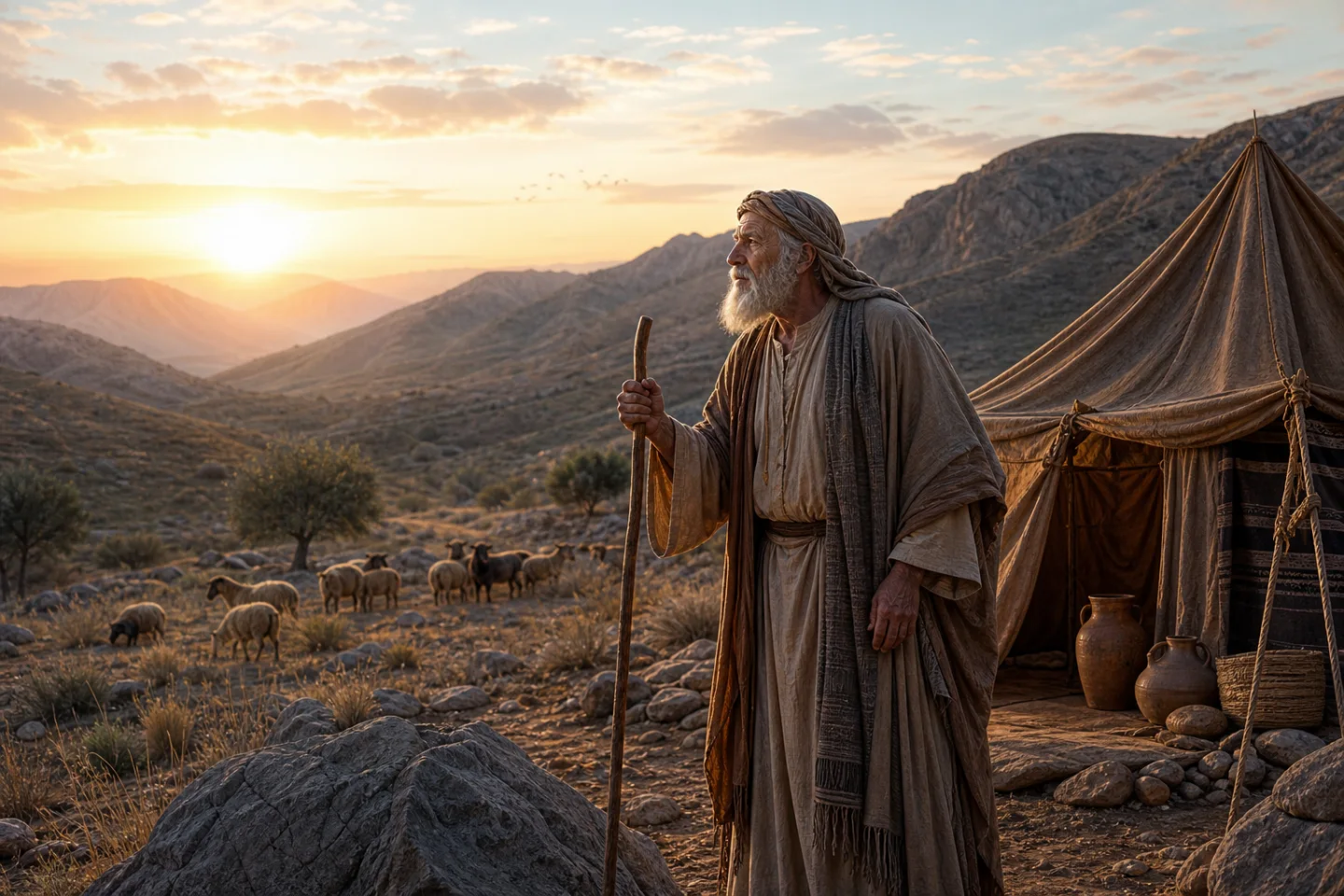
Abram’s life in Canaan was marked by movement, tents, and altars. He traveled through the land rather than ruling it as an established owner. After he and Lot separated, God again directed Abram to look across the land and reaffirmed the promise of descendants and land. His journey therefore was not merely a relocation; it was the beginning of a life shaped by a divine promise not yet fully seen.
Genesis 11:31–32 · Genesis 12:1–9 · Genesis 13:14–18 · Nehemiah 9:7–8
A Family Marked by Waiting, Difficult Choices, and Hope
The promise of descendants unfolded amid real pressure and pain. Abram and Lot eventually separated because their households and flocks had become too large for the land to support them together, and conflict arose between their herdsmen. Lot chose the well-watered Jordan region, while Abram remained in Canaan.
More painfully, Abram and Sarai remained without a child. In Genesis 15, Abram speaks openly about his lack of an heir. In that setting, God promises that Abram’s own descendant will be his heir and compares his future offspring to the stars. Genesis then states that Abram believed God, and that this faith was counted to him as righteousness.
The waiting did not remove the family’s complexity. Hagar bore Ishmael to Abraham, so Ishmael is truly Abraham’s son. Later, however, God renewed the promise specifically in relation to Sarah: she would bear Isaac. Genesis presents Isaac’s birth as the fulfillment of that promise. Abraham’s family story should not be flattened into an idealized portrait. It is a story of God’s faithfulness unfolding within a household marked by grief, choices, and unresolved human tensions.
Genesis 13:5–18 · Genesis 15:1–6 · Genesis 16:1–16 · Genesis 17:15–21 · Genesis 21:1–21
The Covenant: Why Abram Became Abraham
God’s covenant with Abraham gathered together the promises that shape his life: descendants, nations, kings, and the land associated with his offspring. Genesis 15 describes God’s formal confirmation of the promise, while Genesis 17 renews and expands the covenant language.
It is in Genesis 17 that Abram becomes Abraham. The new name is connected to God’s declaration that he would be the father of a multitude of nations. Sarai becomes Sarah, and the promised son through Sarah is named Isaac. These name changes are not incidental details; they belong to the covenant’s forward-looking promise.
Circumcision was given as the sign of this covenant for Abraham, the males of his household, and his male descendants. In Genesis, the sign marks a people bound to the covenant God made with Abraham. It does not replace the earlier emphasis on Abraham’s trust in God; rather, the narrative places faith, promise, covenant, and obedient response together in the story of this family.
Genesis 15:7–21 · Genesis 17:1–14 · Genesis 17:15–27
Abraham’s Faith: Believing, Interceding, and Obeying
Genesis 15:6 gives the Bible’s foundational statement about Abraham’s faith: he believed God, and it was counted to him as righteousness. That faith was not presented as detached from life. It appears in Abraham’s dependence on God’s promise, his concern for others, and his willingness to obey in difficult circumstances.
When God disclosed the coming judgment on Sodom, Abraham interceded. He appealed to God’s justice and repeatedly asked whether the city would be spared for the sake of righteous people who might be found there. The episode reveals Abraham speaking boldly, yet humbly, before God.
Genesis 22 presents the most searching test of Abraham’s obedience. The text explicitly calls it a test: Abraham is commanded to offer Isaac, the son connected to the promise. Abraham proceeds in obedience, but Isaac is not sacrificed. God stops him and provides an animal for the offering in Isaac’s place. The passage should be read with the sobriety the narrative gives it: it records a severe test, Abraham’s obedience, and God’s provision.
Later writers draw on these events. Hebrews remembers Abraham’s departure toward the promised land and his response in the test involving Isaac as acts of faith. The New Testament also returns to Genesis 15 to explain faith and righteousness. Those later interpretations build on, rather than replace, the Genesis account of a man trusting God amid uncertainty.
Genesis 15:1–6 · Genesis 18:16–33 · Genesis 22:1–19 · Hebrews 11:8–19 · James 2:20–24
Machpelah, Isaac, and the End of the Journey
The closing chapters of Abraham’s life retain the theme of pilgrimage. When Sarah died at Kiriath-arba, that is, Hebron, Abraham purchased the cave of Machpelah from Ephron as a burial property. The purchase was a concrete holding in Canaan, though it was a burial place rather than the broad territorial possession promised to his descendants.
Abraham also acted to secure a wife for Isaac from among his wider family rather than from the Canaanites around him. The account underscores his concern for the continuation of the promised line and for Isaac’s future in relation to the land.
Genesis says that Abraham died at a good old age, having lived 175 years. Isaac and Ishmael buried him in the cave of Machpelah beside Sarah. The image is fitting: Abraham’s life began with a call to go, continued as a long residence in a land of promise, and ended with burial in the land where he had lived as a stranger.
Genesis 23:1–20 · Genesis 24:1–9 · Genesis 25:1–11
Why Abraham Remains Central in the Bible
Within Genesis, Abraham’s story is about God’s call, covenant, promise, and faithfulness. It also shows Abraham’s faith responding through belief and obedience. The promise that blessing would reach all families of the earth gives his story a scope larger than his own household.
Later biblical books repeatedly return to him. Exodus remembers God’s covenant with Abraham. Matthew begins Jesus’ genealogy with Abraham. Paul, especially in Romans and Galatians, reflects on Genesis 15:6 to describe Abraham as an example of righteousness received through faith and as the father of those who believe, whether Jew or Gentile. Hebrews presents him as a faithful pilgrim who looked beyond immediate possession toward God’s promise.
These are later biblical readings of Abraham’s life, not additions to the events narrated in Genesis. Together, they explain why Abraham remains central: his story becomes a major biblical witness to the reliability of God’s promise, the nature of faith, and the hope of blessing for the nations.
Exodus 2:24 · Matthew 1:1–2 · Romans 4:1–25 · Galatians 3:6–18 · Hebrews 11:8–19
Conclusion
Abraham’s path places faith inside time: a promise received, imperfect decisions, and obedience that learns to wait. Machpelah does not close that promise; it shows that its reach extended beyond the lifetime of the one who received it.
Biblical references
- Genesis 11:27–32
- Genesis 12:1–9
- Genesis 13:5–18
- Genesis 15:1–21
- Genesis 16:1–16
- Genesis 17:1–27
- Genesis 18:16–33
- Genesis 21:1–21
- Genesis 22:1–19
- Genesis 23:1–20
- Genesis 24:1–9
- Genesis 25:1–11
- Nehemiah 9:7–8
- Exodus 2:24
- Matthew 1:1–2
- Romans 4:1–25
- Galatians 3:6–18
- Hebrews 11:8–19
- James 2:20–24