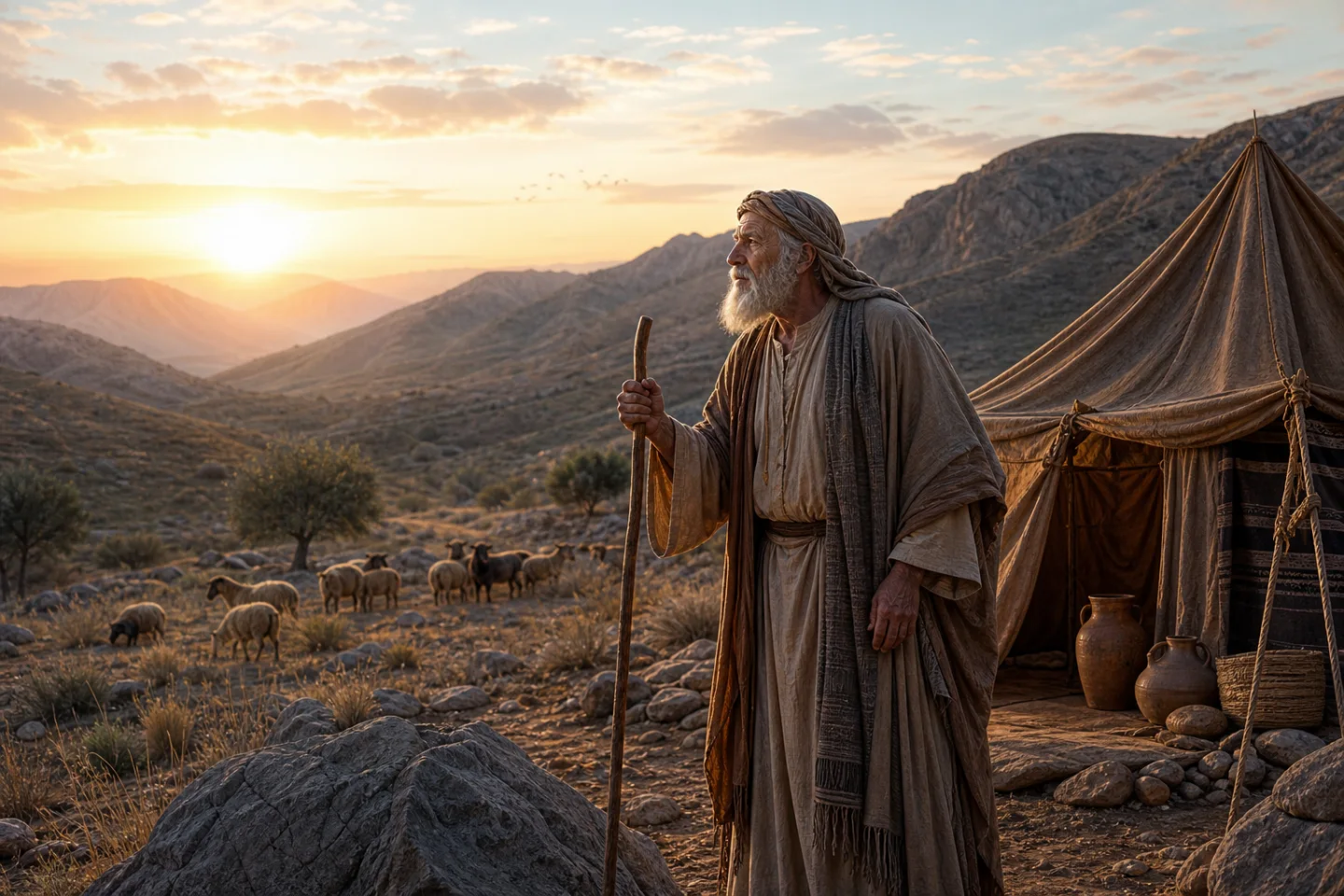

The figure of the lamb runs through Scripture from the patriarchal narratives to the final visions of Revelation. Sometimes it is a literal animal offered in sacrifice; in other passages the language is applied to a person and takes on theological meaning. The thread should not collapse every text into one scene, yet it does reveal a trajectory of provision, sacrifice, redemption, and victory that the New Testament brings to focus in Jesus Christ.
The Mount Moriah Offering: Substitution and Divine Provision
In Genesis 22, Isaac asks about the lamb for the burnt offering, and Abraham answers that God will provide. The account culminates with a ram caught in a thicket taking Isaac’s place. The episode clearly establishes the themes of divine provision and substitution, even though the animal finally offered is a ram.
Genesis 22:1–14
The Passover Lamb: Protection, Covenant, and Deliverance from Judgment
Exodus 12 commands the selection of a year-old animal without defect for Passover. Its blood, placed on the doorposts and lintel, serves as a sign during the night of judgment on Egypt. The rite becomes tied to deliverance and is to be remembered through the generations. Here the lamb enters Israel’s collective memory of rescue.
Exodus 12:1–14
The Sanctuary Liturgy: The Continual Daily Offering
The sacrificial law incorporates lambs regularly. Leviticus describes procedures for burnt offerings, while Numbers establishes continual offerings morning and evening. These sacrifices belong to Israel’s worship and show that lamb imagery does not depend on a single event but appears repeatedly in the liturgical life of the people.
Leviticus 1:10–13 · Numbers 28:1–8
The Prophetic Vision: The Suffering Servant as a Silent Lamb
Isaiah 53 compares the afflicted Servant to a lamb led to slaughter, emphasizing his silence under suffering. Acts 8 explicitly connects this passage with the proclamation of Jesus. The image moves beyond ritual alone and is applied to a person whose offering is interpreted in the light of redemptive suffering.
Isaiah 53:1–12 · Acts 8:30–35
The New Testament Fulfillment: The Lamb of God and Apostolic Redemption
John the Baptist calls Jesus the “Lamb of God” and relates him to the sin of the world. Paul speaks of Christ as Passover, and Peter describes redemption through precious blood like that of a spotless lamb. These apostolic connections read Jesus’ death as the fulfillment of earlier sacrificial patterns without erasing the differences among them.
John 1:29–36 · 1 Corinthians 5:7–8 · 1 Peter 1:18–20
The Apocalyptic Consummation: The Slain Lamb Enthroned and Triumphant
Revelation brings the image to a climactic paradox: the Lamb appears as slain and yet stands in authority and receives worship. The same symbol reappears in connection with the redeemed, the marriage supper, and the New Jerusalem. Sacrifice does not end in defeat; in the apocalyptic vision, the slain Lamb is also the victor.
Revelation 5:6–14 · Revelation 7:9–17 · Revelation 19:6–9 · Revelation 21:22–27
Conclusion
From Moriah to Revelation, the lamb expresses provision, sacrifice, and redemption. The New Testament gathers these lines in Christ without reducing every earlier text to a mechanical equivalence. The image reaches its fullness when the Lamb who gives his life is also the one who reigns, gathers the redeemed, and stands at the center of final hope.
Biblical references
- Genesis 22:1–14
- Exodus 12:1–14
- Leviticus 1:10–13
- Numbers 28:1–8
- Isaiah 53:1–12
- Acts 8:30–35
- John 1:29–36
- 1 Corinthians 5:7–8
- 1 Peter 1:18–20
- Revelation 5:6–14
- Revelation 7:9–17
- Revelation 19:6–9
- Revelation 21:22–27