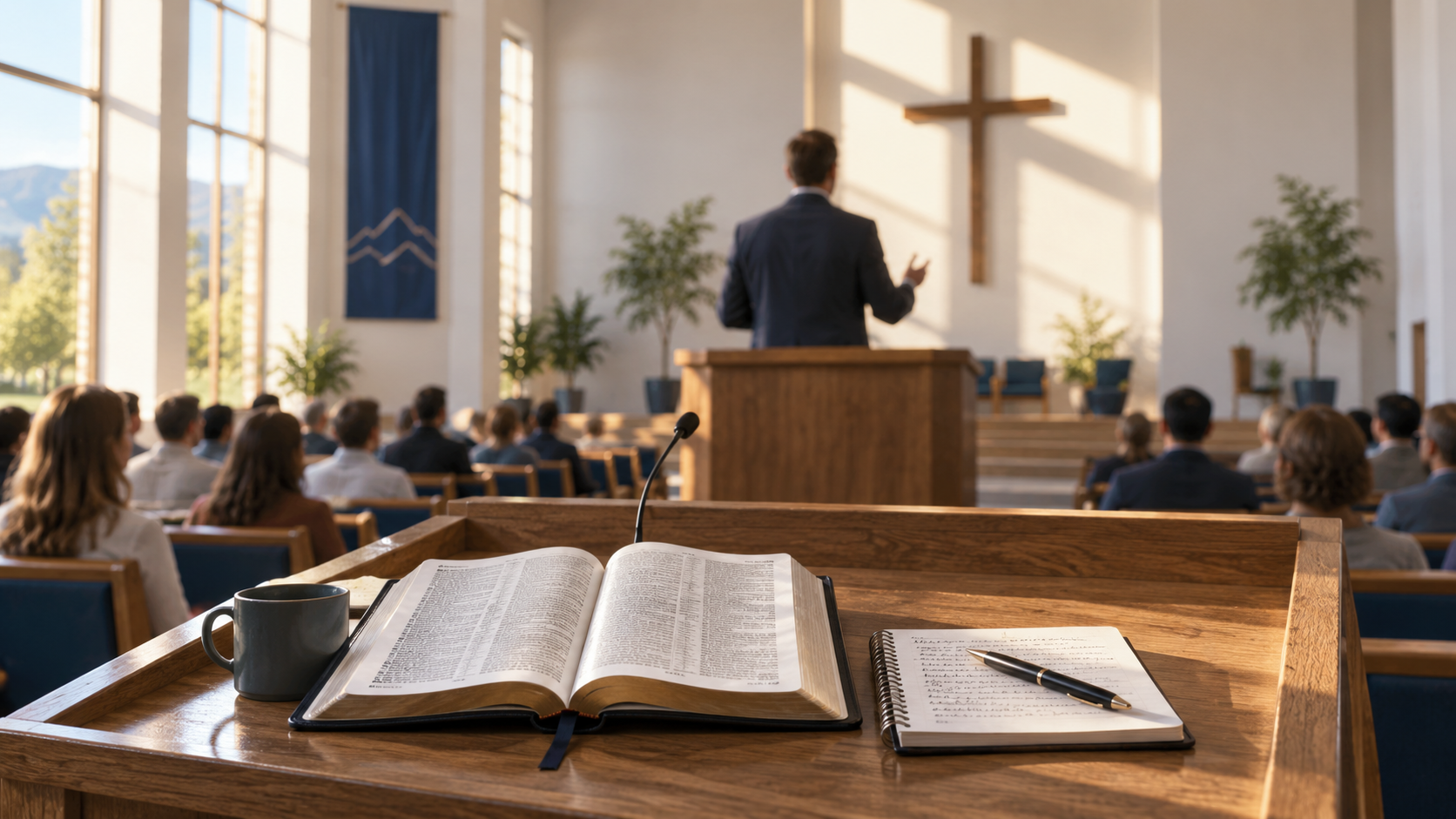
Protestantism is not a single church but a broad family of Christian communities that emerged largely from the Reformation of the sixteenth century and from later renewal movements. Within that family are Lutherans, Reformed, Anglicans, Baptists, Methodists, Pentecostals, Presbyterians, and many others. The word evangelical is often used for a cluster of convictions shared by many of these churches, especially regarding the authority of the Bible, the necessity of conversion, and the centrality of Jesus Christ.
Brief origin and history
The Protestant Reformation developed in the sixteenth century through figures such as Martin Luther, Ulrich Zwingli, and John Calvin, leading to the formation of new ecclesial communities. Later movements and revivals helped shape modern evangelicalism. For that reason, “Protestantism” should always be understood as a diverse reality.
Scripture and authority
One of the best-known features of Protestantism is its strong emphasis on the authority of the Bible. Many Protestant communities speak of sola Scriptura, meaning that Scripture is the supreme norm for doctrine and Christian life. This does not mean that Protestants reject creeds, confessions, or teachers, but rather that those authorities are seen as secondary and always subject to the judgment of Scripture.
God, the Trinity, and Jesus Christ
The great majority of historic Protestant churches and evangelical groups profess the classical doctrine of the Trinity. They confess Jesus Christ as true God and true man, Savior and Lord, and place strong emphasis on his atoning death and resurrection.
The Holy Spirit
Protestants and evangelicals affirm the work of the Holy Spirit in conversion, sanctification, and the life of the Church. In some streams, especially Pentecostal and charismatic ones, there is special emphasis on spiritual gifts, prayer for healing, and other charismatic manifestations.
Salvation
Many Protestant communities stress that salvation is God’s gracious gift received through faith in Jesus Christ. Although there are nuances among different traditions, it is common to emphasize that justification is not earned by human merit. Good works are understood as the response to and fruit of faith, not the basis on which a person purchases salvation.
Church and ministry
Internal differences are considerable. Some churches retain episcopal structures, others are governed by elders, and others emphasize strong congregational autonomy. Nor is there a worldwide authority equivalent to the Pope. Many churches stress the priesthood of all believers while still maintaining ordained ministries such as pastors, elders, or bishops according to their own tradition.
Sacraments or ordinances
Most historic Protestant churches recognize primarily two rites instituted by Christ:
- baptism;
- the Lord’s Supper.
Some call them sacraments and others ordinances. There are also differences regarding the meaning of baptism, the mode by which it is administered, and the meaning of the Lord’s Supper. Not all churches hold the same understanding of Christ’s presence in the Supper.
Mary and the saints
In general, Protestantism honors Mary as the mother of Jesus but does not develop the Marian devotion found in Catholicism or Orthodoxy. Nor does it practice the invocation of the saints in the same way. Protestant emphasis usually falls on the unique mediation of Christ.
The afterlife
Most Protestant churches affirm the resurrection of the dead, final judgment, heaven, and hell. Some traditions develop highly detailed systems of eschatology, while others prefer more restrained formulations. In general, they do not hold the doctrine of purgatory in the Catholic sense.
Distinctive practices
Characteristic features of many Protestant and evangelical churches include:
- central preaching of the Bible;
- emphasis on personal conversion and conscious faith;
- congregational singing;
- mission and evangelism;
- Bible study;
- denominational diversity.
What to keep in mind when comparing
It is not fair to describe “Protestantism” as if every church agreed on every detail. Even so, there are broad common themes: the privileged authority of Scripture, the centrality of faith in Christ, strong emphasis on grace and conversion, and understandings of church authority and sacraments that differ from Catholicism and Orthodoxy.