Judaism is the religious tradition of the Jewish people and the oldest of the major biblical monotheistic traditions. It is not only a religion in a narrow sense; it also includes a history, a collective memory, a communal life, a set of practices, and a deep bond with the Scriptures of Israel.
Brief origin and history
Judaism is rooted in the biblical history of Israel. Its foundational texts include the Torah and, more broadly, the Tanakh. Over time, rabbinic literature and different streams of interpretation and practice developed. Today there are different expressions of Judaism, including Orthodox, Conservative, and Reform Judaism, among others.
Scripture and tradition
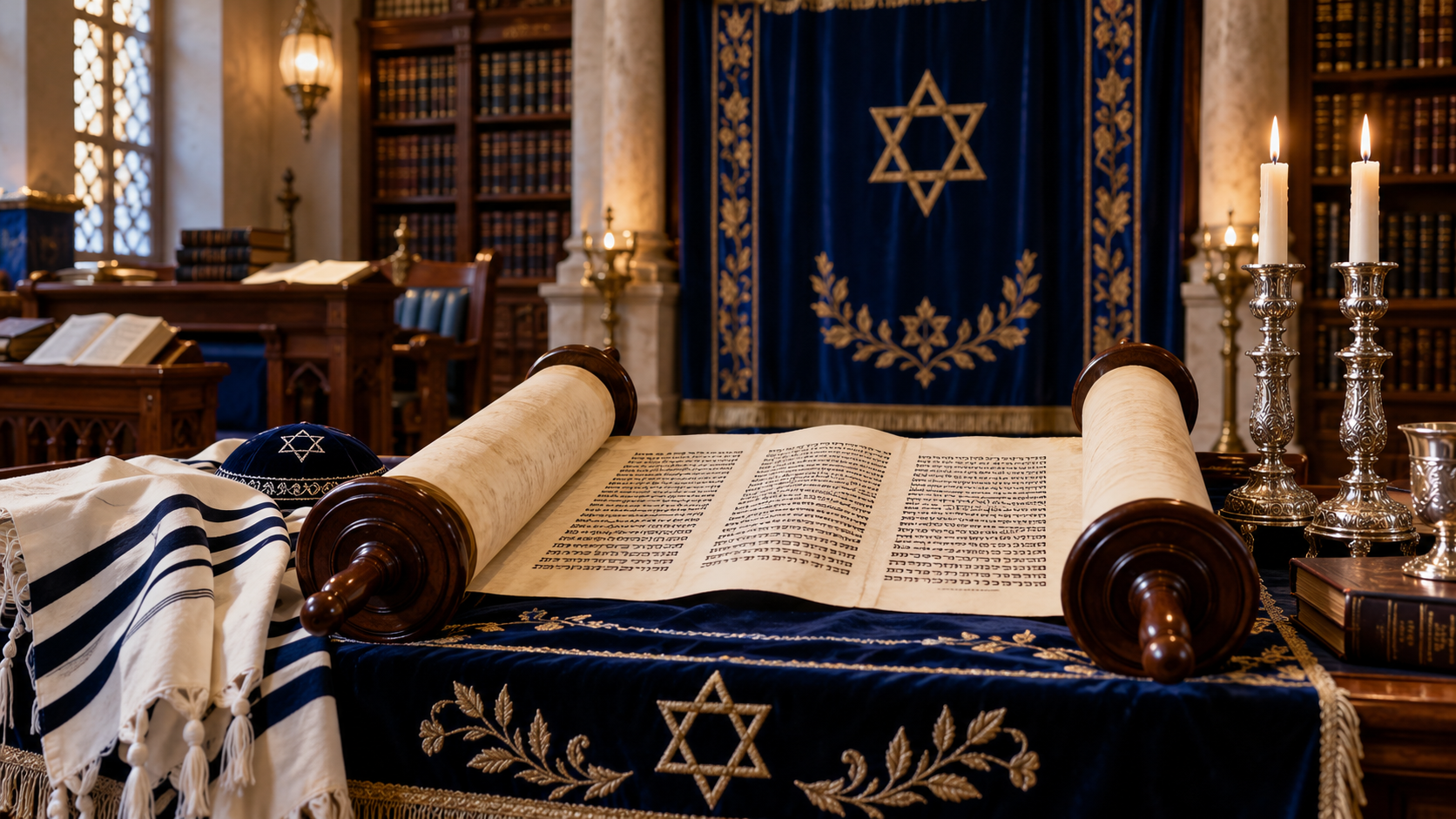
The foundational text of Judaism is the Torah, understood narrowly as the five books of Moses and more broadly as divine instruction. Also central are the rest of the Tanakh and rabbinic tradition, especially the Mishnah and the Talmud in communities that recognize the authority of the oral law. Not all Jews understand the normative weight of these traditions in the same way, so Judaism should be described as a diverse family.
God
Judaism affirms radical monotheism: God is one. This confession is classically expressed in the Shema: “Hear, O Israel: the Lord our God, the Lord is one.” God’s unity and transcendence stand at the center. For that reason, Judaism does not share the Christian doctrine of the Trinity.
Jesus
In general, Judaism does not recognize Jesus as the promised Messiah or as the Son of God in the Christian sense. Nor does it regard him as a divine person. Some Jewish authors may view Jesus as a first-century Jew or even as a teacher, but they do not share the Christian confession of his identity or resurrection as the foundation of faith.
Salvation, covenant, and faithful living
Judaism often places less emphasis on a single theory of salvation and more on faithfulness to God’s covenant, holiness of life, and observance of the commandments. The language of grace, forgiveness, repentance, and divine mercy certainly exists within Judaism, yet the overall framework is deeply bound up with covenant life, prayer, justice, and the practice of the mitzvot.
Religious authority
Religious authority depends greatly on which stream of Judaism is in view. In broad terms, Scripture and rabbinic tradition carry major weight. There is no single universal magisterium comparable to that of the Catholic Church. For this reason, internal differences are significant and should be acknowledged honestly.
Worship and community life
Jewish life is structured around prayer, the synagogue, Torah study, the festive calendar, and daily practice. Shabbat, the major festivals, blessings, study, and family life are of enormous importance. In many forms of Judaism, dietary observance (kashrut) and other mitzvot also play a major role.
Sacraments and rites
Judaism is not organized around a sacramental theology in the way Catholic or Orthodox Christianity is. Even so, it possesses rites, blessings, and covenantal signs of great significance, such as circumcision, Bar/Bat Mitzvah, marriage, festivals, and life-cycle practices.
The afterlife
Within Judaism there are different ways of speaking about the life to come. Many streams affirm hope in the world to come and, in some contexts, resurrection. At the same time, Judaism often places greater emphasis on faithfulness to God in this life and on the sanctification of time and ordinary action.
Distinctive practices
Characteristic features of Judaism include:
- the Shema and confession of the one God;
- the centrality of the Torah;
- observance of Shabbat;
- the festival calendar;
- the practice of mitzvot;
- a life shaped by study and communal memory.
What to keep in mind when comparing
Judaism is indispensable for understanding the background of Christianity, but it should not be presented simply as “Christianity without Jesus.” It has its own identity, its own sources, and a long interpretive history. When compared with Christian traditions, one of the key issues will always be the identity of Jesus and the way each community understands revelation, covenant, and religious authority.