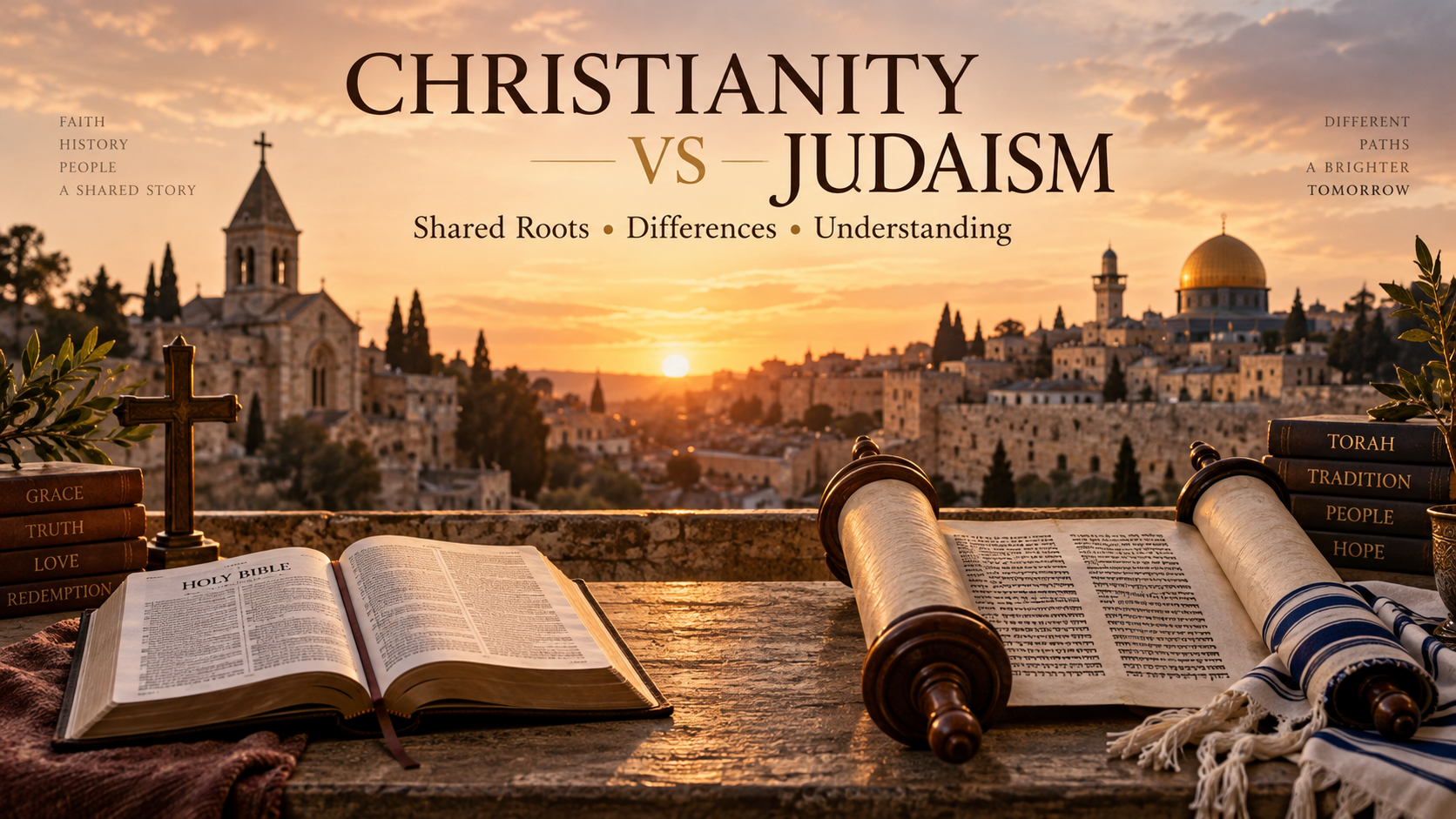
Christianity and Judaism are deeply connected by history and by the Scriptures of Israel, but today they are distinct religious traditions.
Christianity emerged in a Jewish setting: Jesus was Jewish, his earliest disciples were Jewish, and the Scriptures of Israel form part of the Christian Bible. At the same time, rabbinic Judaism and Christianity followed different paths during the first centuries and developed their own identities, practices, and doctrines.
A responsible comparison must acknowledge the shared heritage and the differences, while avoiding the idea that Judaism is simply an incomplete version of Christianity.
What they share
Shared elements include faith in the Creator God, much of the biblical heritage of Israel, figures such as Abraham, Moses, David, and the prophets, the Ten Commandments, a strong tradition of prayer, and concern for justice, mercy, and moral responsibility.
Christianity cannot understand its own origins without Judaism.
Scriptures
### Judaism
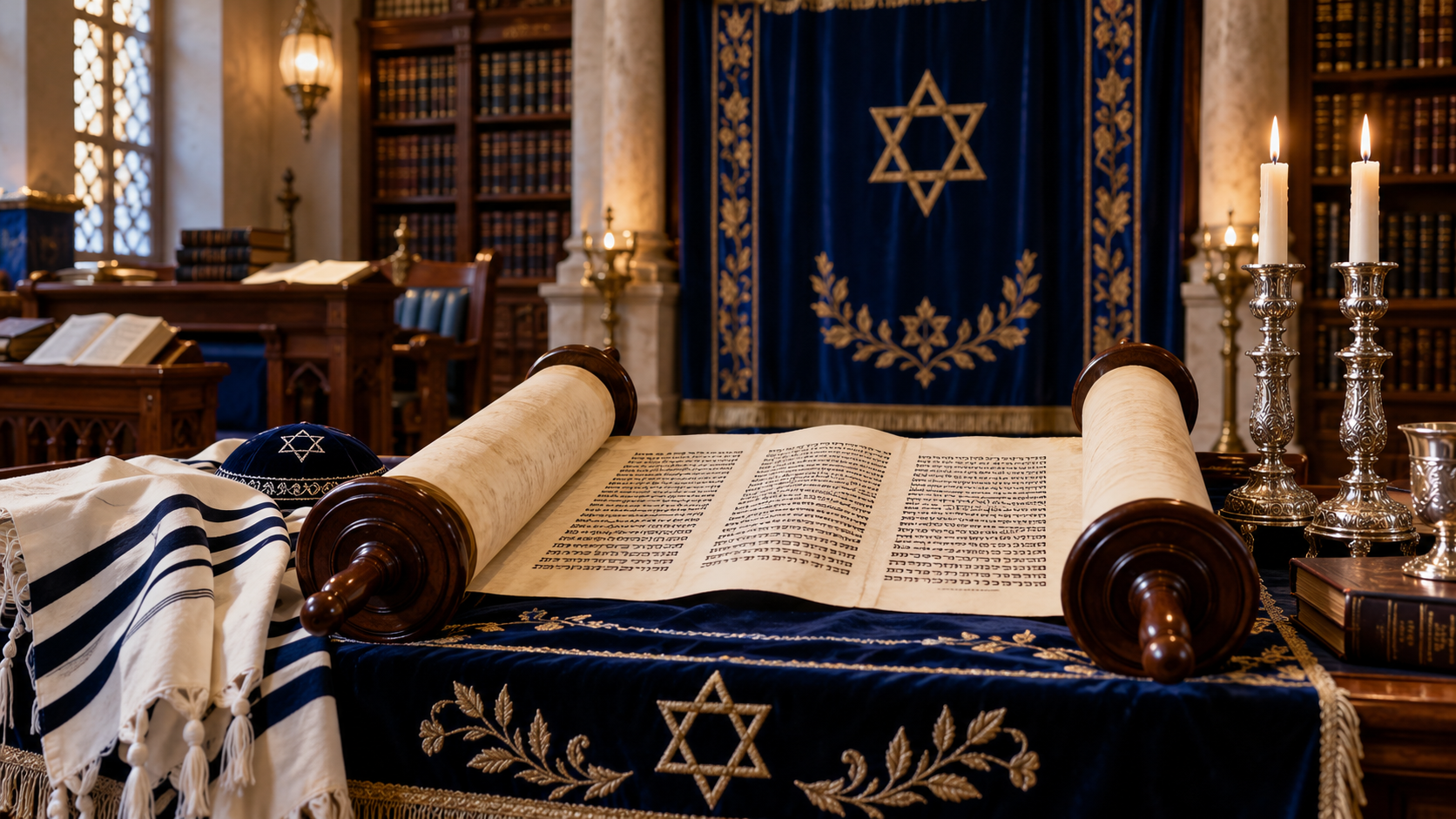
Judaism is centered on the Torah and, more broadly, the Tanakh. Rabbinic tradition — the Mishnah, Talmud, and centuries of interpretation — also has a central place in many Jewish communities.
### Christianity
Christianity receives the Scriptures of Israel as the Old Testament and adds the New Testament, centered on Jesus Christ and the life of the earliest Christian communities. The exact arrangement of the Old Testament canon varies among Catholics, Orthodox Christians, and Protestants.
God
Both traditions are monotheistic.
Judaism insists on the absolute oneness of God and does not accept the doctrine of the Trinity.
Most historic Christianity confesses one God in three Persons: Father, Son, and Holy Spirit.
Jesus
For Christianity, Jesus is the Messiah, the Son of God, and the center of Christian revelation. His death and resurrection stand at the heart of the Gospel.
Judaism does not recognize Jesus as the Messiah or as the Son of God in the Christian sense and does not base its faith on Jesus’ resurrection.
Some Jewish authors may study him as a historical Jewish figure or first-century teacher, but this is not the same as accepting Christian claims about his identity.
The Messiah
Christians believe Jesus is the promised Messiah and await his return.
Traditional Judaism still awaits the fulfillment of the messianic age and does not identify Jesus as the expected Messiah.
Covenant
Judaism understands its identity deeply in relation to God’s covenant with Israel and to the Torah.
Christianity interprets covenant through Jesus Christ and the New Testament.
This subject requires special care: major contemporary Christian churches have rejected anti-Jewish interpretations that portrayed the Jewish people as simply abandoned or cursed by God.
Law and commandments
In Judaism, the mitzvot and a life shaped by Torah are central to the sanctification of daily life.
Christians also receive the moral commandments of the biblical tradition, but different churches understand the relationship between Christians and the ritual and civil laws of the Torah in different ways.
Worship and religious life
Jewish life is structured around prayer, Torah study, synagogue life, Shabbat, festivals, family life, and mitzvot.
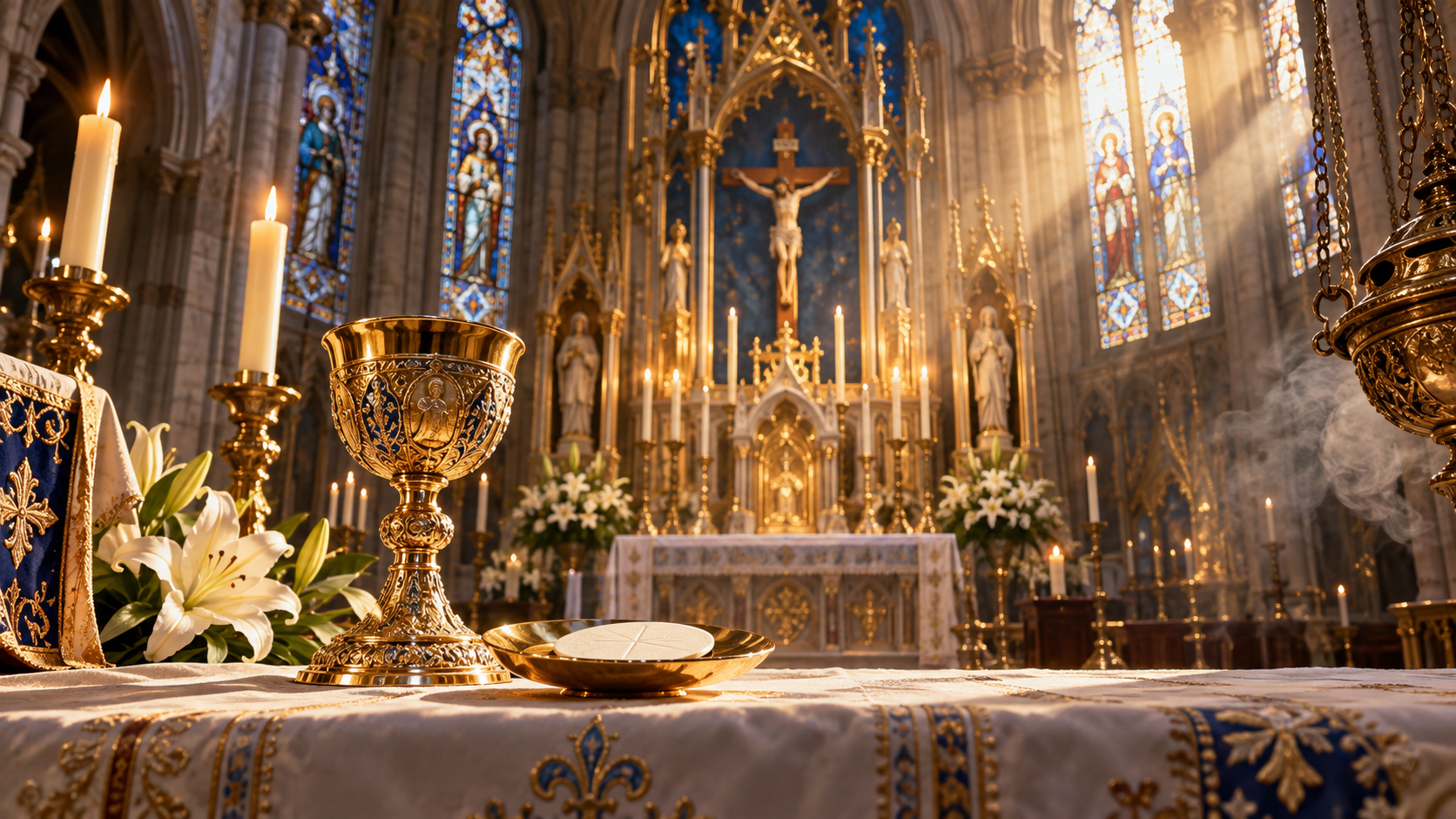
Christian life is normally structured around prayer, Bible reading, Sunday worship, baptism, the Lord’s Supper or Eucharist, the Christian calendar, and community life.
Sacraments
Judaism does not have a sacramental theology equivalent to that developed in many Christian churches, though it does have rites, covenantal signs, blessings, and practices that accompany communal and family life.
Salvation and righteous living
Both traditions speak of repentance, mercy, justice, and faithfulness to God, but they do not organize these ideas in exactly the same way.
Christianity places the saving work of Jesus Christ at the center. Judaism centers religious life on covenant, return to God, Torah, prayer, justice, and commandments.
A history that requires respect
Christian-Jewish relations cannot be separated from a history that includes centuries of discrimination, persecution, and antisemitism.
In the Catholic case, Nostra aetate explicitly rejected collective blame of Jews for Jesus’ death and deplored antisemitism. That historical memory must be part of any responsible comparison.
In summary
Christianity and Judaism share biblical roots, monotheism, foundational figures and narratives, and a strong ethic of responsibility before God.
Their major differences concern the identity of Jesus, the Trinity, the meaning of Messiah, the relationship to Torah, the New Testament, and the understanding of covenant and salvation.
Judaism should be studied as a living tradition with its own identity, not merely as the “background” of Christianity.