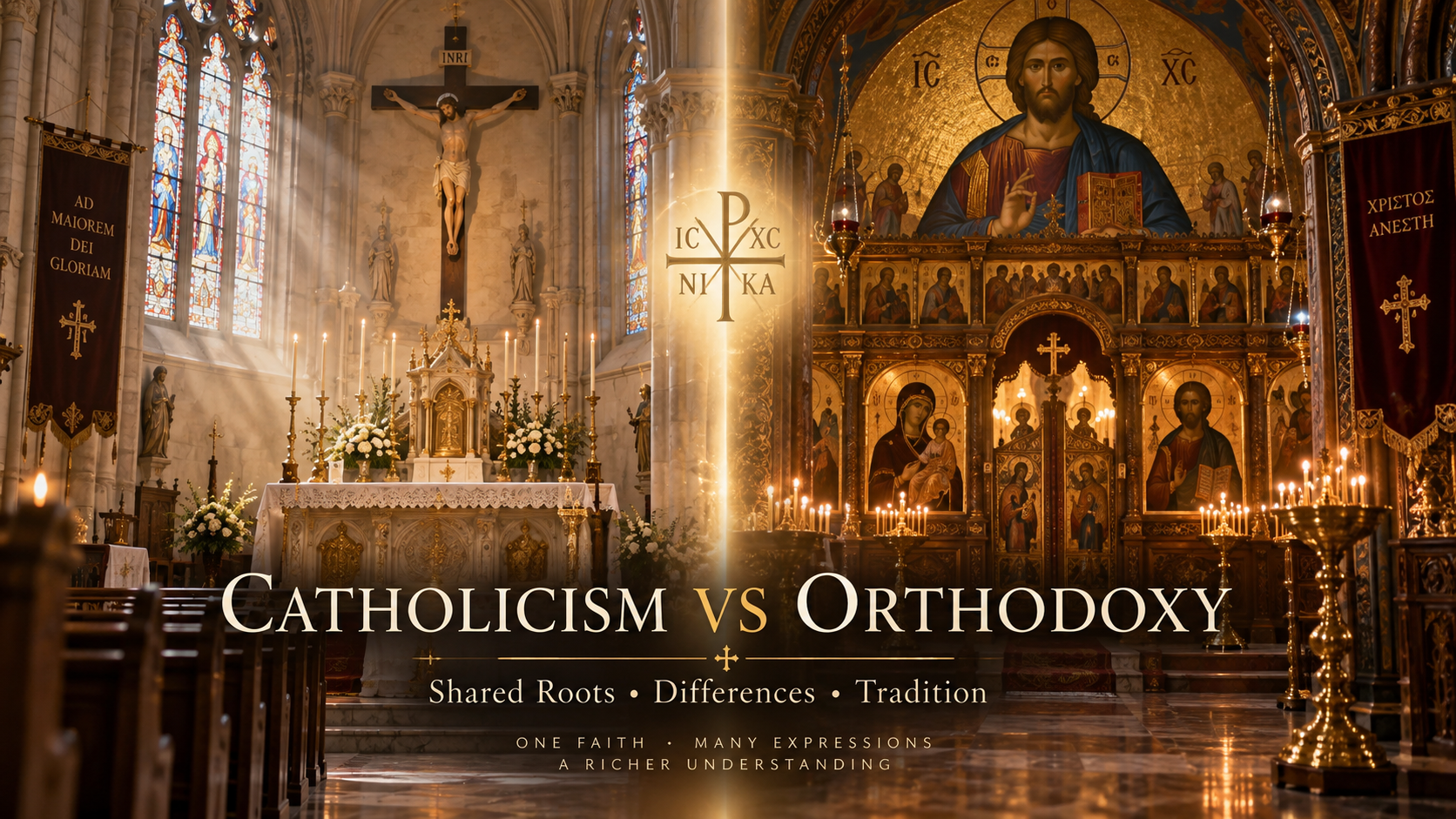
The Catholic Church and the Orthodox Churches share more with one another than many other branches of Christianity do. Both preserve an ancient episcopal structure, sacramental life, veneration of Mary and the saints, historic liturgy, and the Trinitarian and Christological faith of the early councils.
At the same time, they are not currently in full communion. Their most important differences concern the primacy of the bishop of Rome, the relationship between primacy and synodality, and certain later doctrinal and disciplinary developments.
What they share
Catholics and Orthodox Christians share faith in the Trinity, confession of Jesus Christ as true God and true man, apostolic succession, episcopal ministry, baptism, Eucharist, the real presence of Christ in the Eucharist, veneration of Mary as Mother of God, veneration of saints, esteem for the Church Fathers, and hope in resurrection.
The bishop of Rome
The Catholic Church recognizes the Pope, bishop of Rome, as possessing universal primacy with doctrinal and pastoral responsibilities for the whole Catholic Church.
The Orthodox Churches historically recognize a place of honor for Rome in the ancient Church, but they do not accept that the bishop of Rome exercises over the Orthodox Churches the same universal jurisdiction he exercises within the Catholic Church.
The relationship between primacy and synodality is one of the major themes of contemporary ecumenical dialogue.
Church structure
The Catholic Church is a worldwide communion of particular churches united with the bishop of Rome.
Orthodoxy consists of several autocephalous or autonomous churches in communion without a universal authority equivalent to the Pope. It therefore tends to express authority in a more strongly synodal way.
Scripture and Tradition
Both traditions place Scripture within a living Tradition that includes liturgy, councils, Fathers, and ecclesial life. Their differences concern the formulation of teaching authority and doctrinal development more than a simple opposition between “Bible” and “Tradition.”
Sacraments or mysteries
Both are sacramental traditions. The Catholic Church formally enumerates seven sacraments. Orthodoxy also commonly speaks of seven principal mysteries, though its theology often treats sacramentality in a less schematic way.
Eucharist
Catholics and Orthodox Christians confess the real presence of Christ and place the Eucharist at the center of the Church’s life. The theological language used to explain the mystery may differ, but the level of agreement is high.
Mary, saints, and icons
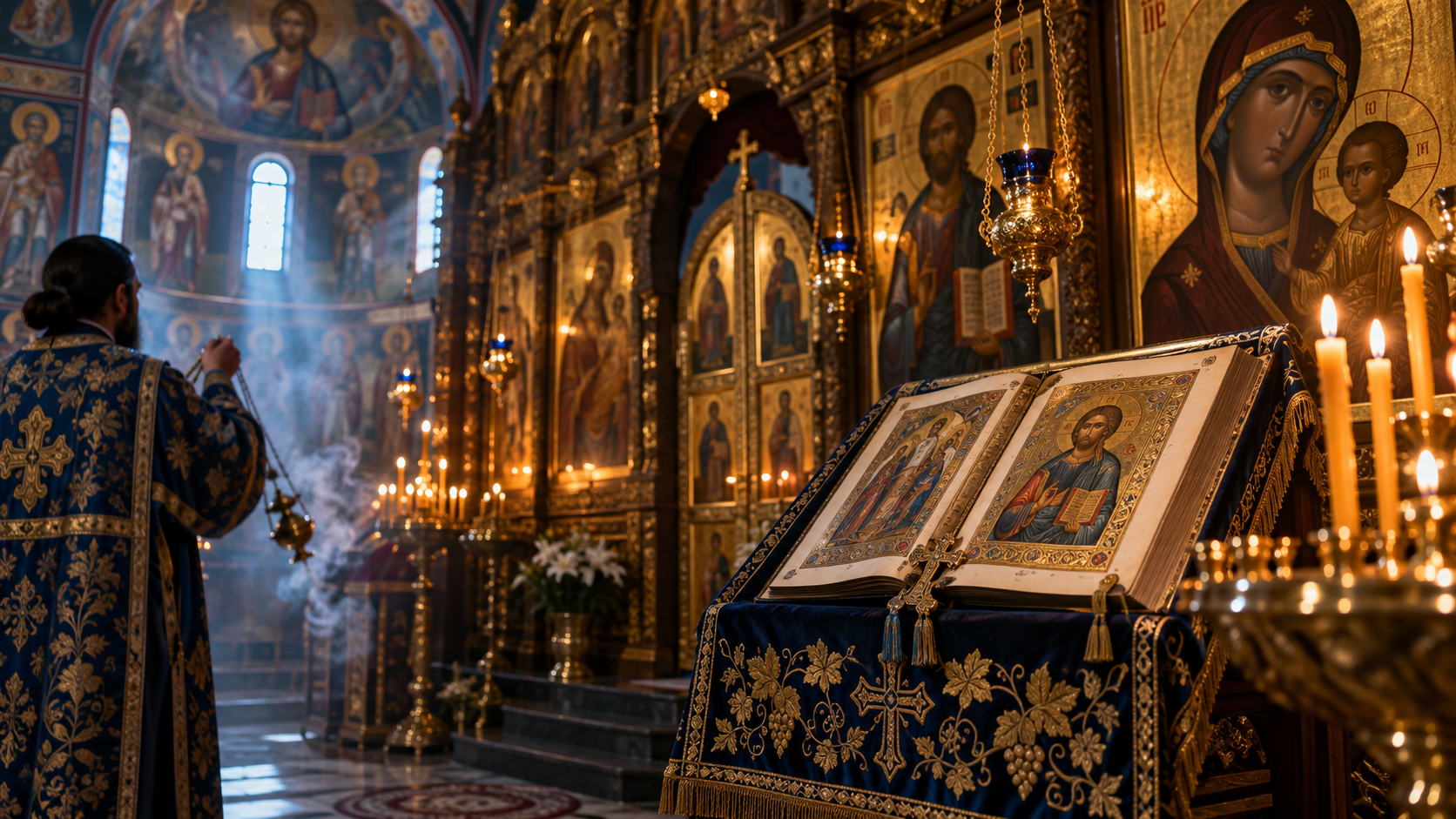
Both traditions deeply honor Mary and the saints and ask for their intercession. Orthodoxy gives especially visible importance to icons, understood as witnesses to the Incarnation and the Church’s communion with Christ and the saints.
The Filioque
An important historic difference concerns the wording of the Creed about the procession of the Holy Spirit. In the West, the Latin term Filioque (“and the Son”) was added, while the original Greek form of the Constantinopolitan Creed does not contain that addition.
The issue has theological, historical, and ecclesial dimensions and has been discussed for centuries.
Purgatory and later formulations
The Catholic Church developed Western formulations such as the doctrine of purgatory. Orthodoxy prays for the dead and affirms judgment and purification, but does not necessarily adopt the same Latin formulations.
There are also differences concerning the reception of certain Marian dogmas defined later by the Catholic Church.
Clergy and discipline
In the Latin Catholic Church, priests normally live celibately, though exceptions exist and Eastern Catholic churches have other disciplines.
In many Orthodox churches, married men may be ordained priests if the marriage takes place before ordination; bishops are chosen from celibate or monastic clergy.
In summary
Catholicism and Orthodoxy share apostolic structure, sacraments, the Eucharist, veneration of Mary and the saints, and the faith of the early councils.
Their most visible differences concern papal primacy and jurisdiction, the relationship between primacy and synodality, the Filioque, certain Western doctrinal developments, and some ecclesiastical disciplines.