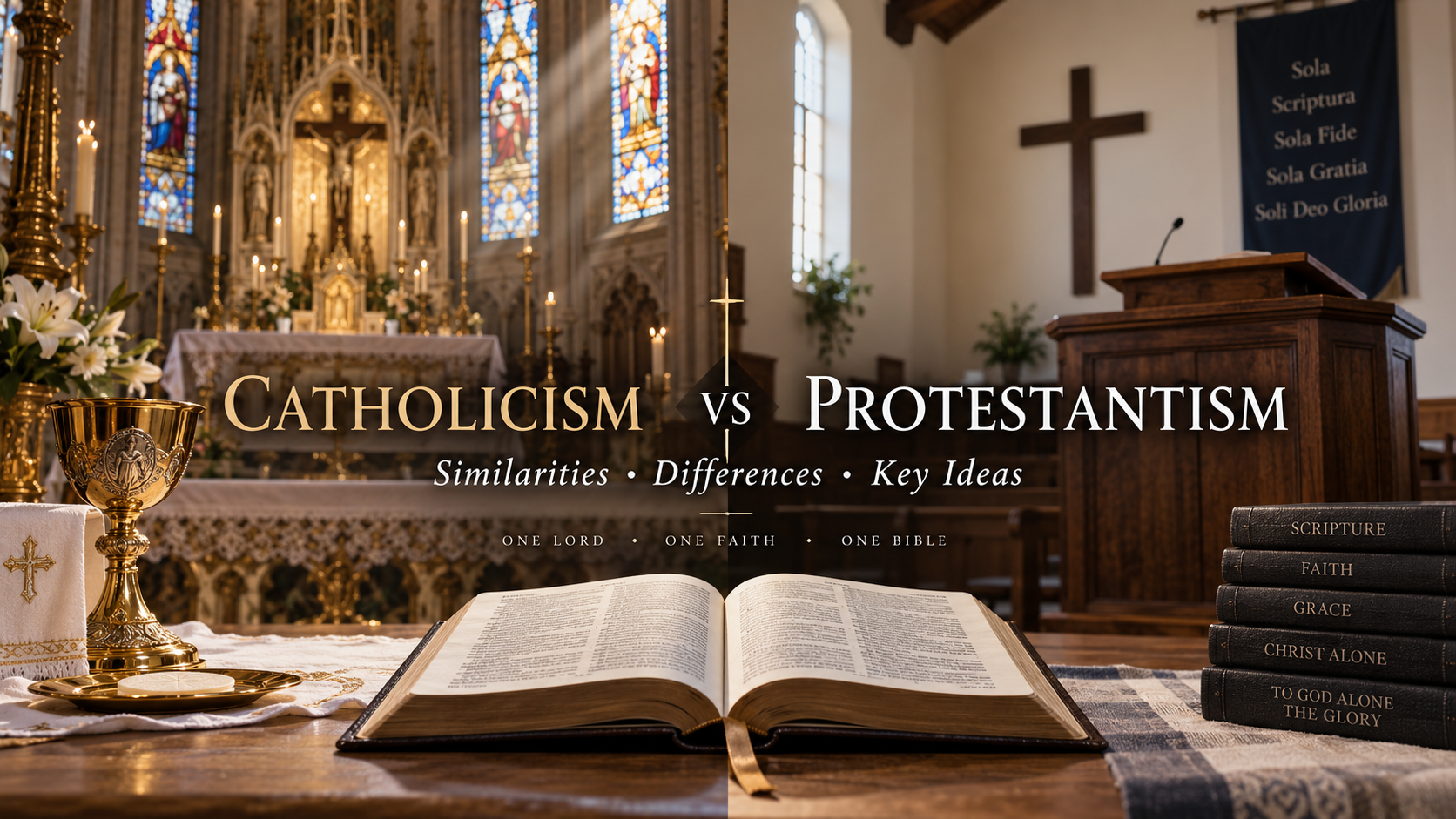
Catholicism and Protestantism both belong to Christianity and share much of the biblical inheritance and historic confession concerning Jesus Christ. Since the Reformation of the sixteenth century, however, important differences have developed regarding authority, salvation, sacraments, ministry, and devotional practice.
“Protestantism” is not one church. Lutherans, Reformed Christians, Anglicans, Baptists, Methodists, Pentecostals, and others may disagree among themselves. This comparison therefore identifies broad patterns.
What they share
Catholics and most historic Protestant and evangelical churches share faith in one God, confession of Father, Son, and Holy Spirit, the centrality of Jesus Christ, his death and resurrection, use of the Old and New Testaments, baptism, prayer, hope in resurrection, and the mission to proclaim the Gospel.
Bible and authority
### Catholicism
The Catholic Church understands revelation in relation to Scripture and Tradition, authentically interpreted by the Magisterium.
### Protestantism
Many Protestant traditions hold to sola Scriptura: the Bible is the final or supreme authority for faith and practice. Creeds and confessions may carry authority, but remain subordinate to Scripture.
The Pope and church structure
Catholicism recognizes the Pope, bishop of Rome, as exercising universal primacy. Bishops form a college in communion with him.
There is no comparable worldwide Protestant authority. Some churches have bishops; others are governed by presbyteries, synods, or congregational autonomy.
Salvation, grace, faith, and works
Both traditions affirm that salvation depends on God’s grace and on Jesus Christ.
Catholicism teaches that grace justifies and transforms the believer and that a life of faith expresses itself in love and works made possible by grace.
Many Protestant traditions, especially those shaped by the Reformation, emphasize justification by faith and reject the idea that salvation can be earned by human merit. Good works are normally understood as the fruit of genuine faith.
Sacraments
The Catholic Church recognizes seven sacraments. Most historic Protestant churches recognize primarily Baptism and the Lord’s Supper, called sacraments or ordinances according to tradition.
Eucharist and the Lord’s Supper
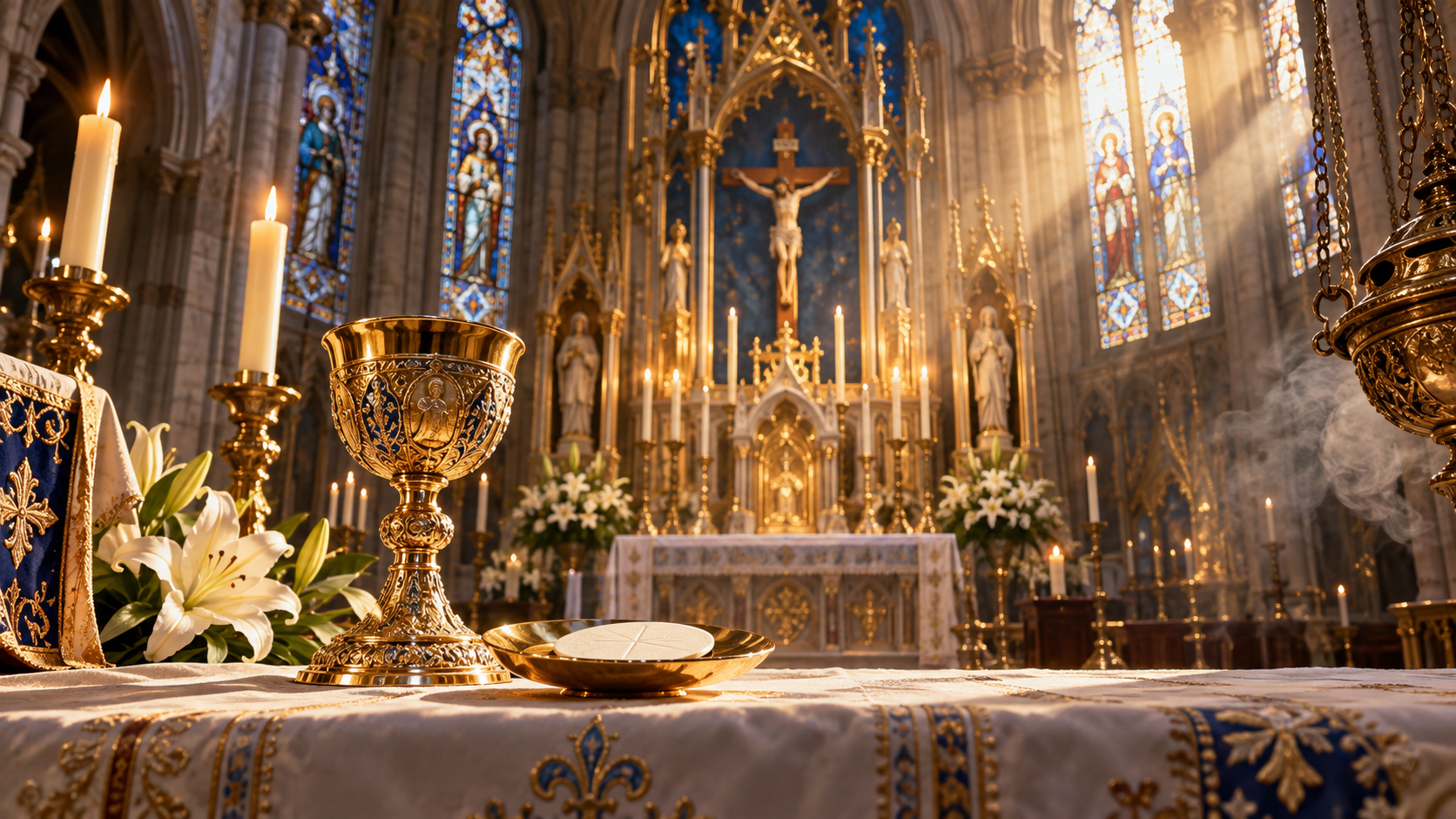
Catholicism teaches the real presence of Christ in the Eucharist and describes the Mass as the sacramental memorial of Christ’s sacrifice.
Among Protestants there is diversity: some traditions affirm forms of real presence, while others emphasize memorial more strongly.
Baptism
Catholicism baptizes adults and infants. Protestantism includes churches that baptize infants and churches that primarily baptize believers able to make a personal profession of faith.
Mary and the saints
The Catholic Church venerates Mary and the saints and asks for their intercession, distinguishing veneration from worship.
Most Protestant churches honor Mary as the mother of Jesus but do not normally invoke saints or practice Marian devotion in the Catholic sense.
Ministry and worship
Catholicism recognizes Holy Orders and a structure of bishops, priests, and deacons. Protestant communities use many different models of ministry.
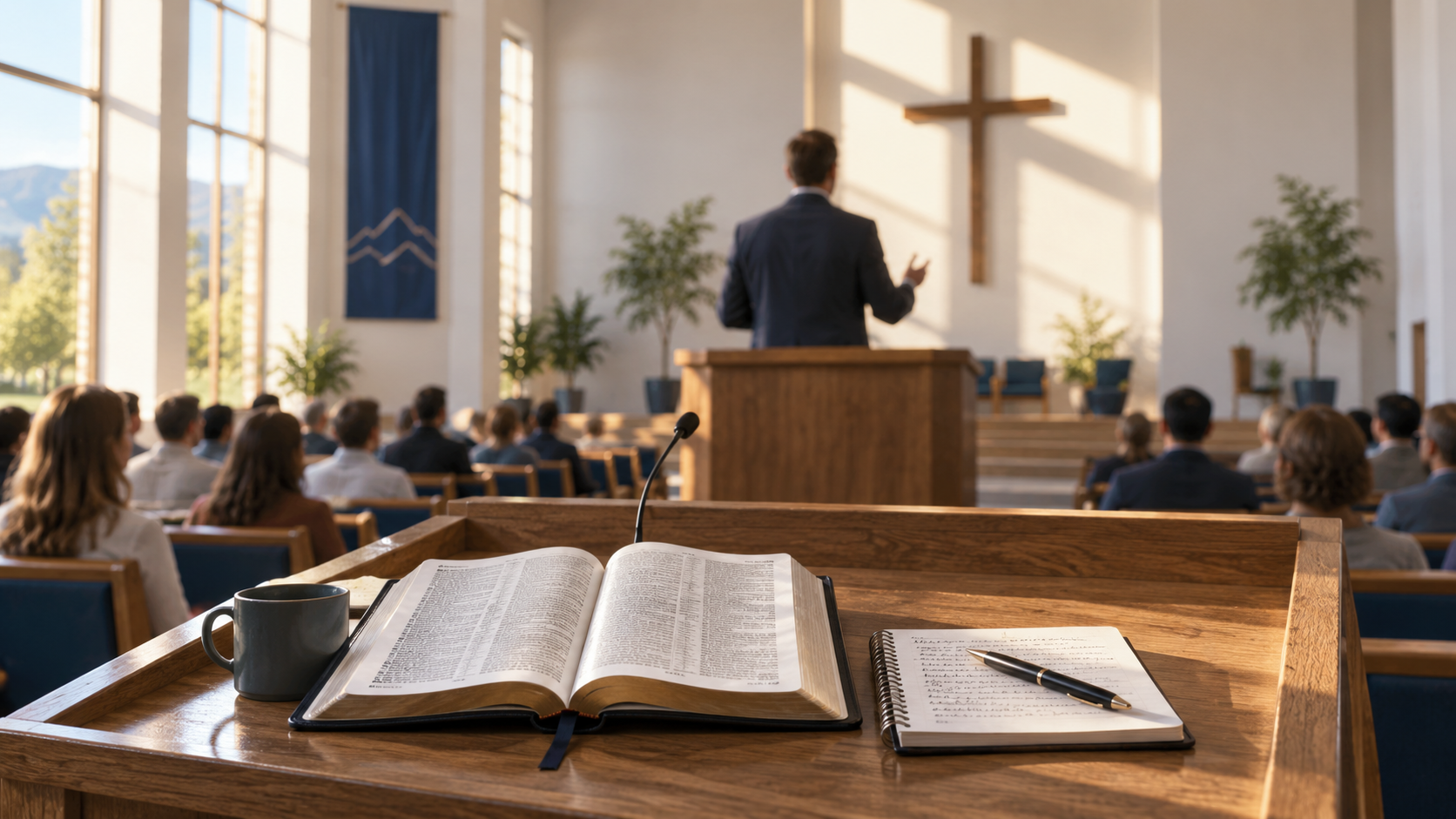
Catholic worship centers especially on the Mass and Eucharist. Many Protestant churches place strong emphasis on biblical preaching, prayer, and singing, though some retain highly structured liturgies.
Purgatory
The Catholic Church teaches purgatory as final purification. Most Protestant churches do not accept this doctrine.
In summary
The main differences concern church authority, the place of Tradition, the role of the Pope, the way justification is explained, the number and nature of sacraments, the Eucharist, Mary and the saints, and certain teachings about the afterlife.
The comparison becomes more precise when a particular Protestant tradition is specified.