
Forgiveness is central to biblical faith, but it is neither simple nor sentimental. Scripture speaks about God forgiving sinners, Christ’s work as the basis of reconciliation, and the call to forgive those who wrong us. It also distinguishes forgiveness from revenge, impunity, and rushed reconciliation. A biblical understanding therefore holds together mercy, truth, repentance, responsibility, and grace rather than reducing forgiveness to a feeling or a slogan.
The short answer: forgiveness begins with God's mercy
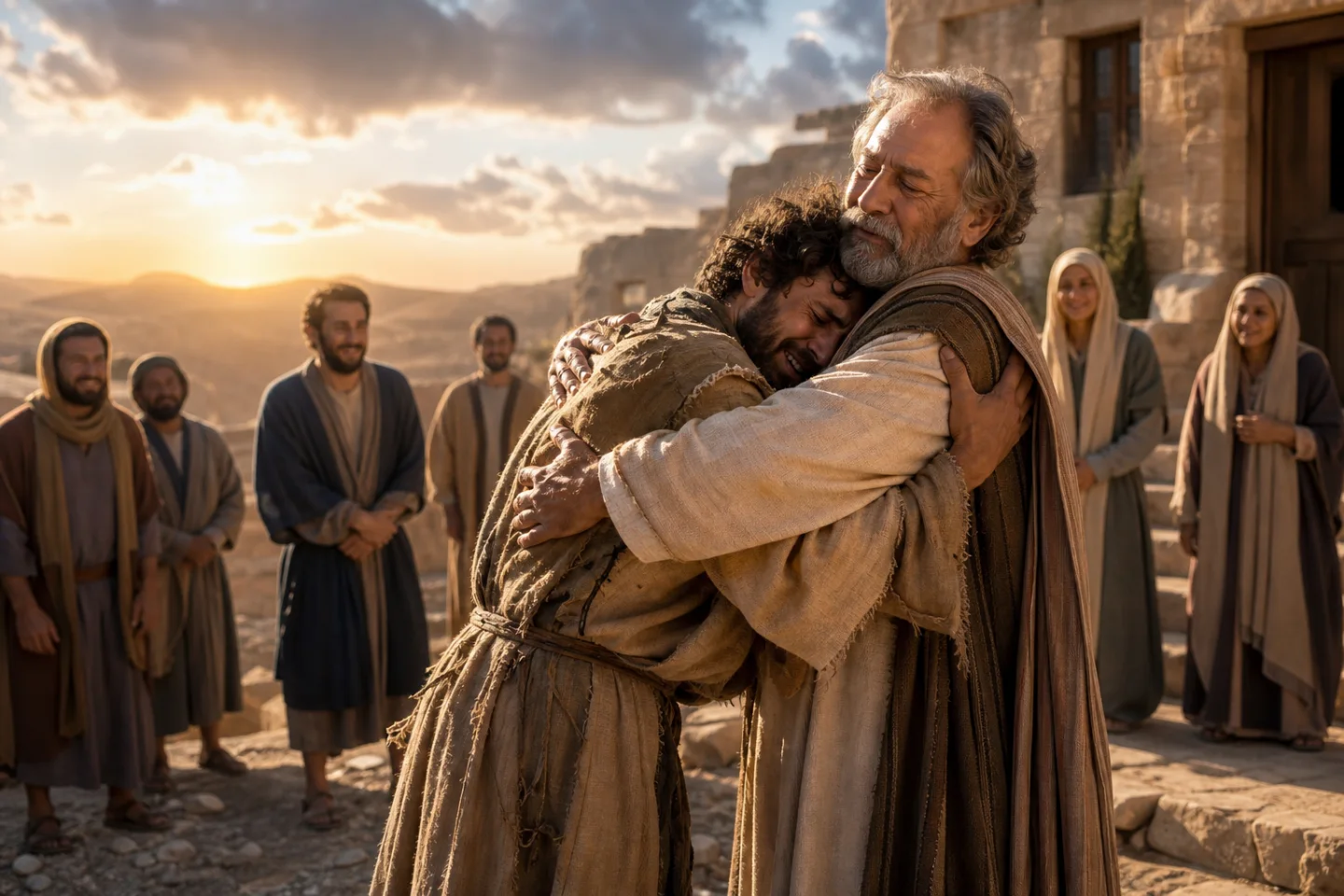
The short answer is that forgiveness begins with God. The prayer Jesus teaches joins two directions: asking for forgiveness and learning to forgive. Matthew 18 shows that received mercy cannot be separated from practiced mercy, while Luke 15 portrays a father receiving the son who returns. Ephesians and Colossians call believers to forgive as they themselves have been forgiven. This pattern guards against treating forgiveness as mere emotional self-help or imagining that God’s grace has no effect on the way forgiven people respond to others.
Mateo 6:9–15 · Mateo 18:21–35 · Lucas 15:11–32 · Lucas 17:3–4 · Efesios 4:31–32 · Colosenses 3:12–13 · 1 Juan 1:8–9
God forgives the sinner who stops hiding sin
Psalm 32 describes the burden of concealing sin and the relief of acknowledging it before God. First John insists that denying sin is self-deception and that confession meets God’s faithfulness and justice to forgive and cleanse. Confession does not purchase forgiveness or force God’s hand through a human work. It is the truthful response of a person who stops defending sin and admits the need for mercy. The biblical movement is from concealment to truth, and from truth to the forgiveness God provides.
Salmos 32:1–5 · 1 Juan 1:8–9 · Salmos 103:8–14 · Isaías 43:25 · Miqueas 7:18–19 · Salmos 32:3–5
Forgiveness is proclaimed fully in Christ's work
The New Testament centers the proclamation of forgiveness in Christ’s work. Romans 3 connects God’s righteousness, redemption, and what Jesus has accomplished, while Jeremiah had anticipated a new covenant marked by forgiveness and renewed relationship with God. These categories overlap without becoming identical: forgiveness addresses guilt, reconciliation describes restored relationship, and justification belongs to the language of God’s righteous verdict. Their shared emphasis is that salvation is not a human achievement but God’s action received by faith.
Romanos 3:21–26 · Jeremías 31:31–34 · 2 Corintios 5:17–21 · 1 Pedro 2:21–24 · Hebreos 8:12 · Hebreos 10:16–18
Jesus calls his followers to forgive without keeping score
When Peter asks how many times he must forgive, Jesus answers in a way that dismantles the bookkeeping of offenses. The following parable portrays a servant who receives extraordinary mercy and then refuses mercy to someone else. The point is not to calculate a literal number of acceptable offenses but to reject a heart that lives by keeping score. Colossians expresses the same logic: believers are to bear with one another and forgive in light of the Lord’s forgiveness. Christian forgiveness is generous and repeated because it is rooted in mercy already received.
Mateo 6:9–15 · Mateo 18:21–35 · Colosenses 3:12–13 · Marcos 11:25 · Lucas 17:3–4
Forgiving is not denying evil or cancelling all accountability
Forgiveness does not mean declaring evil acceptable. Jesus also teaches confrontation of sin, and Luke 17 places repentance and forgiveness within a relationship that takes wrongdoing seriously. Romans 12 rejects personal vengeance, while Romans 13 recognizes a public role for justice. Forgiveness, reconciliation, and trust therefore should not be collapsed into one idea. A person may renounce vengeance while still setting boundaries, seeking protection, and requiring truth about what happened. Rebuilding trust can require time, accountability, and observable change.
Lucas 17:3–4 · Mateo 18:15–17 · Romanos 12:17–21 · Romanos 13:1–4
Mercy extends even to enemies
Jesus and Stephen provide severe examples of prayer in the midst of violence directed against them. Their responses show that mercy can reach even toward people who do harm without making the harm insignificant. This posture entrusts final retribution to God and refuses to be ruled by personal revenge. It does not require a victim to remain exposed to danger or to abandon every legitimate pursuit of justice. The central point is that evil should not transform the wounded person into someone governed by the desire to return harm for harm.
Lucas 23:33–34 · Hechos 7:59–60
A biblical path when facing guilt or offense
For the person seeking God’s forgiveness, the biblical path begins with acknowledging sin, confessing it, and turning toward God. For the person who has been wronged, the path may include naming the harm truthfully, rejecting personal revenge, bringing pain before God, and seeking a just and prudent response. Ephesians 4 adds the call to put away bitterness and malice, while Luke 17 preserves the value of confrontation. The process may not produce immediate emotional relief or complete reconciliation, but it directs the response toward truth, mercy, and freedom from the cycle of retaliation.
Salmos 32:3–5 · 1 Juan 1:8–9 · Hechos 3:19 · Lucas 17:3–4 · Romanos 12:17–21 · Efesios 4:31–32 · Mateo 18:15–17
Conclusion
Biblical forgiveness does not minimize sin; it takes sin seriously enough to bring it before God and place it under his mercy. The person who needs forgiveness is called to stop hiding and confess honestly. The person who has been wronged is called to renounce personal vengeance and cultivate a forgiving posture without denying truth or neglecting safety. In both directions, grace received in Christ becomes the framework for relationships shaped by mercy and responsibility.
Biblical references
- Mateo 6:9–15
- Mateo 18:21–35
- Lucas 15:11–32
- Lucas 17:3–4
- Efesios 4:31–32
- Colosenses 3:12–13
- 1 Juan 1:8–9
- Salmos 32:1–5
- Salmos 103:8–14
- Isaías 43:25
- Miqueas 7:18–19
- Salmos 32:3–5
- Romanos 3:21–26
- Jeremías 31:31–34
- 2 Corintios 5:17–21
- 1 Pedro 2:21–24
- Hebreos 8:12
- Hebreos 10:16–18
- Marcos 11:25
- Mateo 18:15–17
- Romanos 12:17–21
- Romanos 13:1–4
- Lucas 23:33–34
- Hechos 7:59–60
- Hechos 3:19