The four horsemen appear at the beginning of the opening of the seals in Revelation 6. The scene does not portray independent forces escaping divine control: each rider appears when the Lamb opens a seal and a living creature calls. The imagery combines conquest, violence, scarcity, and death, with connections to earlier prophetic scenes that help the reader approach the passage soberly.
The First Seal: The White Horse and the Crown of Conquest
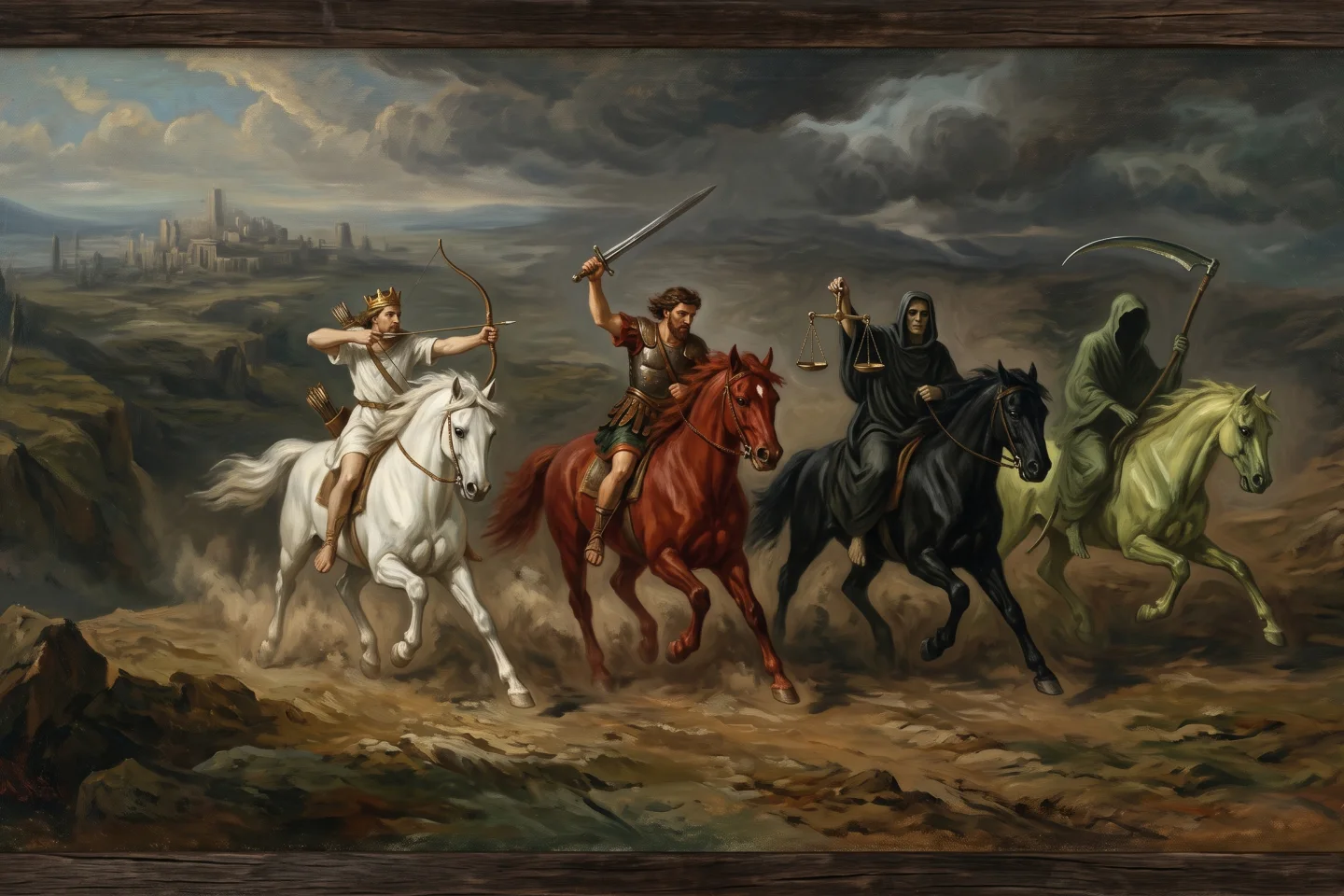
The first seal reveals a white horse. Its rider carries a bow, receives a crown, and goes out conquering. The text describes a drive toward conquest but does not explicitly identify the rider with a specific person. It is therefore safer to state what Revelation says—conquest and granted authority—without turning a debated interpretation into a literal fact.
Revelation 6:1–2
The Second Seal: The Red Horse and the End of Peace
The second horse is fiery red. Its rider is permitted to take peace from the earth and to bring people into violent conflict, and he is given a great sword. The imagery shifts from the expansion associated with the first rider to the open collapse of social peace and the reality of war.
Revelation 6:3–4
The Third Seal: The Black Horse and the Scales of Scarcity
The third rider sits on a black horse and carries scales. A voice in the vision announces high prices for staple foods. The scales and economic language create a picture of scarcity and rationing: food exists, but obtaining it becomes costly, while certain products are specifically protected from harm.
Revelation 6:5–6
The Fourth Seal: The Pale Horse, Death, and Hades
The fourth horse is pale or yellowish. Its rider is named Death, and Hades follows. The passage grants them limited authority over a fourth of the earth through sword, famine, death, and wild animals. The stated limit matters: the devastation is severe, but it is not presented as unlimited power.
Revelation 6:7–8
Prophetic Connections: Zechariah's Chariots and Covenant Judgments
Zechariah also portrays horses of different colors sent out by God, while Ezekiel groups sword, famine, wild beasts, and pestilence among severe judgments. Matthew 24 speaks of wars, famines, and birth pains in a setting of warning. These connections do not make every passage the same vision, but they show that Revelation draws from a recognizable prophetic vocabulary of judgment and suffering.
Zechariah 1:8–10 · Zechariah 6:1–8 · Ezekiel 14:21 · Matthew 24:6–8
Conclusion
The four horsemen form a sequence of warning: conquest, war, scarcity, and death expose how fragile human securities can be. Yet the frame of the vision is decisive: the seals are opened by the Lamb. The passage calls readers to take judgment and suffering seriously without treating them as autonomous chaos outside God’s rule.
Biblical references
- Revelation 6:1–8
- Zechariah 1:8–10
- Zechariah 6:1–8
- Ezekiel 14:21
- Matthew 24:6–8