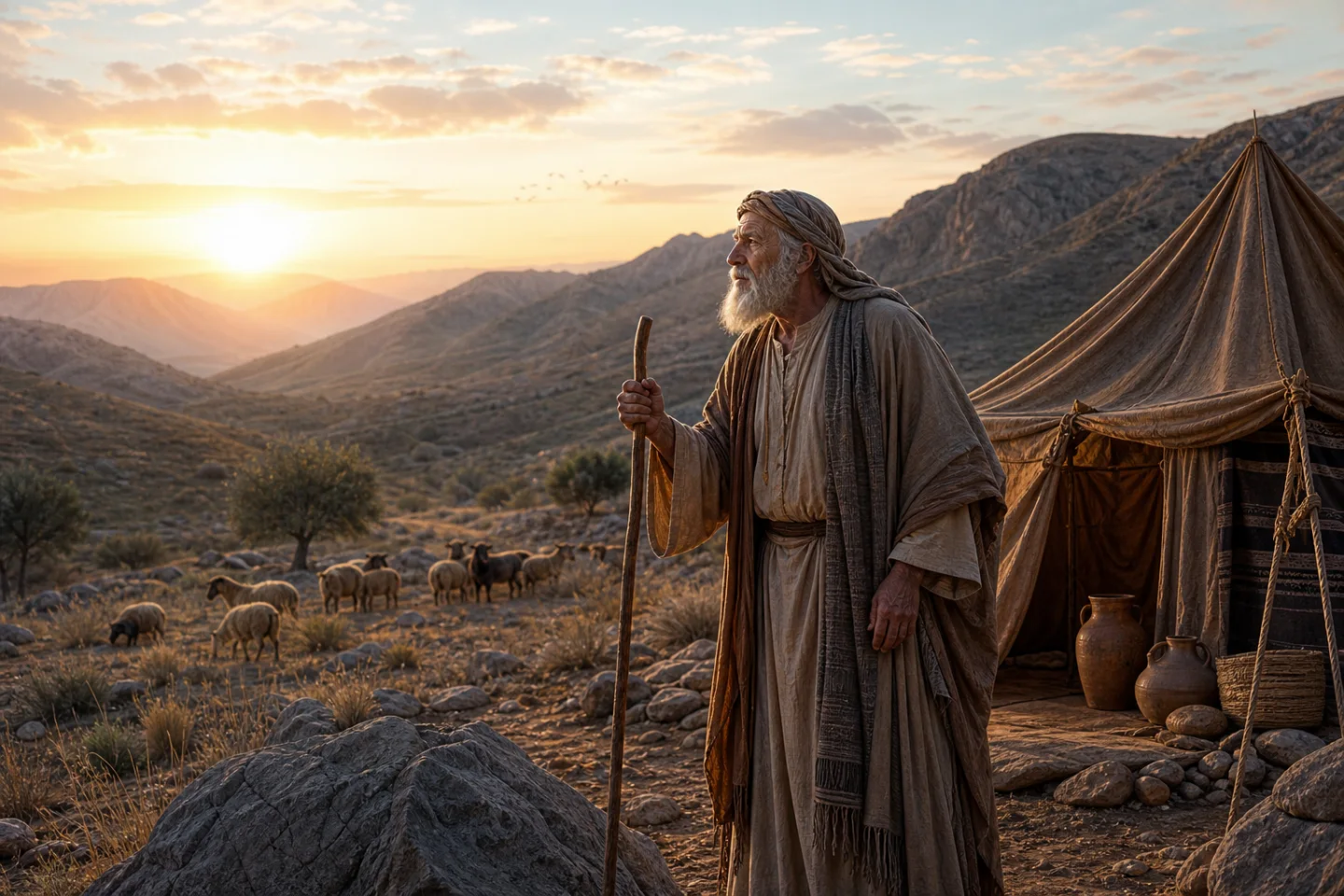
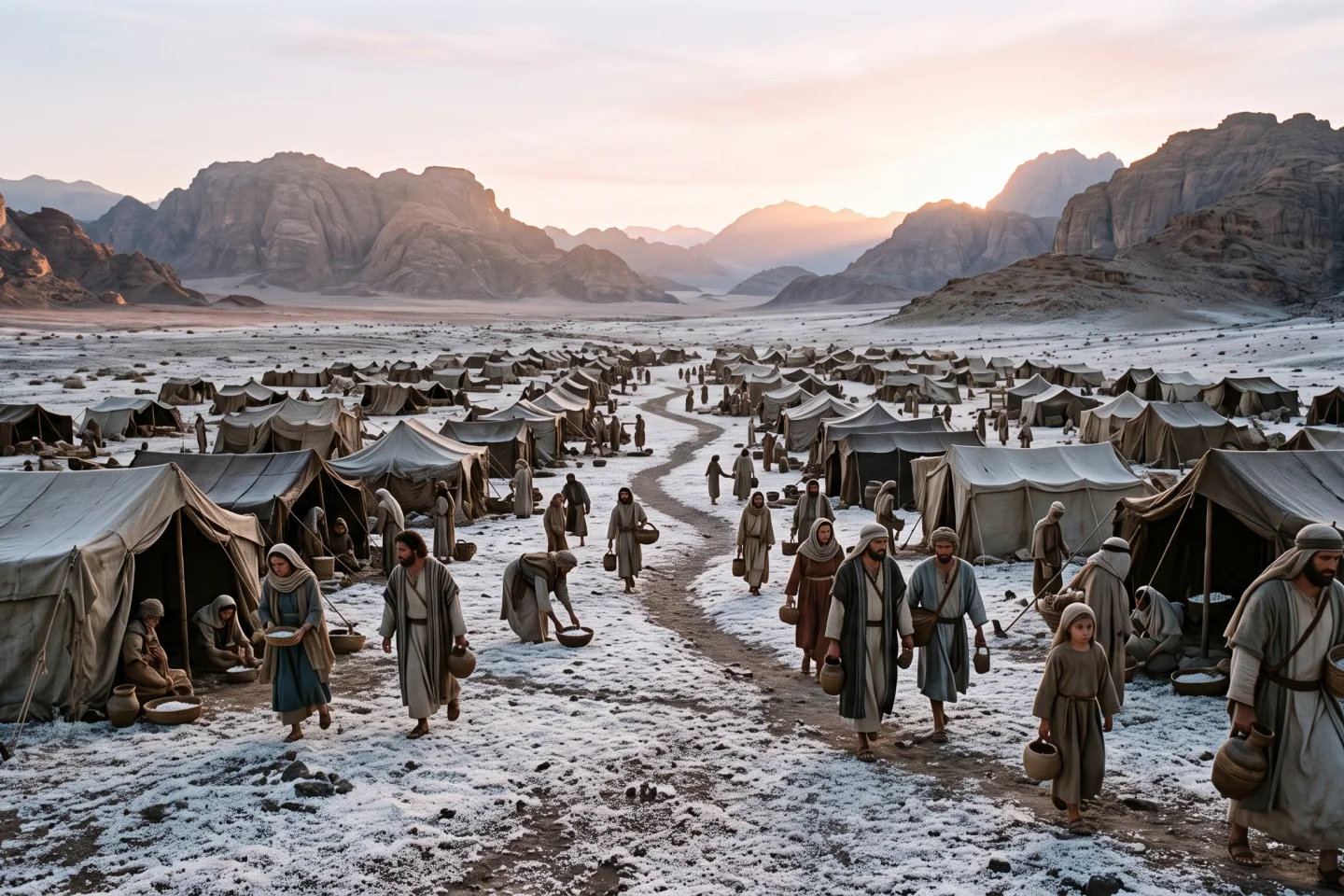
Manna appears in Scripture as God’s concrete answer to a real need: a people recently brought out of Egypt are crossing a wilderness where they cannot sustain themselves by their own resources. The account is about more than food. The way manna is gathered, kept, and received week after week turns daily provision into a school of dependence, obedience, and remembrance. Later biblical texts return to the episode to explain its formative purpose and to present Christ as the true bread that gives life.
Murmuring in the Wilderness of Sin and the Promise of Bread from Heaven
Israel reaches the Wilderness of Sin after experiencing deliverance from Egypt, but hunger gives rise to murmuring. Exodus 16 places the crisis before God and describes his answer: bread from heaven in the morning and meat in the evening. The initiative does not arise from Israel’s self-sufficiency but from divine faithfulness amid human weakness. The provision also shows that God continues to accompany the people he has just rescued.
Exodus 16:1–36
Daily Gathering, the Omer Measure, and the Sabbath Rest
Manna was to be gathered each morning according to each person’s need. The text emphasizes a measured portion and an outcome in which the one who gathered much did not end with excess and the one who gathered little did not lack. Keeping it improperly for the next day led to spoilage, while on the sixth day a double portion was gathered and remained usable for the Sabbath. Numbers adds details about its appearance and preparation. Daily food therefore taught daily trust and respect for the rest God appointed.
Exodus 16:1–36 · Numbers 11:4–9
The Golden Pot of Remembrance and the Cessation of Manna in Gilgal
A portion was to be kept as a memorial for future generations. The episode was not meant to become a forgotten emergency measure; it was to be remembered. Joshua 5 marks the other end of the story. When Israel celebrates Passover in the land and begins to eat its produce, the manna ceases. The extraordinary provision has fulfilled its purpose on the journey, while its memory continues to testify to God’s faithfulness.
Exodus 16:1–36 · Joshua 5:10–12 · Hebrews 9:1–5
The Pedagogical Purpose of the Wilderness: Man Does Not Live by Bread Alone
Deuteronomy interprets the wilderness years as formative. Hunger and provision taught that human life does not depend on material bread alone but on the word and will of God. Nehemiah recalls the same period by stressing that God did not abandon his people’s sustenance during their journey. This reading does not deny physical need; it places that need within a deeper dependence.
Deuteronomy 8:2–5 · Nehemiah 9:15–21
Christ as the True Bread of Life in the New Testament
In John 6, Jesus moves the discussion beyond the ancient food in the wilderness. Manna sustained temporal life, while Jesus presents himself as the bread from heaven who gives eternal life to the believer. This is a christological interpretation of the earlier provision: the sign points beyond itself. First Corinthians likewise rereads the wilderness experience as instruction and warning for the Christian community.
John 6:30–58 · 1 Corinthians 10:1–4
Frequently asked questions
What does the “hidden manna” of Revelation 2:17 mean?
Revelation 2:17 uses the image of “hidden manna” as a promise to the one who overcomes. Within the Bible’s wider manna imagery, it functions as a promise of sustenance and communion granted by Christ rather than a return to the physical food of the wilderness.
Conclusion
Manna displays a faithfulness that accompanies, disciplines, and teaches. In the wilderness it sustained Israel day after day; in the land it ceased because its temporary purpose had been fulfilled. Its biblical meaning remains: life received from God does not rest on human control, and the New Testament directs that lesson toward Christ, presented as the bread of life.
Biblical references
- Exodus 16:1–36
- Numbers 11:4–9
- Joshua 5:10–12
- Deuteronomy 8:2–5
- Nehemiah 9:15–21
- John 6:30–58
- 1 Corinthians 10:1–4
- Hebrews 9:1–5
- Revelation 2:17