Genesis 2 concentrates on humanity within creation. The chapter begins with the completion of God’s creative work and the seventh-day rest, then describes the man, the garden, the command concerning the tree, and the creation of woman. Identity, vocation, moral boundary, and relationship are held together in a text that later biblical writers repeatedly revisit when discussing humanity and marriage.
The Seventh Day and the Completion of Creation
Creation reaches its completion with the seventh day. God ceases from his work, blesses the day, and sanctifies it. The narrative then introduces the account of the heavens and earth and uses the name Yahweh God. Theologically, this shift can be read as a movement from cosmic scale toward a more immediate focus on the Creator’s relationship with humanity. The chapter need not be treated as a rival creation story; it is a concentrated view of human life within the creation already described.
Genesis 2 · Genesis 2:1–3 · Genesis 2:4
Formed from Dust and Placed in Eden
The man is formed from the dust of the ground and receives the breath of life from God. The garden planted in Eden contains beautiful and useful trees, including the tree of life and the tree of the knowledge of good and evil. The text also describes a river dividing into four branches and names Pishon, Gihon, Tigris, and Euphrates. These details give the setting concrete features while the narrative keeps its primary focus on human life, provision, and responsibility within the garden.
Genesis 2 · Genesis 2:7 · Genesis 2:8–14
Work, Guardianship, and a Moral Boundary
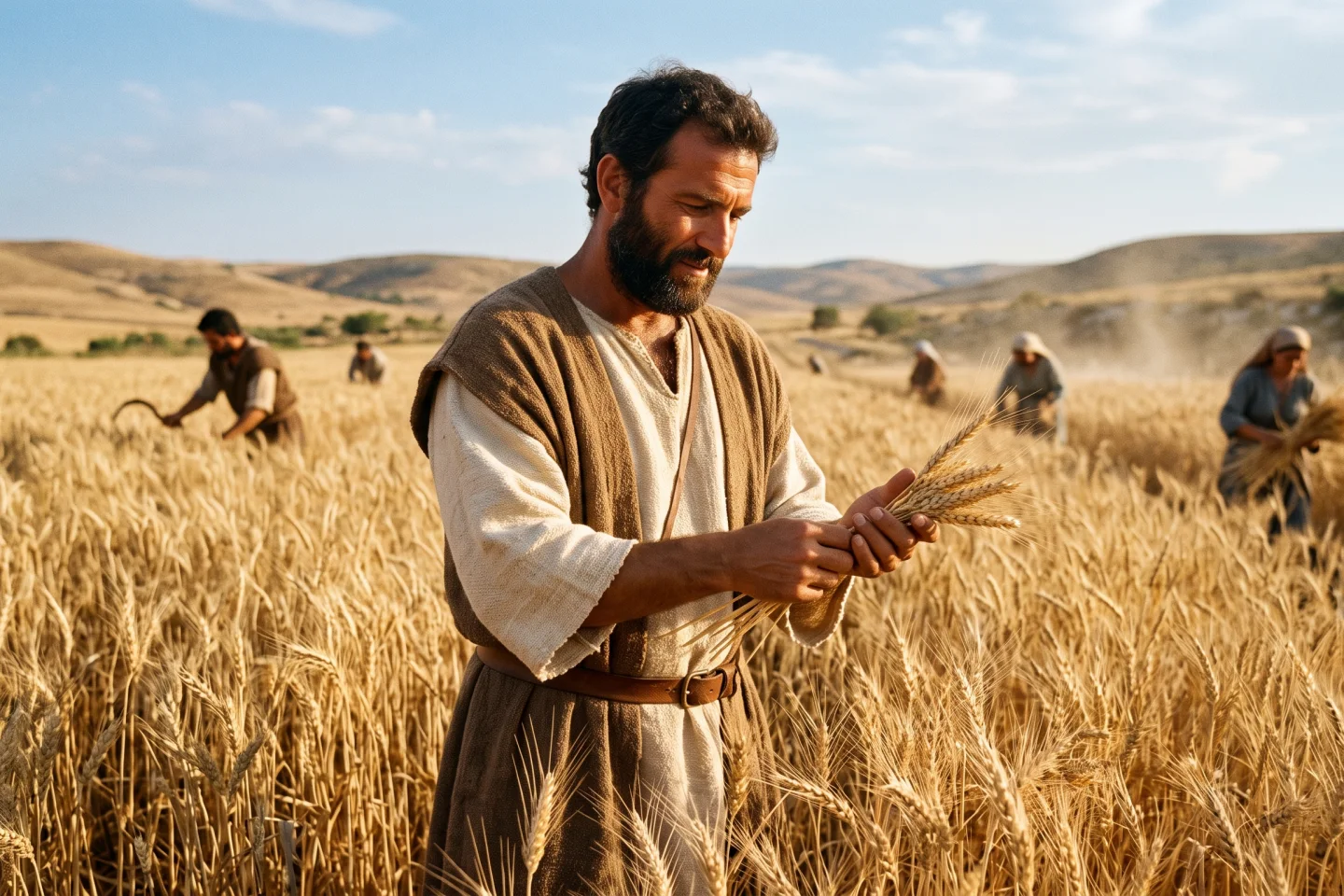
The man is placed in the garden to work it and keep it. Work therefore appears before any account of the fall and belongs to humanity’s original vocation. Alongside responsibility comes a moral boundary: the man may eat from the trees of the garden except the tree of the knowledge of good and evil. Human freedom is not portrayed as absolute autonomy but as received life within a relationship that also includes command.
Genesis 2 · Genesis 2:15–17
Woman, Corresponding Help, and One Flesh
For the first time in the creation narrative something is called not good: the man’s solitude. After the animals are named and no corresponding helper is found, God forms the woman from the man and brings her to him. His response recognizes kinship and correspondence, and the narrative states the pattern of leaving father and mother and being joined to one’s wife as one flesh. Jesus and Paul later appeal to this passage when teaching about marriage.
Genesis 2 · Genesis 2:18–25 · Matthew 19:4–6 · Mark 10:6–9 · Ephesians 5:28–33
The First Adam, Christ, and New Testament Echoes
The New Testament returns to Genesis 2 in several ways. Jesus appeals to the creation design when teaching on marriage, and Paul uses marital union as a point of reference when speaking about Christ and the church. In 1 Corinthians 15, the first man who became a living being is contrasted with Christ as the last Adam. These connections do not replace the narrative meaning of Genesis 2, but they show the chapter’s broad canonical significance for Christian theology.
Matthew 19:4–6 · Mark 10:6–9 · 1 Corinthians 15:45–47 · Ephesians 5:28–33
Conclusion
Genesis 2 portrays humanity as created by God and placed in a world of provision, work, responsibility, and relationship. Eden contains both abundance and boundary; vocation includes care; marriage answers the problem of solitude. Later New Testament references show how foundational these scenes become for thinking about marriage, humanity, and the contrast between Adam and Christ.
Biblical references
- Genesis 2
- Genesis 2:1–3
- Genesis 2:4
- Genesis 2:7
- Genesis 2:8–14
- Genesis 2:15–17
- Genesis 2:18–25
- Matthew 19:4–6
- Mark 10:6–9
- Ephesians 5:28–33
- 1 Corinthians 15:45–47