Genesis 24 is one of the longest narratives in the patriarchal cycle. Abraham is old, and the continuation of the promise now touches Isaac’s future marriage. Oath, prayer, hospitality, family deliberation, and travel all shape the story. The characters make real decisions, yet the servant repeatedly interprets the successful course of the mission as evidence of God’s steadfast mercy and faithfulness.
The Oath: Preserving the Line of Promise
Abraham charges his servant to find a wife for Isaac among his relatives and forbids him to choose a Canaanite woman. At the same time, Isaac must not be taken back to the land Abraham left. The mission therefore holds two concerns together: the marriage must preserve the covenant family, and the heir must remain tied to the promised land. What might otherwise appear to be a private household arrangement is framed as part of the larger history of promise.
Genesis 24:1–9 · Genesis 12:1–3
Prayer at the Well and Rebekah’s Hospitality
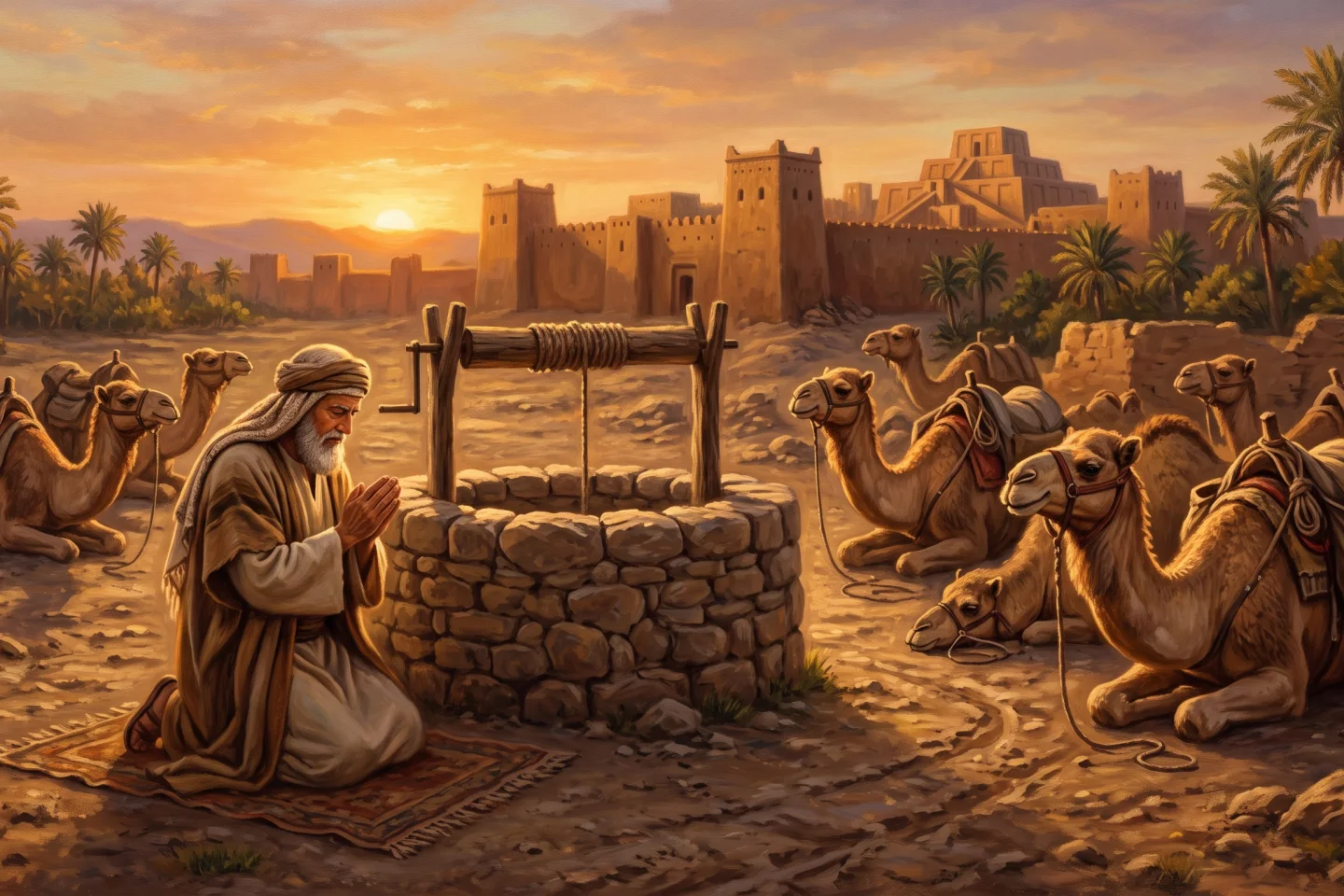
When the servant reaches the region of Nahor, he prays for a sign expressed through concrete service: the chosen young woman would offer water to him and to his camels. Rebekah does exactly that and works until the animals have enough. The servant watches before acting and worships when he learns her family connection. Theologically, the narrative itself attributes the mission’s success to God’s steadfast kindness, while Rebekah’s conduct displays energy, generosity, and initiative.
Genesis 24:10–27
The Servant’s Testimony Before Bethuel and Laban
At the family home, the servant refuses to eat until he explains his mission. He retells Abraham’s blessing, the oath, his prayer, and the encounter at the spring. The family acknowledges that the matter has come from the Lord and agrees that Rebekah may go. The repeated narrative is therefore purposeful: it gives the household the evidence on which they must decide and moves the mission from a private commission to a recognized family agreement.
Genesis 24:28–54
Rebekah’s Decision and the Immediate Departure
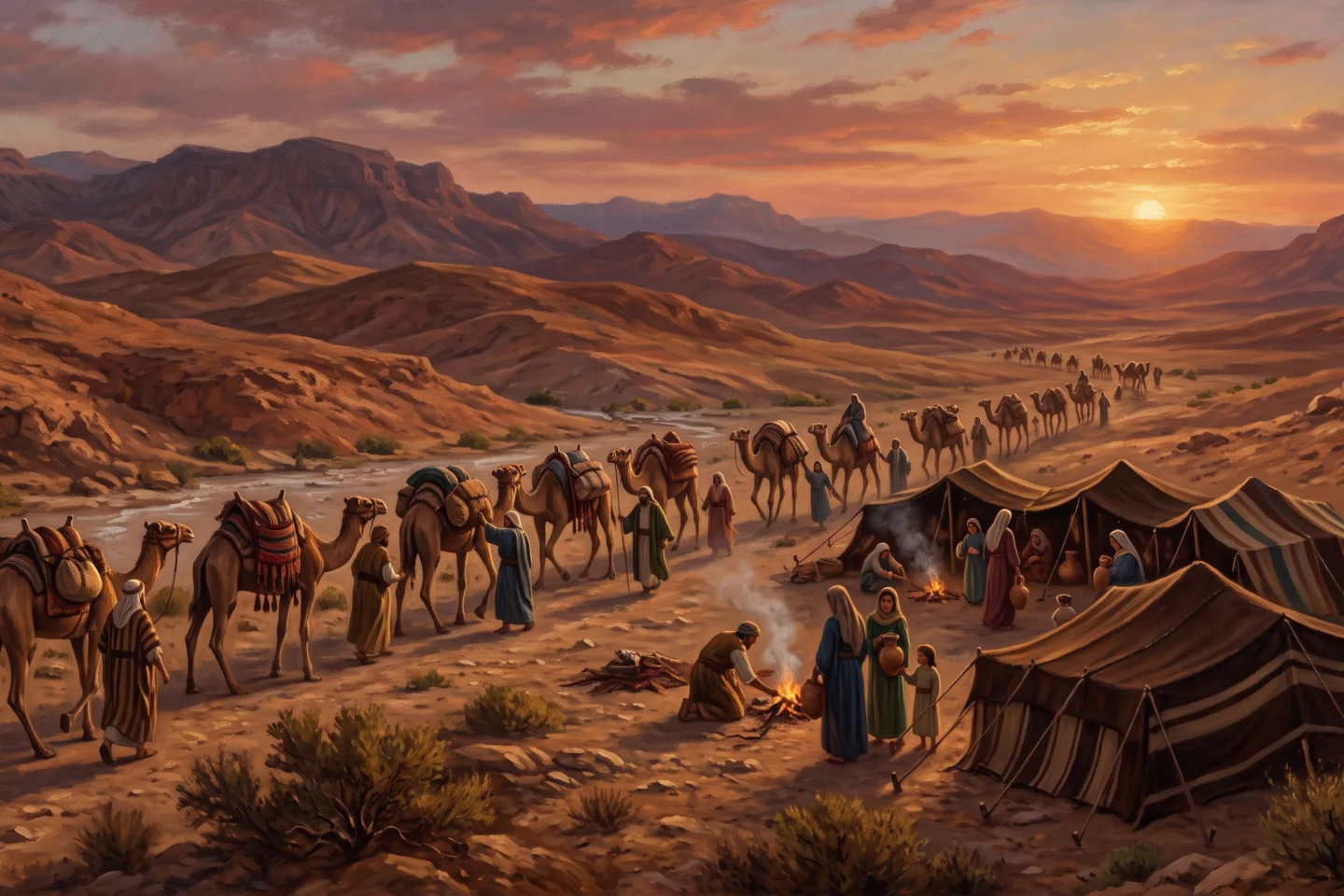
When the family suggests delaying the journey, the servant asks not to be detained. Rebekah is consulted directly and says that she will go. Her own decision stands within the larger family negotiation. Her relatives bless her, and the caravan begins the return journey. After the mission has been recognized and Rebekah has given her consent, the story presents no reason to postpone the next step.
Genesis 24:55–61 · Genesis 22:20–24
The Meeting with Isaac and Consolation After Sarah
The account ends in the Negev. Isaac goes out into the field, sees the approaching caravan, and Rebekah asks who the man coming toward them is. After the servant reports what has happened, Isaac receives Rebekah as his wife. The chapter says that he loved her and was comforted after his mother’s death. The mission Abraham began therefore concludes in a new family union that secures the continuation of Isaac’s line.
Genesis 24:62–67 · Genesis 25:20
Conclusion
Genesis 24 portrays providence not as the cancellation of human responsibility but as the setting in which oaths, prayers, hospitality, decisions, and travel converge. The covenant line continues through the concrete marriage of Isaac and Rebekah, and the story repeatedly credits God’s faithfulness for the path that led to that union.
Biblical references
- Genesis 24:1–9
- Genesis 12:1–3
- Genesis 24:10–27
- Genesis 24:28–54
- Genesis 24:55–61
- Genesis 22:20–24
- Genesis 24:62–67
- Genesis 25:20