Genesis 26 is the chapter in Genesis that most directly places Isaac at the center of the action. A famine creates uncertainty, and God renews the promises previously given to Abraham. Yet Isaac also shows fear, faces envy, and repeatedly loses access to wells before reaching a place of greater room. Covenant faithfulness advances through very ordinary pressures: food, security, water, coexistence, and family.
Famine and the Renewal of the Promise in Gerar
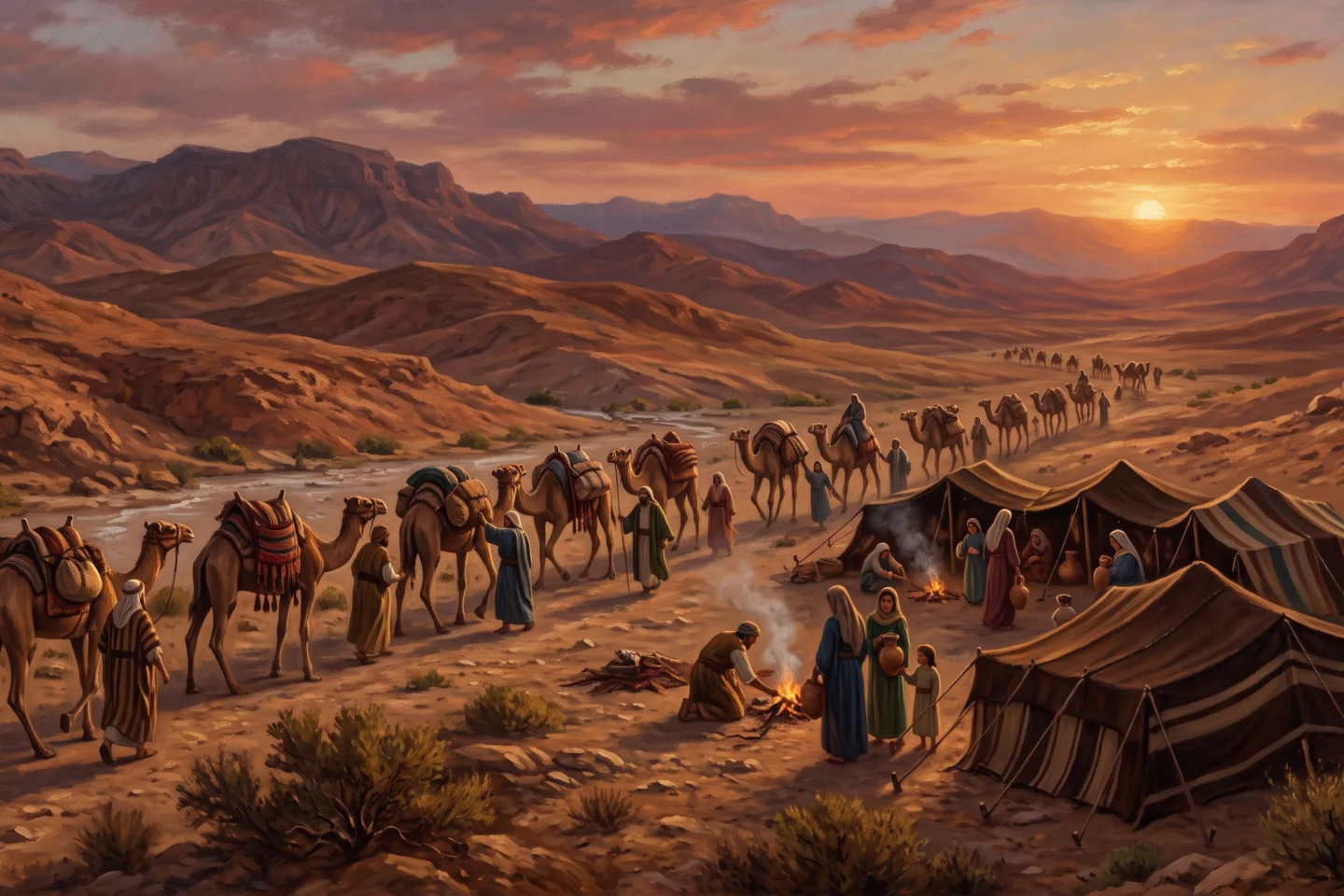
During a new famine, Isaac moves toward Gerar. God tells him not to go down to Egypt and confirms the promises of land, descendants, and blessing previously associated with Abraham. Remaining in the region therefore becomes an act shaped by promise in the middle of economic uncertainty. From the beginning, Isaac’s story is not independent of Abraham’s: the covenant line has entered a new generation, and Isaac must live within that inherited calling.
Genesis 26:1–5 · Genesis 12:1–3 · Genesis 22:15–18
Isaac’s Fear and Rebekah’s Preservation
Isaac fears that the men of the region will kill him because of Rebekah and presents her as his sister. The episode repeats a pattern already seen in Abraham’s life. Abimelech discovers the truth by observing the couple and rebukes Isaac for exposing the community to danger. The repetition prevents the patriarch from being idealized: the covenant continues despite human weakness, and the family is preserved even though Isaac’s own decision was driven by fear and deception.
Genesis 26:6–11 · Genesis 12:10–20 · Genesis 20:1–18
Prosperity, Envy, and the Disputes over Wells
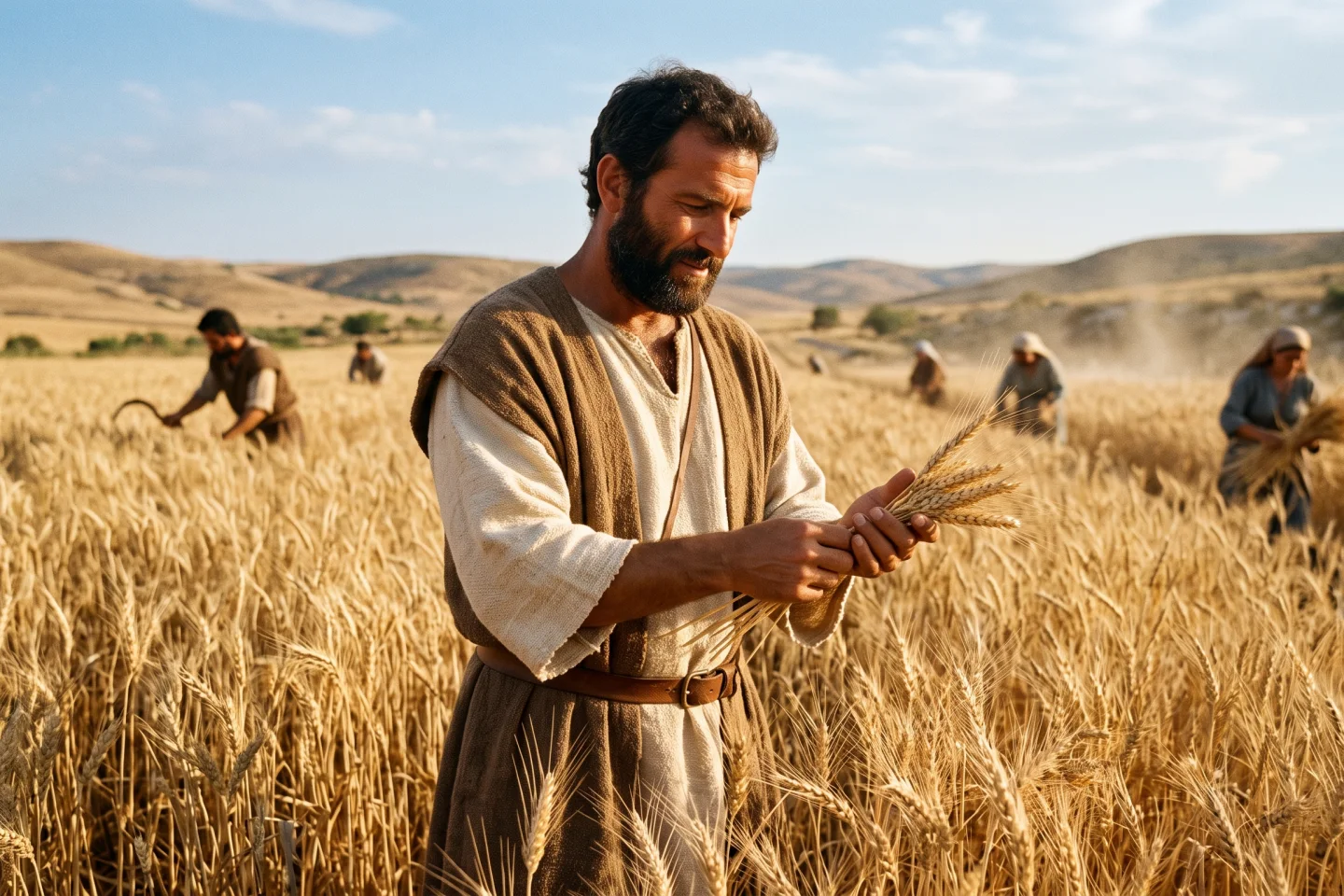
Isaac sows and receives an extraordinary harvest, while his possessions increase until the Philistines become envious. Wells dug in Abraham’s time are stopped up, and new wells create fresh disputes as Isaac moves through the region. The names Esek and Sitnah preserve the memory of conflict; Rehoboth marks a change because no quarrel occurs there. Prosperity therefore arrives together with social tension, and Isaac repeatedly chooses distance over escalation.
Genesis 26:12–22
Beersheba: Altar, Promise, and a Covenant of Peace
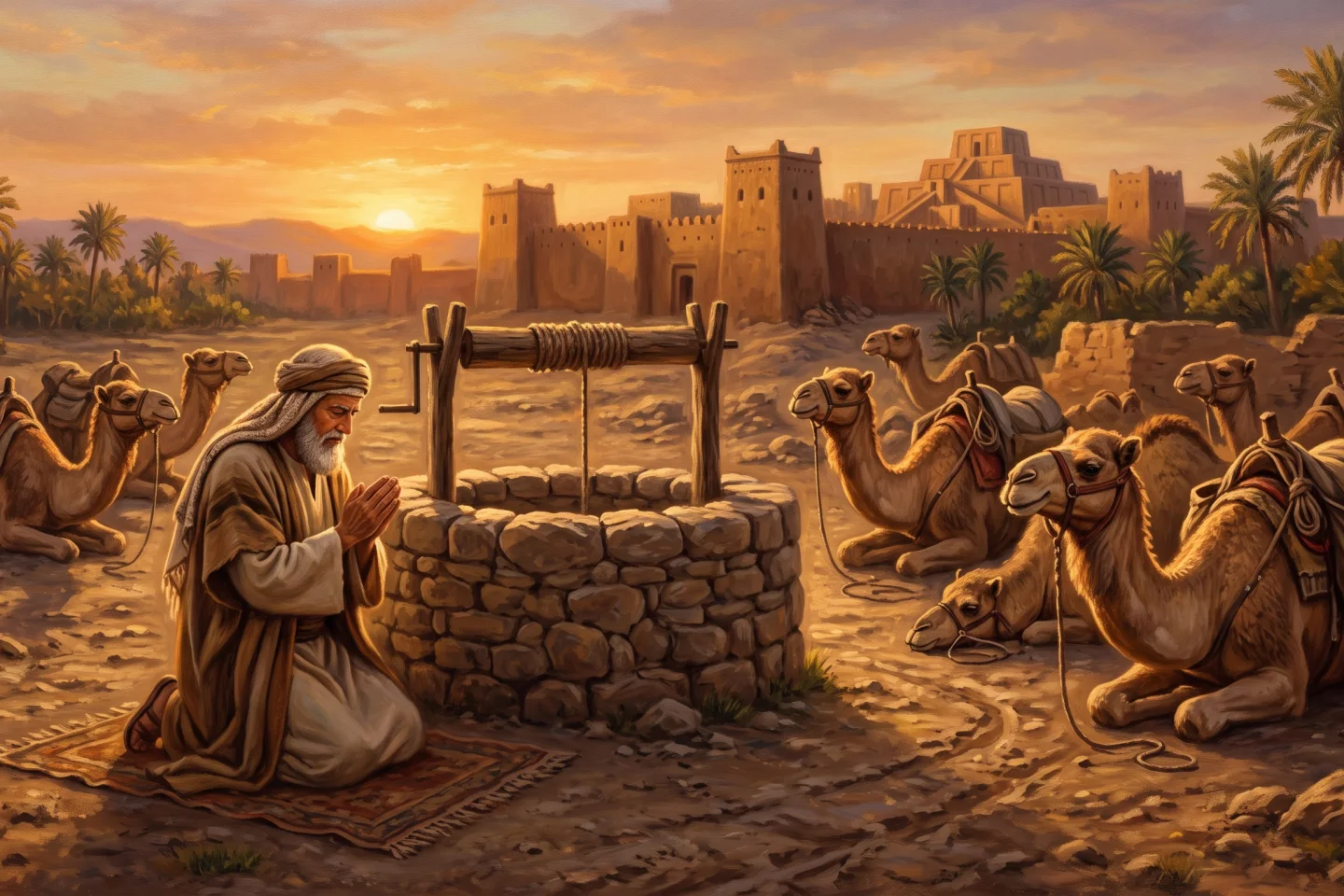
At Beersheba God appears again to Isaac and promises his presence and blessing. Isaac responds by building an altar and calling on the Lord. Soon afterward Abimelech and his companions arrive seeking a treaty, acknowledging that God’s blessing is evident in Isaac’s life. A relationship marked by friction is transformed into a formal agreement of peace. Revelation, worship, and social reconciliation stand together without erasing the conflicts that made the treaty necessary.
Genesis 26:23–33 · Genesis 21:22–34
Esau’s Marriages and Family Grief
The chapter closes with a family note that prepares later conflict. Esau marries Hittite women, and the marriages cause grief to Isaac and Rebekah. The notice links the end of Genesis 26 with the marital concerns that will soon lead Jacob to seek a wife among the wider family. The tension is no longer about Philistines or wells but about the future within the household that carries the promise.
Genesis 26:34–35 · Genesis 28:1–5
Conclusion
Genesis 26 presents Isaac as the true heir of Abraham’s promises without turning him into an idealized figure. God renews the covenant, the land yields abundantly, opponents recognize Isaac’s prosperity, and peace is eventually established; yet fear, conflict, and family pain remain. The promise moves forward because of the faithfulness the narrative attributes to God amid human weakness.
Biblical references
- Genesis 26:1–5
- Genesis 12:1–3
- Genesis 22:15–18
- Genesis 26:6–11
- Genesis 12:10–20
- Genesis 20:1–18
- Genesis 26:12–22
- Genesis 26:23–33
- Genesis 21:22–34
- Genesis 26:34–35
- Genesis 28:1–5