
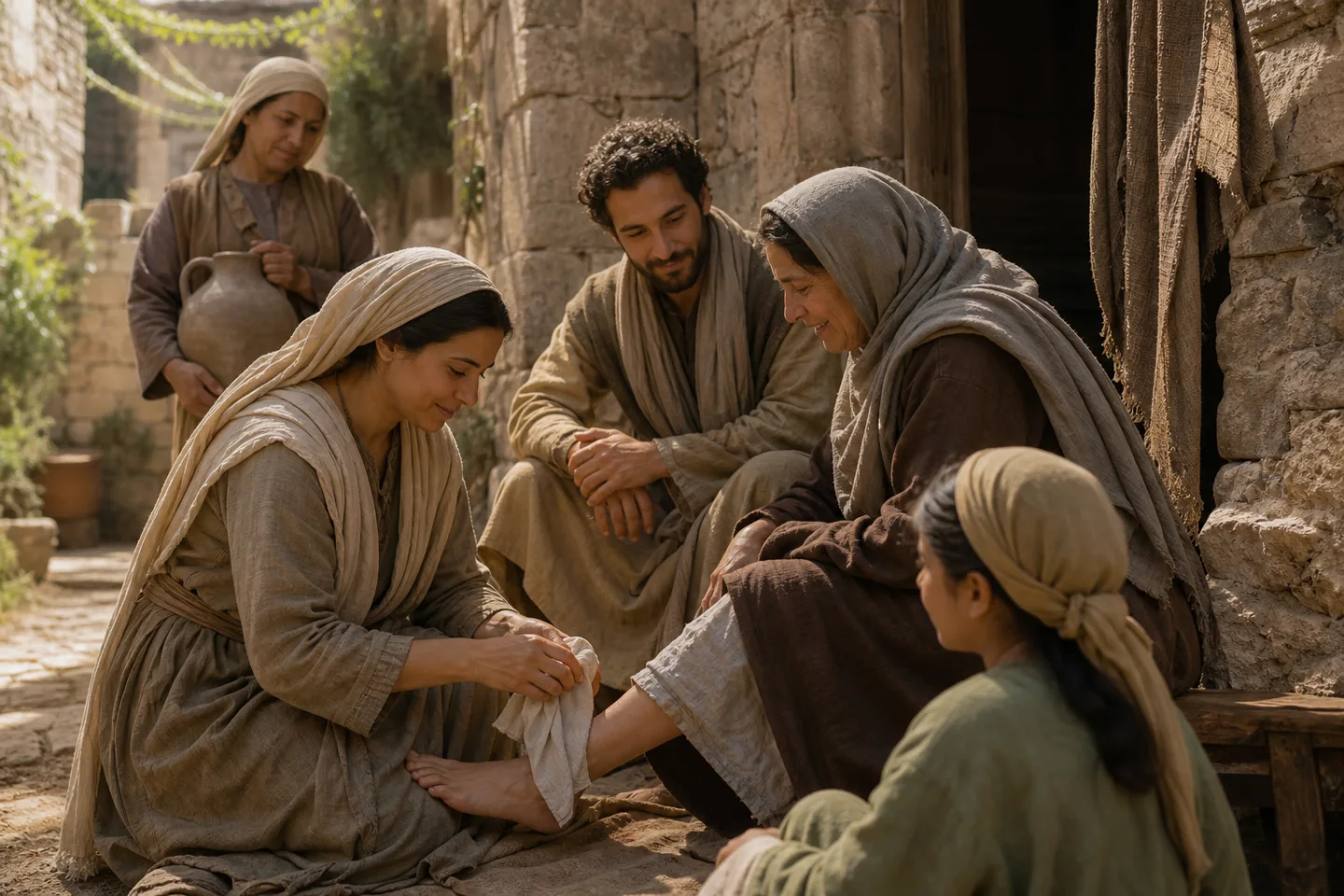
“The fruit of the Spirit” is often reduced to a list to memorize, but Paul places it inside a much larger argument. Galatians discusses freedom, the failure of seeking justification through law, the conflict between flesh and Spirit, and relationships that can be damaged by jealousy, rivalry, anger, and division. The nine qualities in Galatians 5:22–23 are not nine unrelated medals. Together they describe what life begins to look like when God’s Spirit reshapes desires, relationships, and decisions.
The Fruit of the Spirit in Galatians 5:22–23
Galatians 5:22–23 names love, joy, peace, patience, kindness, goodness, faithfulness, gentleness, and self-control. The list comes after the command to walk by the Spirit and before the call to keep in step with the Spirit. That placement matters. Paul is not presenting detached virtues but the outcome of a life whose direction is being shaped by the Spirit. The expression also uses “fruit” in the singular. It is therefore reasonable to view the qualities as an integrated pattern before treating them as nine separate projects in which people collect moral points.
Gálatas 5:16–26 · Gálatas 5:22–23
Why Paul Contrasts the Fruit with the Works of the Flesh
The contrast with the works of the flesh gives the fruit its sharpest context. Galatians 5 includes sexual sin, idolatry, and drunkenness, but it also names patterns that destroy community: hostility, strife, jealousy, fits of anger, rivalry, and division. Spirituality therefore cannot be reduced to private experiences. A Spirit-led life is visible in the way people treat one another. Paul has already connected Christian freedom with serving one another through love in Galatians 5:13–14. The fruit of the Spirit describes what that redirected freedom begins to look like in practice.
Gálatas 5:13–21 · Gálatas 5:24–26 · Romanos 8:5–14 · Gálatas 5:16–26 · Gálatas 5:19–23
One Fruit, Not Nine Independent Spiritual Achievements
Thinking in terms of an integrated fruit helps avoid two mistakes. One is turning the list into a moral competition, where someone boasts about a few strengths while ignoring damage in other areas. The other is imagining growth happens without human participation. Galatians calls believers to walk by the Spirit, while John 15 connects fruitfulness with remaining in Christ. Transformation is not produced independently from the source of life, but neither is the believer described as passive. The image points to dependence, abiding, and sustained obedience through which character is reshaped.
Gálatas 5:19–25 · Juan 15:1–8 · 2 Corintios 3:17–18 · Gálatas 5:19–23 · Gálatas 5:24–26 · Juan 15:16
What Each Fruit of the Spirit Means
The nine qualities interpret one another. Love heads the list and directs the good toward others. Joy is more than excitement, and peace is more than the absence of conflict; both are connected with hope and trust in God. Patience, kindness, and goodness describe a disposition that endures, treats others generously, and actively seeks what is good. Faithfulness points toward reliability; gentleness is not weakness but strength governed without proud aggression; self-control concerns ordered desires and reactions. English translations sometimes vary slightly in wording, yet the whole list still moves toward a coherent pattern of character.
Gálatas 5:22–23 · 1 Corintios 13:1–13 · Romanos 5:1–5 · Filipenses 4:4–7 · Efesios 4:1–3 · Colosenses 3:12–14 · Santiago 5:7–11 · 2 Timoteo 1:7 · 2 Pedro 1:5–8 · Romanos 15:13 · Gálatas 6:1–2 · Colosenses 3:12–13 · 2 Pedro 1:3–8
What the Fruit of the Spirit Is Not
The fruit of the Spirit should not be confused with spiritual gifts. Gifts concern capacities and functions distributed within the community; fruit describes qualities of character that should mark Spirit-led life. Nor is fruit simply temperament. A naturally quiet person still needs love and gentleness formed by God, while an intense personality is not excluded from self-control. Finally, the list is not a new system for earning acceptance with God. Galatians strongly opposes seeking justification through law. Fruit is the consequence of grace and the visible direction of a life responding to that grace.
Gálatas 3:1–14 · Gálatas 5:13–18 · Gálatas 5:22–23 · 1 Corintios 13:1–3 · Gálatas 5:22–26 · 1 Corintios 13:1–13 · Colosenses 3:12–14
How to Grow in the Fruit of the Spirit Without Turning It Into Self-Improvement
Cultivating fruit begins with dependence rather than moral cosmetics. Remaining in Christ, receiving Scripture, praying, confessing sin, and living within a community where others can correct and support us all belong to that life. Galatians 5 also invites concrete examination: how do we respond when contradicted, what happens when jealousy rises, how is anger handled, do we pursue good when nobody applauds, and do desires rule us or are they being governed? Growth is not achieved by repeating nine virtue names. It becomes visible as those qualities reshape actual relationships, habits, and choices.
Juan 15:4–5 · Gálatas 5:25–26 · Gálatas 6:1–2 · Colosenses 3:12–17 · Filipenses 1:9–11 · Gálatas 5:13–15 · Gálatas 5:19–26 · Gálatas 6:1–10 · Gálatas 5:16–18 · Gálatas 5:25
Conclusion
The fruit of the Spirit is not a scorecard for comparing Christians and not a self-improvement technique. It is a portrait of a life learning to remain in Christ and walk by the Spirit. Its evidence appears especially in ordinary relationships, reactions, and choices: loving, persevering, doing good, responding gently, and practicing self-control. Growth may be gradual, but its direction matters.
Biblical references
- Gálatas 5:16–26
- Gálatas 5:22–23
- Gálatas 5:13–21
- Gálatas 5:24–26
- Romanos 8:5–14
- Gálatas 5:19–23
- Gálatas 5:19–25
- Juan 15:1–8
- 2 Corintios 3:17–18
- Juan 15:16
- 1 Corintios 13:1–13
- Romanos 5:1–5
- Filipenses 4:4–7
- Efesios 4:1–3
- Colosenses 3:12–14
- Santiago 5:7–11
- 2 Timoteo 1:7
- 2 Pedro 1:5–8
- Romanos 15:13
- Gálatas 6:1–2
- Colosenses 3:12–13
- 2 Pedro 1:3–8
- Gálatas 3:1–14
- Gálatas 5:13–18
- 1 Corintios 13:1–3
- Gálatas 5:22–26
- Juan 15:4–5
- Gálatas 5:25–26
- Colosenses 3:12–17
- Filipenses 1:9–11
- Gálatas 5:13–15
- Gálatas 5:19–26
- Gálatas 6:1–10
- Gálatas 5:16–18
- Gálatas 5:25