Exodus tells far more than Israel’s departure from Egypt. The book begins under oppression and ends with the glory of God filling the tabernacle. Between those points stand Moses’ call, Passover, the crossing of the Red Sea, wilderness provision, the Sinai covenant, the crisis of the golden calf, and the construction of the sanctuary. Deliverance is the beginning of a story that leads to a community called to live under covenant and in God’s presence.
From Oppression to Divine Commission: The Cry of Israel and the Revelation of the Name
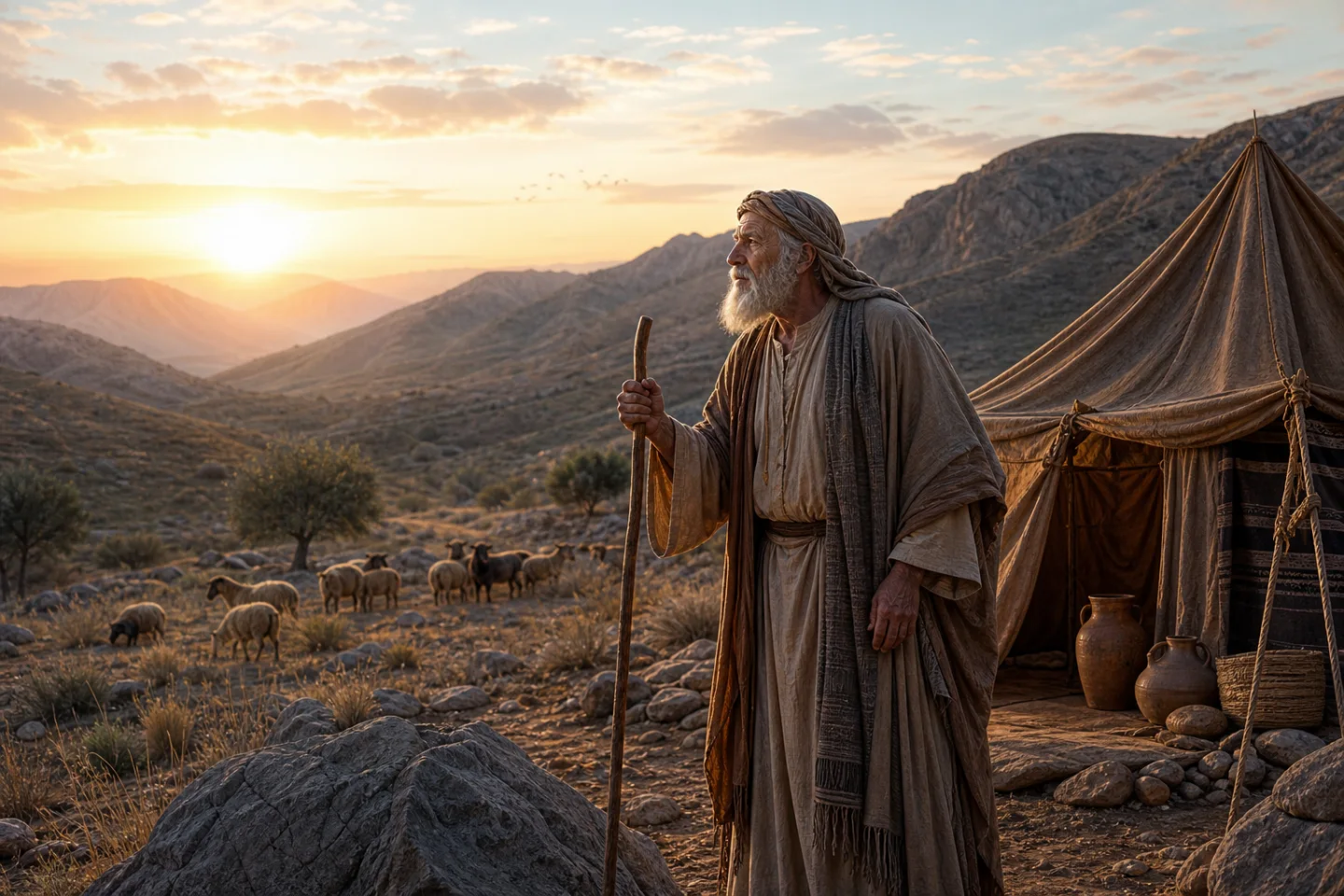
Exodus opens with a changed situation for Israel’s descendants: Joseph’s memory has disappeared from the royal court, and the Hebrew population is subjected to hard labor. The people’s cry is connected with God’s remembrance of the covenant. At Horeb, God calls Moses from the burning bush, reveals his memorial name, and sends him before Pharaoh with the promise of bringing the people out of bondage.
Exodus 1:1–22 · Exodus 3:1–22 · Exodus 6:1–8
Redemption by Blood and Power: Passover and the Crossing of the Red Sea
Passover marks the night of departure. The blood on Israelite houses functions as a sign amid judgment on Egypt. Soon afterward the people are trapped between Pharaoh’s army and the sea. Exodus 14 narrates the opening of the waters and Israel’s crossing; Exodus 15 answers with a song of victory. Theologically, deliverance is linked both with rescue through blood and with God’s power to open a path where none existed.
Exodus 12:1–36 · Exodus 14:1–31 · Exodus 15:1–21
The Testing Ground: Daily Bread, Living Water, and Divine Preservation in the Wilderness
The wilderness quickly reveals new needs. Exodus 16 presents hunger, murmuring, quail, and manna; Exodus 17 presents thirst and water from the rock at Horeb. Provision does not remove testing, but it sustains the people through it. The journey toward Sinai becomes a school of dependence in which Israel learns that freedom from Egypt does not mean self-sufficiency.
Exodus 16:1–15 · Exodus 17:1–7
The Sinai Covenant: The Moral Law and the Solemn Ratification of the Treaty
At Sinai, God calls Israel to be a kingdom of priests and a holy nation. The giving of the Decalogue and the ratification in Exodus 24 show that the rescued people’s relationship with God includes covenant obligations. The law does not appear as the means of escaping Egypt; it comes after deliverance and orders the life of the community brought out of slavery.
Exodus 19:1–25 · Exodus 20:1–21 · Exodus 24:1–18
The Broken Covenant and Restored Mercy: The Golden Calf and Moses’ Intercession
The golden calf episode shows the seriousness of covenant rupture. Moses descends, the tablets are broken, and the people face the consequences of apostasy. Yet the account continues with intercession, a renewed pursuit of God’s presence, and covenant renewal. Exodus 34 holds mercy and justice together in the proclamation of God’s character.
Exodus 32:1–35 · Exodus 33:12–23 · Exodus 34:1–10
The Tabernacle: Sacred Craftsmanship and the Indwelling of Divine Glory
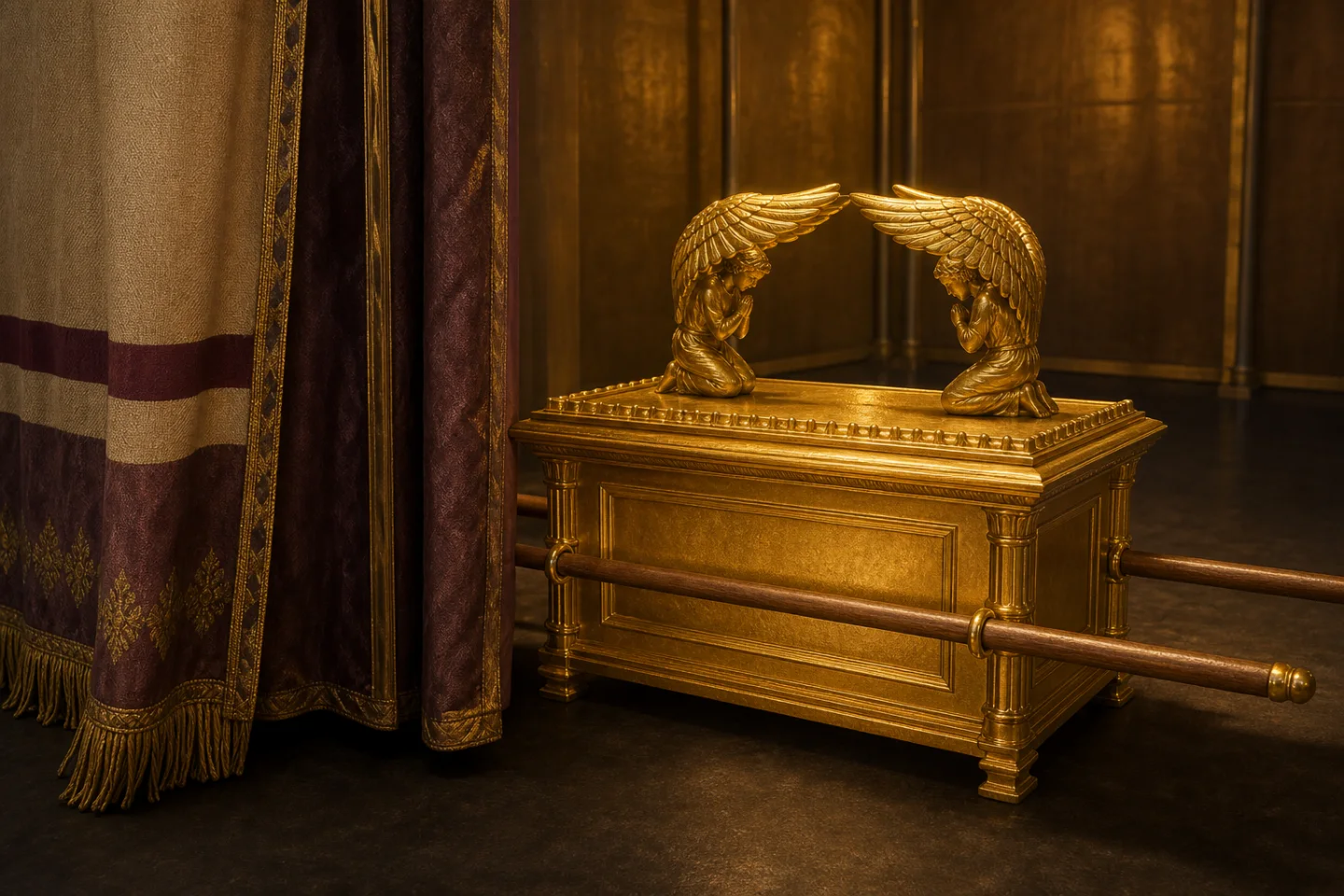
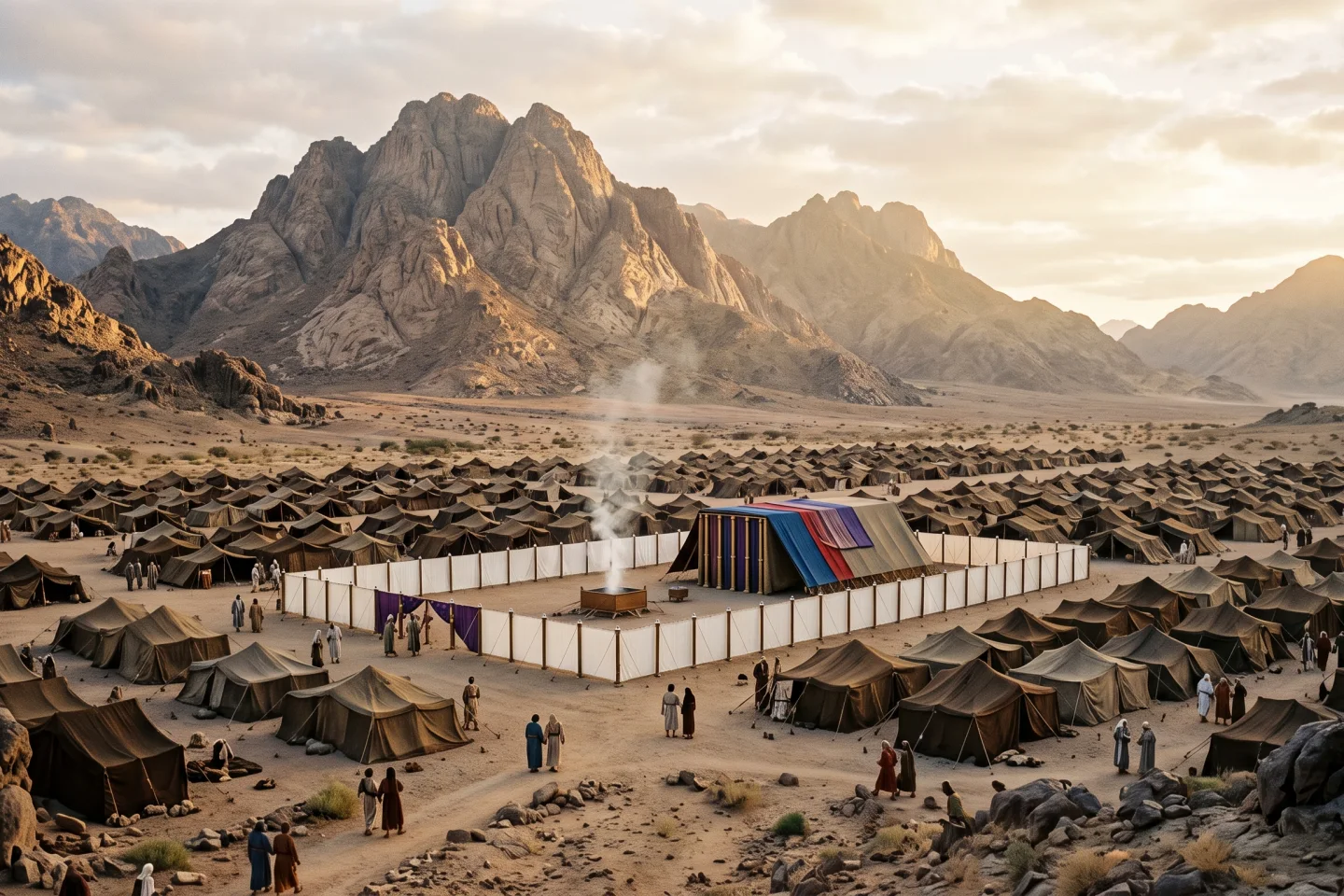
The book’s final major movement centers on the sanctuary. God commands the building of a place for him to dwell among the people, craftsmen are equipped for the work, and the tabernacle is finally erected. Exodus ends when the cloud covers the tent and the Lord’s glory fills it. The narrative therefore moves from bondage to divine presence in the midst of a redeemed community.
Exodus 25:1–9 · Exodus 35:30–35 · Exodus 40:1–38
Conclusion
Exodus presents redemption as a movement with a destination: God hears, delivers, guides, covenants, forgives, and dwells among his people. The departure from Egypt is decisive, but the book does not end on the seashore. It ends at the tabernacle, where divine presence shows that rescue is ordered toward communion, worship, and life under covenant.
Biblical references
- Exodus 1:1–22
- Exodus 3:1–22
- Exodus 6:1–8
- Exodus 12:1–36
- Exodus 14:1–31
- Exodus 15:1–21
- Exodus 16:1–15
- Exodus 17:1–7
- Exodus 19:1–25
- Exodus 20:1–21
- Exodus 24:1–18
- Exodus 25:1–9
- Exodus 32:1–35
- Exodus 33:12–23
- Exodus 34:1–10
- Exodus 35:30–35
- Exodus 40:1–38