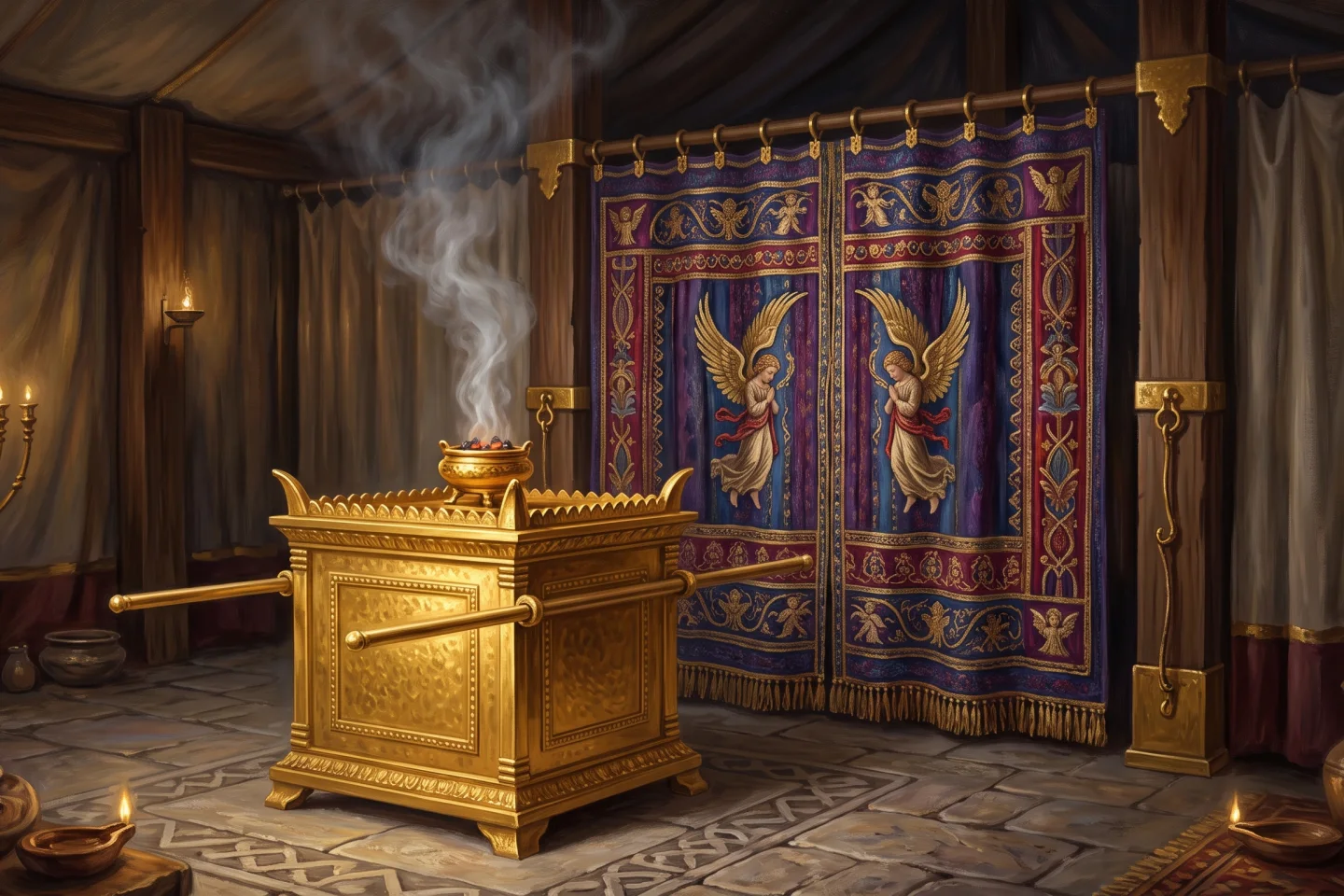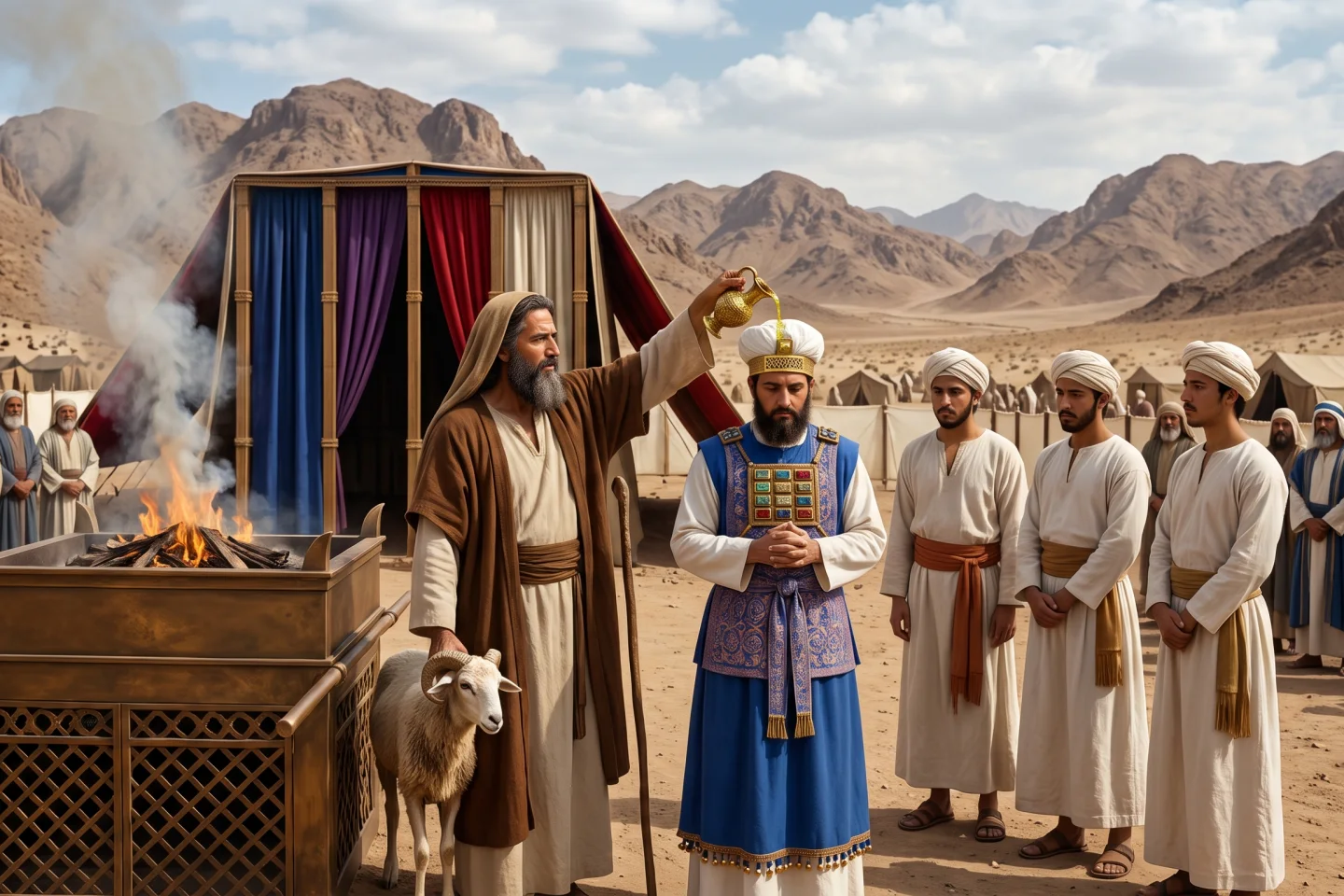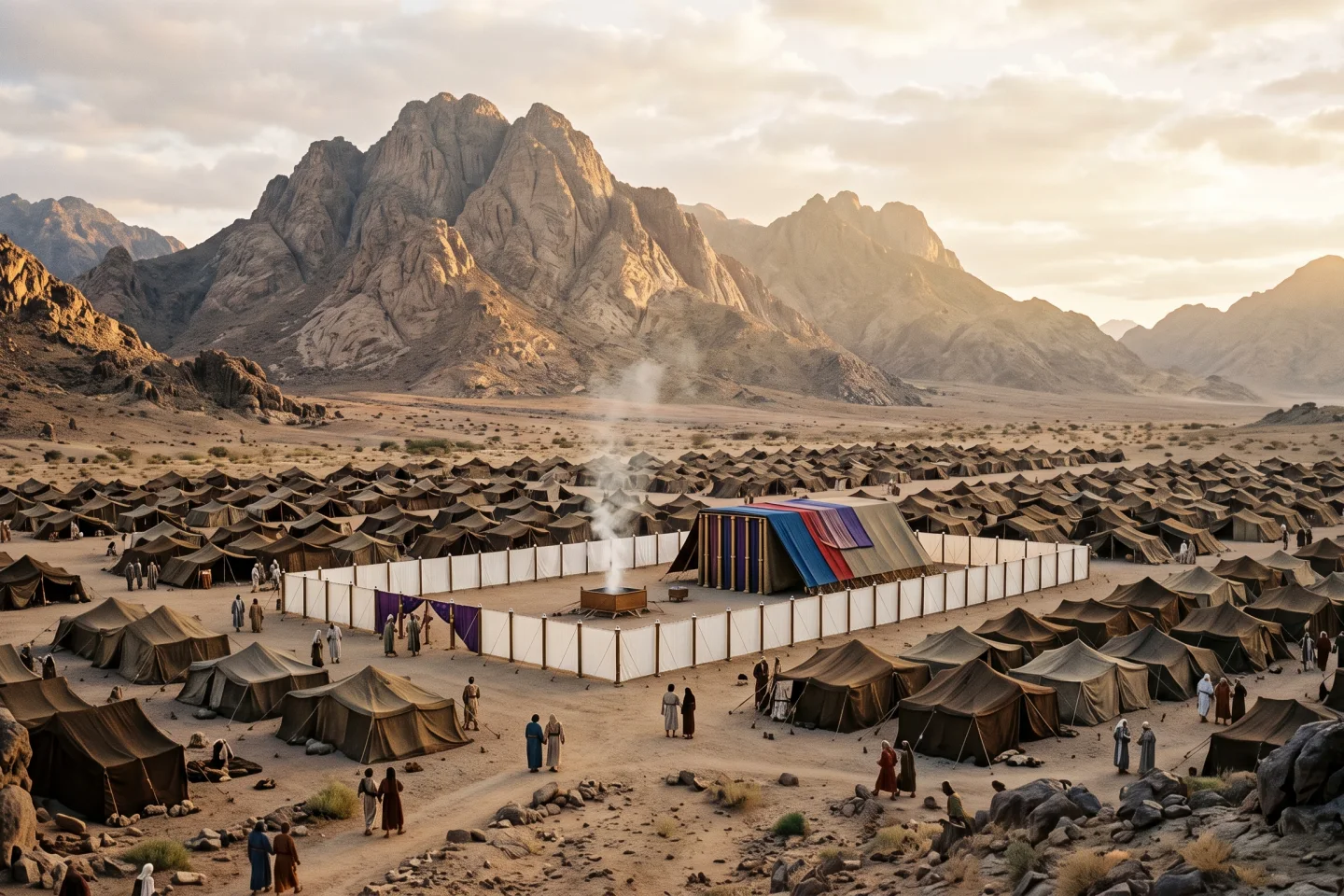
Exodus 28 moves from the structure of the sanctuary to the people who will serve within it. Aaron and his sons are set apart for the priesthood and receive garments designed for sacred ministry. The chapter pays close attention to materials, names, stones, colors, and individual pieces. Together, the garments communicate that priestly service represents the people before God and requires consecration and reverence.
The Priestly Calling and the Purpose of the Garments
God commands that Aaron and his sons be set apart from Israel to serve as priests. Their clothing is not a matter of private taste but part of the institution of the office, and skilled craftsmen are assigned to make it. The text associates the garments with honor and beauty, while a theological reading sees them as visible signs of the dignity of sacred service. Priestly authority therefore begins with divine appointment rather than with the clothing itself.
Exodus 28:1–5 · Hebrews 5:1–4
The Ephod and Breastpiece: Israel on Shoulders and Heart
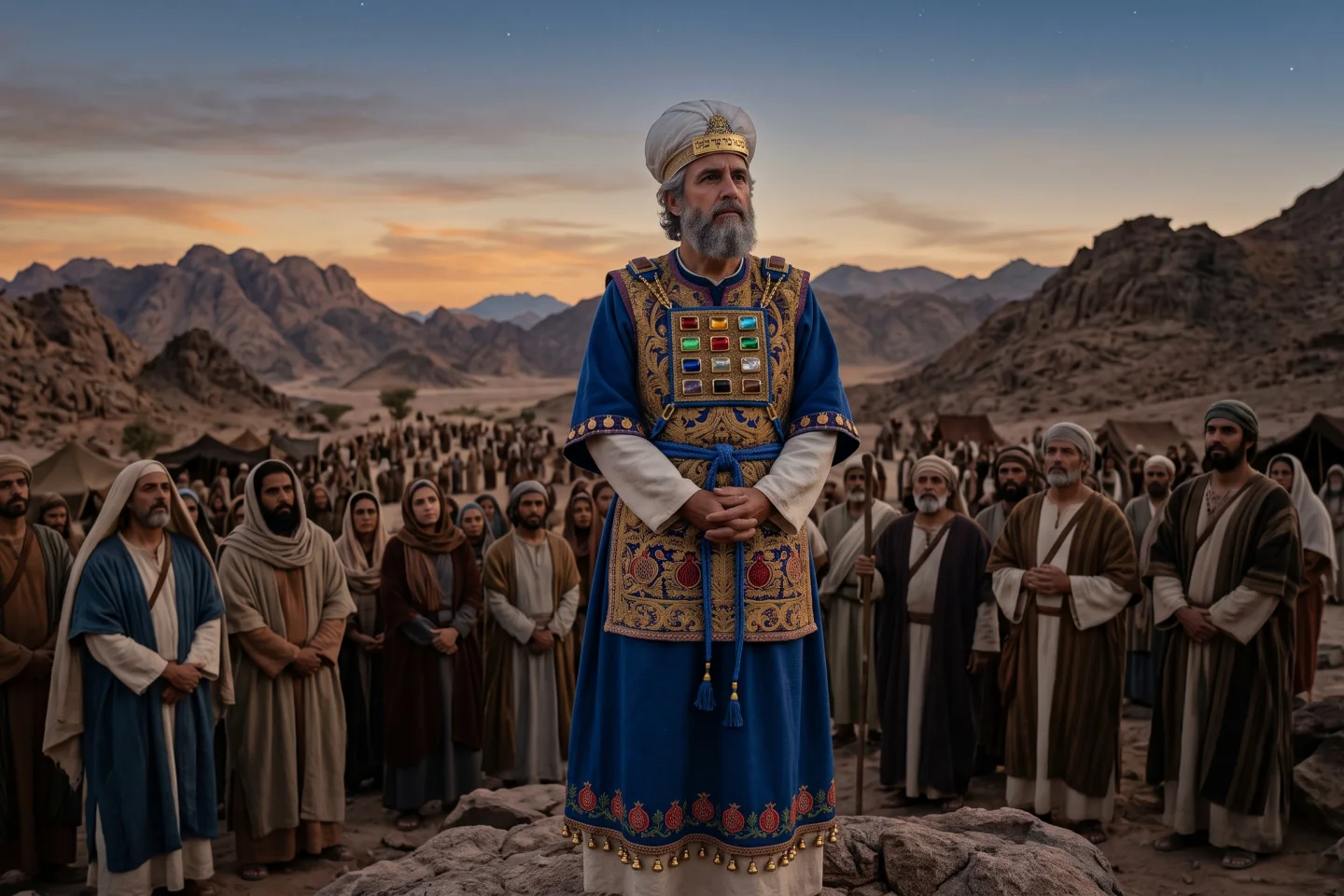
The ephod carried onyx stones engraved with the names of the tribes, while the breastpiece displayed twelve precious stones. The high priest thus entered service bearing a memorial of Israel on his shoulders and over his heart. This arrangement supports the theological understanding of the priest as a corporate representative of the people. The breastpiece also contained the Urim and Thummim, associated elsewhere in Scripture with decisions and inquiry in Israel’s life.
Exodus 28:6–30 · Numbers 27:21
The Blue Robe and the Golden Plate
The blue robe carried pomegranates and bells around its hem. The text connects the sound of the bells with the priest’s entrance and exit from the holy place and with the preservation of his life. A golden plate bearing a declaration of holiness was attached to the turban. Theologically, the plate expresses the priest’s consecration and his role concerning faults connected with sacred offerings. The clothing makes clear that approaching the sanctuary was never ordinary or casual.
Exodus 28:31–38
Garments for Aaron’s Sons and Reverence in Service
The instructions also cover the priests serving with Aaron. Tunics, sashes, headgear, and linen garments covered them during ministry. The chapter explicitly associates failure to observe certain clothing requirements with guilt and danger of death. Priestly dress therefore does not function as decoration detached from vocation; it belongs to a network of boundaries teaching order, modesty, and reverence before divine holiness.
Exodus 28:39–43 · Leviticus 16:2–4
Conclusion
Exodus 28 presents priestly garments as an integral part of the ministry of Aaron and his sons. They distinguish the office, carry the memory of the tribes, express consecration, and establish concrete boundaries for approaching the sanctuary. The dignity of priesthood is therefore rooted in a calling and instructions received from God rather than in personal status.
Biblical references
- Exodus 28:1–5
- Hebrews 5:1–4
- Exodus 28:6–30
- Numbers 27:21
- Exodus 28:31–38
- Exodus 28:39–43
- Leviticus 16:2–4