A covenant is easier to misunderstand when it is reduced to a slogan. The biblical passages need their own questions: who is making the commitment, who receives it, what is promised, and what response is named? Genesis 9:8–17 and Exodus 19:3–6 explicitly speak of covenant. Genesis 15:1–6 contributes a closely related scene of promise and faith in Abram's life. Taken together, these texts allow a working description of covenant as a commitment establishing a relationship. They do not justify assuming that every covenant has the same terms. This is a focused reading of three passages, not a catalogue of every biblical covenant or a full account of the new covenant.
Start with what God actually promises
God speaks to Noah and his sons in Genesis 9. He includes their offspring and every living creature with them: birds, livestock, and the other animals of the earth. The passage repeatedly returns to this breadth. Its horizon is not confined to one person's private experience; it includes life beyond the human family.
The commitment has a particular content. All flesh will not again be cut off by the waters of a flood, and there will not again be a flood to destroy the earth. That is more precise than a promise that no flood, loss, or painful event will ever occur. Keeping the wording in view prevents a reader from asking the passage to guarantee something it does not say.
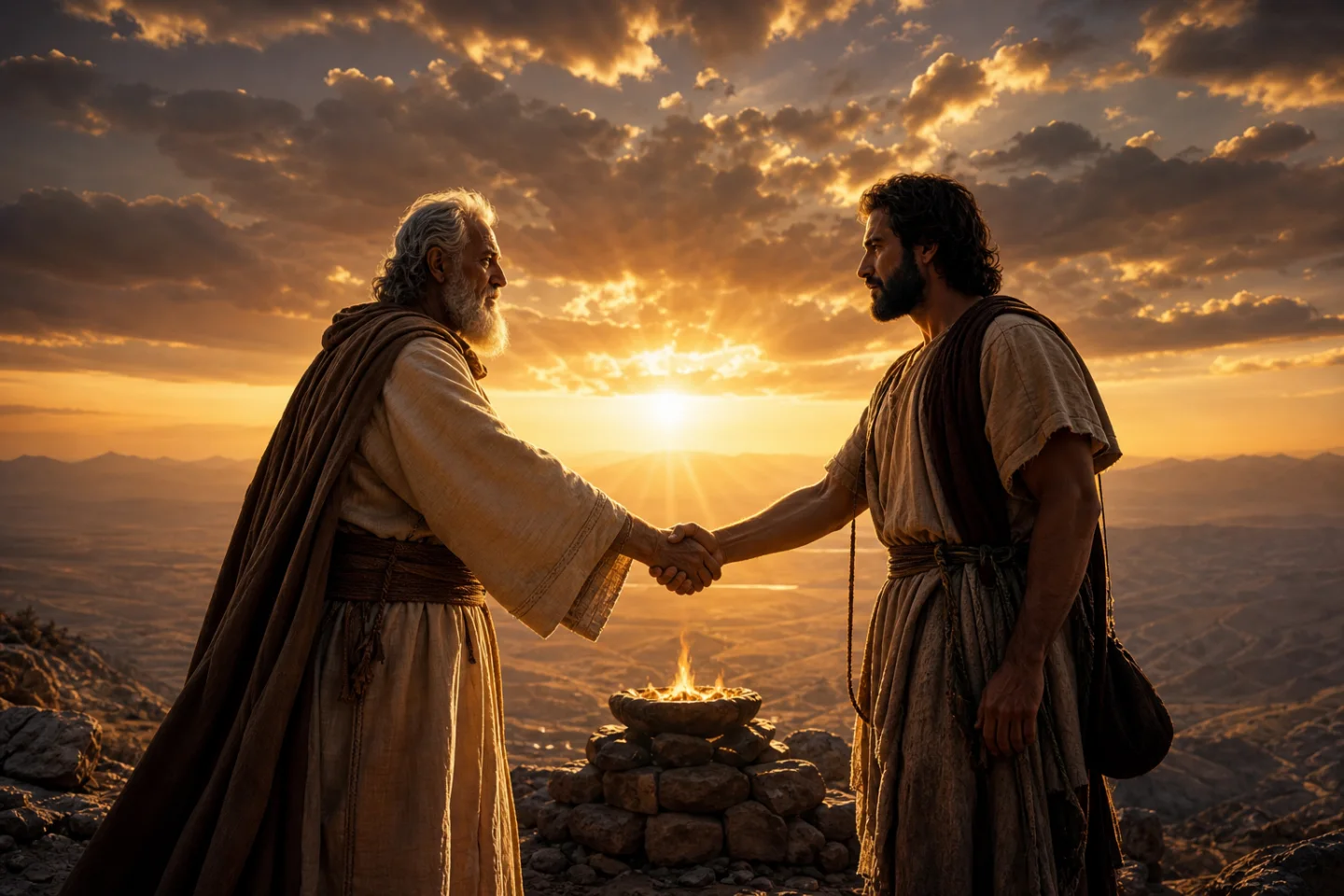
The initiative also matters. God announces that he establishes the covenant; the scene is not presented as bargaining between equal parties. This observation helps explain why covenant here cannot simply mean a commercial deal. The relationship rests on a commitment declared by God and directed toward recipients he identifies.
Genesis 9:8–17
A visible sign points back to that commitment
> I set my rainbow in the cloud, and it will be a sign of a covenant between me and the earth.
Genesis 9:13 — World English Bible
The rainbow is called a sign of the covenant between God and the earth. As the passage continues, the language of seeing and remembering is tied to the same promise about the waters and to the same community of living creatures. The sign does not acquire a separate message every time it is mentioned.
A natural interpretation is that the visible sign makes the enduring commitment recognizable. This does not require treating the rainbow as a magical object or imagining that the promise must be renewed through human control of the sign. The importance of the rainbow comes from the covenant to which it points.
Nor must the language of remembering be expanded into a claim that God had forgotten. Within this passage, remembering emphasizes the continuity of the relationship and promise. The reader is given a sign, recipients, and a commitment; none should be detached from the others and made to carry an unrelated assurance.
Genesis 9:8–17
Abram answers a promise with a real question
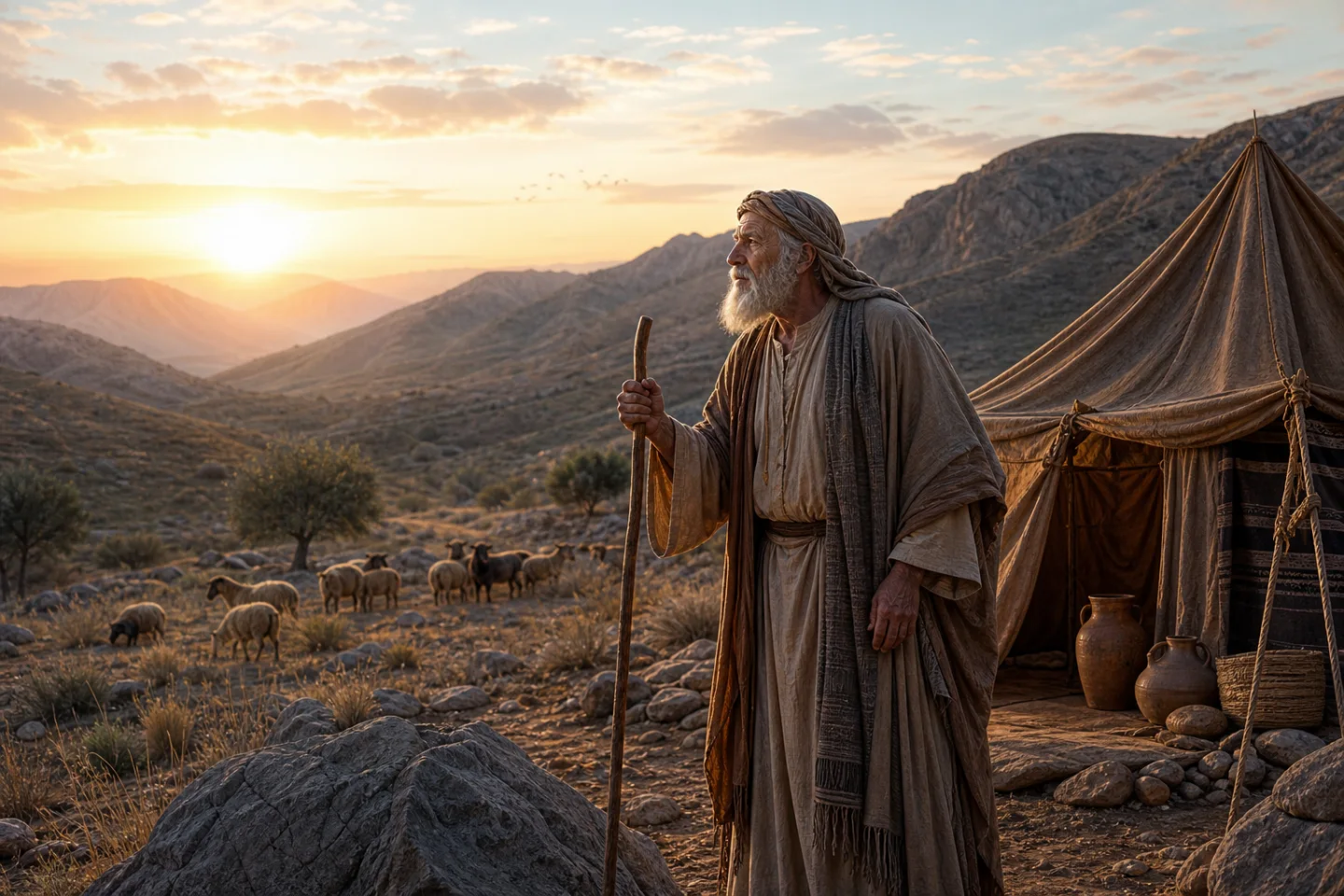
Genesis 15:1–6 turns to Abram. God's word comes in a vision, telling him not to be afraid and speaking of protection and reward. Abram responds with the situation he cannot resolve: he remains childless and sees someone from his household as his prospective heir. The promised future is heard from within a present lack.
God's answer is that this man will not be his heir; his heir will come from his own body. Abram is then brought outside to look at the sky and consider the stars as an image of his offspring. The scene ends not with Abram holding the complete fulfillment in his hands, but with his believing God's word.
> He believed in the LORD, who credited it to him for righteousness.
Genesis 15:6 — World English Bible
The selected six verses do not contain a full covenant ceremony. Their focus is promise, question, assurance, and faith. They help us understand how trust responds to divine initiative, but they should not be made to describe rituals that lie outside the passage being studied. Calling the scene relevant to covenant does not remove the need to distinguish what these verses themselves narrate.
Genesis 15:1–6
Israel is addressed as a people
In Exodus 19:3–6, Moses receives a message for the house of Jacob and the children of Israel. It begins by recalling what God did to the Egyptians and how he brought Israel to himself, using the image of being carried on eagles' wings. A remembered act of God comes before the statement about the people's response.
> Now therefore, if you will indeed obey my voice and keep my covenant, then you shall be my own possession from among all peoples; for all the earth is mine;
Exodus 19:5 — World English Bible
Listening and keeping the covenant are explicit here. The promise of being God's own possession among the peoples is accompanied by the statement that the whole earth belongs to him. Israel is also called a kingdom of priests and a holy nation. Belonging and calling are joined; the text is not describing a privilege with no bearing on the people's life.
The order supports a reading of obedience as a response within a relationship God initiates. It does not force a choice between divine action and human responsibility. Both occur in the speech. God recalls what has been done and then names what Israel is to hear and keep.
Exodus 19:3–6
Why the differences are part of the meaning
Compare the recipients before comparing the details. Noah's passage includes his descendants and living creatures. Abram's scene is centered on a promised heir. The words delivered through Moses address Israel collectively. These are not interchangeable audiences. A promise cannot safely be transferred from one setting to another simply because all three contribute to the biblical theme of covenant.
The prominent elements differ as well. Genesis 9 gives a visible sign. Genesis 15:1–6 emphasizes believing the promise. Exodus 19 explicitly names listening and keeping the covenant. A shared emphasis on God's initiative connects the passages, but the differences stop that connection from becoming a single flattened formula.
The content of the promise should remain equally specific. The Noah passage does not promise immunity from all pain. The Israel passage does not detach special belonging from its call to obedience. Reading either as a general guarantee that every personal plan will succeed would move beyond the words on the page.
Genesis 9:8–17 · Genesis 15:1–6 · Exodus 19:3–6
A useful way to read covenant language
Begin by writing down what is actually stated, before building a larger theological system around it. Identify the speaker and recipients. Separate the promise from the sign. Notice whether a condition or response is expressed. Then compare the passages without importing a missing detail from one into another.
This approach can also change the personal question a reader brings. Instead of asking only what benefit can be claimed, it becomes possible to ask how a relationship is being described. Abram's trust and Israel's call to listen keep the reader attentive to response, without turning response into a technique for forcing the promise to work.
Genesis 9:8–17 · Genesis 15:1–6 · Exodus 19:3–6
Conclusion
Covenant language has weight because the commitments are not empty. They have recipients, content, and consequences. Noah, Abram, and Israel should therefore be heard in their own scenes: a promise concerning living creatures, trust concerning offspring, and a people called to keep what God has spoken.
Biblical references
- Genesis 9:8–17
- Genesis 15:1–6
- Exodus 19:3–6