The flood story in Genesis 6–9 begins with a moral diagnosis of the earth, not with the measurements of the ark. Violence and corruption explain why the waters are presented as judgment. Against that background Noah finds favor and receives instructions that preserve his household and animal life. The story ends not merely with dry ground, but with a covenant that reaches beyond one family to living creatures and the continuing order of the inhabited world.
A world marked by corruption and violence
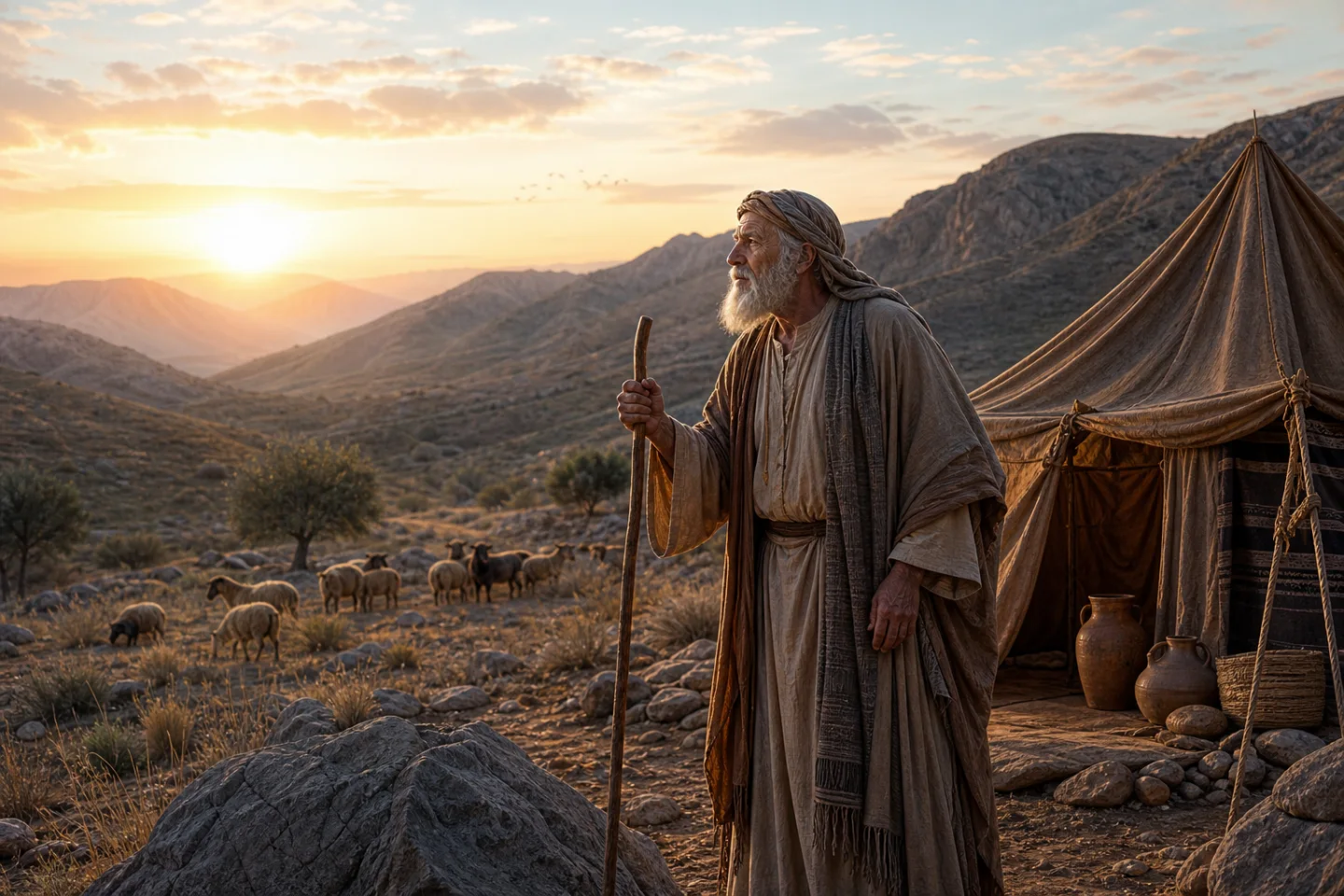
Genesis portrays a world in which wickedness, corruption, and violence have come to shape human life. That evaluation makes the judgment intelligible. The flood is not introduced as a random disaster but as a response to a creation disordered by human evil. Noah stands in deliberate contrast: he finds favor and is described as righteous and blameless in his generation, one who walks with God. From the opening movement, the story sets two realities side by side—the seriousness of corruption and the possibility of preservation under God’s favor.
Génesis 6:5–13 · Génesis 6:8–9 · Génesis 6:5–7 · Génesis 6:11–13
Noah finds favor: the ark as obedience and preservation
God commands Noah to build the ark and enter it with his wife, his sons, and their wives. The preservation also includes animal life. Genesis is more precise than the popular phrase “two of every kind”: it distinguishes between unclean animals and a larger provision for clean animals and birds. Noah responds by doing what he is commanded. Hebrews 11 later interprets that obedience as faith in response to a warning about events not yet seen. In Genesis, the ark is a concrete means of preservation rather than an invitation to speculate beyond the information the narrative gives.
Génesis 6:14–22 · Génesis 7:1–5 · Génesis 7:7–16 · Hebreos 11:7 · Génesis 6:8–9 · Génesis 7:1–3 · Génesis 6:22 · Génesis 7:5
When the flood began
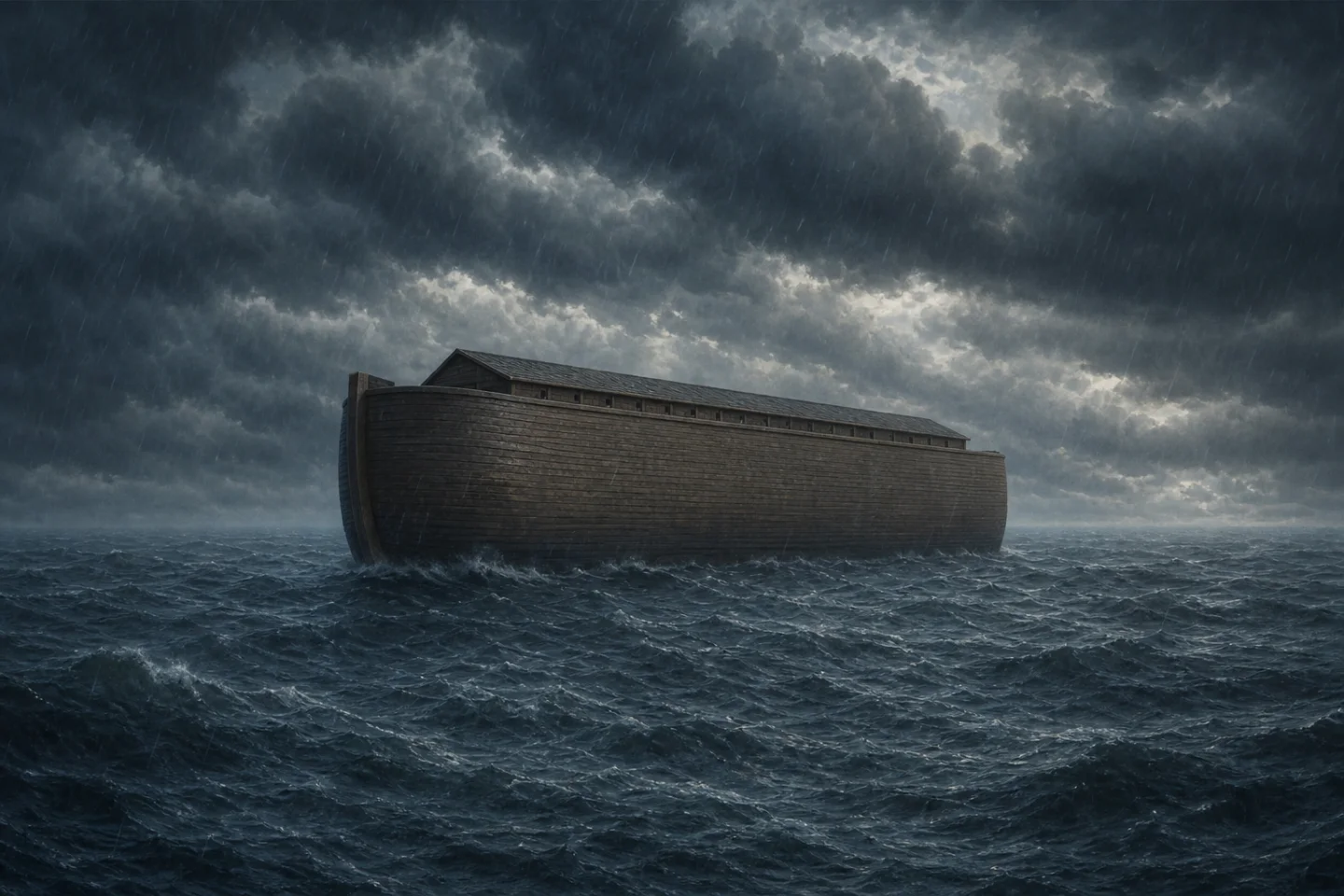
When the flood begins, Genesis describes entry into the ark, the coming of the waters, and their dominance over the earth. The narrative emphasizes both the breadth of judgment and the contrast between those preserved inside the ark and the terrestrial life that perishes outside. The waters prevail for one hundred and fifty days before the movement of the story changes. The passage is concerned with judgment and preservation; it does not provide a complete account of every physical mechanism, so responsible interpretation should resist turning narrative silence into scientific detail the text never states.
Génesis 7:11–24 · Génesis 7:17–24 · Génesis 7:24 · Génesis 8:1–5
“God remembered Noah”: the receding waters
Genesis 8 marks the turning point by saying that God remembered Noah. The expression does not suggest previous forgetfulness; it signals faithful attention and saving action. A wind passes over the earth, the waters begin to recede, and the ark comes to rest on the mountains of Ararat. Noah sends out a raven and then a dove repeatedly until the signs indicate that the land is drying. Genesis names the mountains of Ararat, but it does not by itself identify a precise modern archaeological location. Claims beyond that require additional evidence.
Génesis 8:1–14 · Génesis 8:6–12 · Génesis 8:4
Leaving the ark: worship and a renewed creation
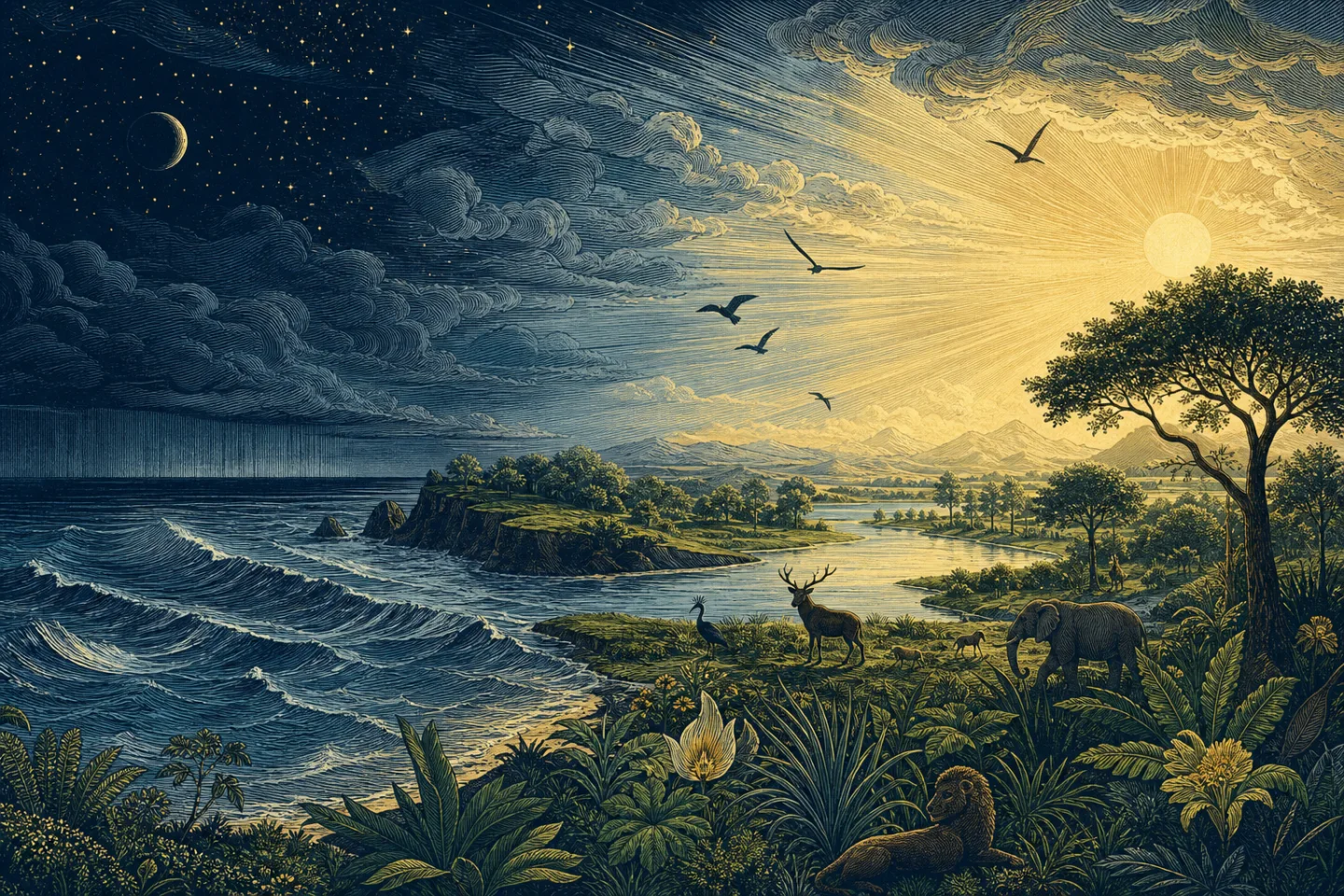
Noah leaves the ark at God’s command rather than by impatient initiative. His first recorded response is to build an altar and offer sacrifices. The following words reaffirm the continuity of earth’s cycles, human fruitfulness, and responsibility for life. The sequence has a creation-like shape: waters cover the earth and are followed by habitable land, multiplying families, and renewed responsibility. That is a literary reading of the narrative pattern rather than a single explicit statement, but it helps explain why the story moves from judgment toward a renewed stage of human history.
Génesis 8:15–22 · Génesis 9:1–7 · Génesis 1:26–31 · Génesis 6:22 · Génesis 7:5 · Génesis 8:18–21 · Génesis 6:5–8 · Génesis 6:17–22 · Génesis 7:23 · Génesis 8:1 · Génesis 9:8–17 · Génesis 1:1–31 · Génesis 7:17–24 · Génesis 8:1–22
The covenant with every creature and the sign of the bow
The climax of Genesis 9 is the covenant. Its scope is broader than Noah as an individual: it includes his descendants, every living creature, and the earth. God promises that floodwaters will not again destroy all flesh in the same manner, and the bow in the clouds serves as the covenant sign. The passage does not need to claim that a rainbow had never appeared physically before; its emphasis is that the bow functions as a sign attached to the promise. The covenant’s universal reach directs attention to the stability of creation, not merely to one family’s private deliverance.
Génesis 9:8–17 · Isaías 54:9–10 · Génesis 9:12–17 · Génesis 8:21–22
How the Bible rereads the flood story
Later biblical writers reread the flood in several ways. Hebrews presents Noah as one who acted in faith before the warned-of event arrived. Jesus compares the days of Noah to ordinary life continuing without readiness for coming judgment. First Peter uses the preservation of eight people through water within a discussion of baptism, while 2 Peter remembers Noah in the context of judgment and rescue. These later uses do not require every feature of the ark to carry one fixed allegorical meaning. They show instead how the flood continued to serve as an example of faith, warning, and preservation.
Hebreos 11:7 · Mateo 24:37–39 · Lucas 17:26–27 · 1 Pedro 3:18–22 · 2 Pedro 2:4–5
Conclusion
The biblical flood holds together two truths that should not be softened: real judgment against evil and merciful preservation. Noah obeys before seeing the announced outcome, leaves the ark to worship, and receives a covenant whose scope includes every living creature. Later biblical writers remember his story as an example of faith, a warning against unpreparedness, and material for theological reflection. Responsible reading therefore attends closely to what Genesis says without turning its silences into confident claims the text itself does not settle.
Biblical references
- Génesis 6:5–13
- Génesis 6:8–9
- Génesis 6:5–7
- Génesis 6:11–13
- Génesis 6:14–22
- Génesis 7:1–5
- Génesis 7:7–16
- Hebreos 11:7
- Génesis 7:1–3
- Génesis 6:22
- Génesis 7:5
- Génesis 7:11–24
- Génesis 7:17–24
- Génesis 7:24
- Génesis 8:1–5
- Génesis 8:1–14
- Génesis 8:6–12
- Génesis 8:4
- Génesis 8:15–22
- Génesis 9:1–7
- Génesis 1:26–31
- Génesis 8:18–21
- Génesis 6:5–8
- Génesis 6:17–22
- Génesis 7:23
- Génesis 8:1
- Génesis 9:8–17
- Génesis 1:1–31
- Génesis 8:1–22
- Isaías 54:9–10
- Génesis 9:12–17
- Génesis 8:21–22
- Mateo 24:37–39
- Lucas 17:26–27
- 1 Pedro 3:18–22
- 2 Pedro 2:4–5