Bethlehem occupies a distinctive place in Scripture because a small town becomes connected with several decisive stages of the biblical story. It first appears as Ephrath in the patriarchal narratives, later becomes the setting of Ruth and the hometown of David, is linked by the prophets with the expected ruler, and in the Gospels becomes the birthplace of Jesus. Its importance grows out of the contrast between its modest size and the weight of the events associated with it.
Patriarchal Origins: Ephrath and the Tomb of Rachel
Genesis identifies Ephrath with Bethlehem in the account of Rachel’s death. Jacob sets up a marker over her grave, so the town is connected early with a painful family memory within the patriarchal story. This first appearance does not by itself anticipate everything Bethlehem will later signify, but it gives the place an ancient root in Israel’s narrative.
Genesis 35:19 · Genesis 48:7
The Drama of Ruth: Restoration and Lineage in the Fields of Bethlehem
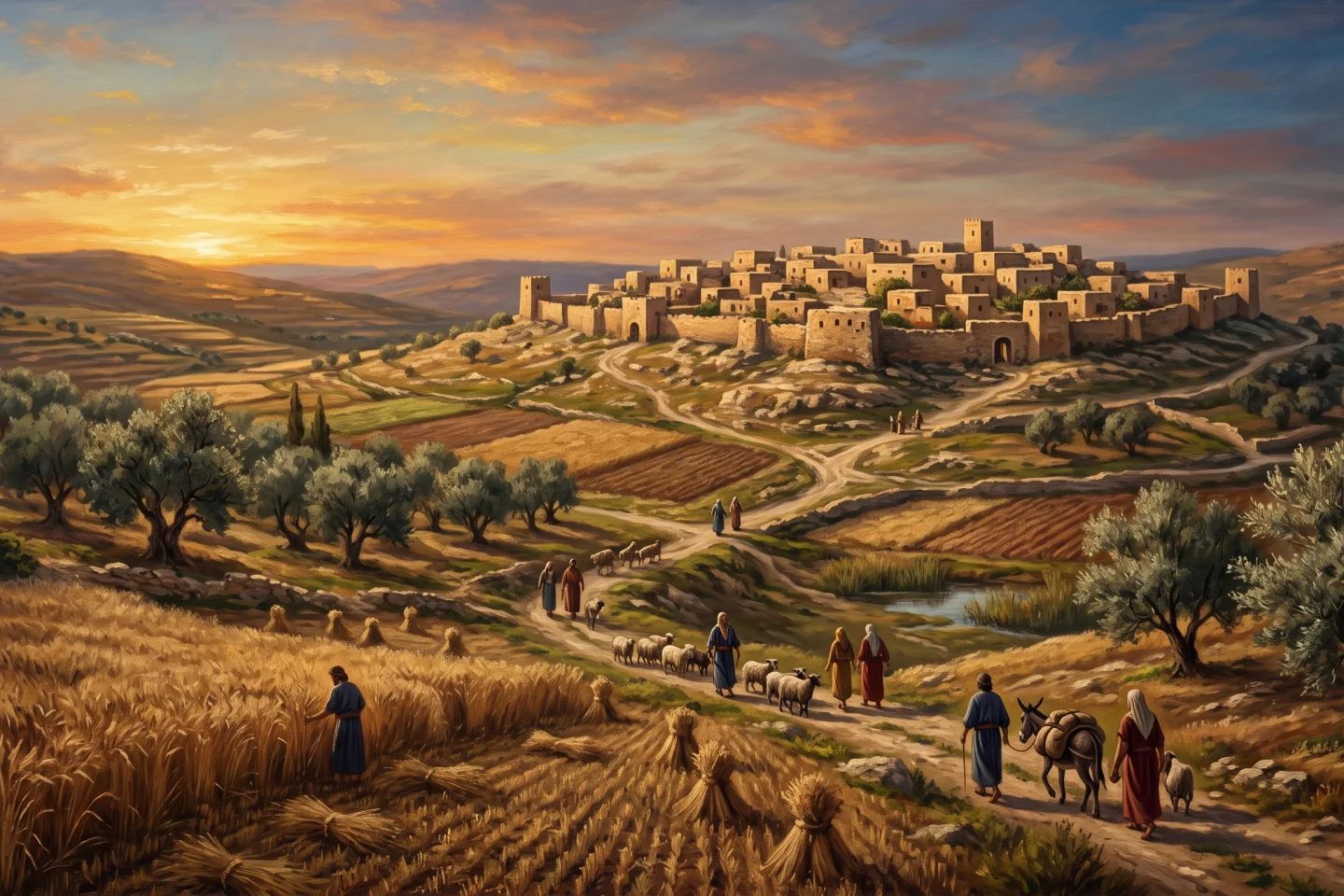
Ruth and Naomi arrive in Bethlehem at the beginning of the barley harvest. There the story of Boaz, family redemption, and the birth of Obed unfolds. The close of Ruth directly links Obed with Jesse and David. Bethlehem therefore becomes a place where a story of loss and restoration leads into the royal line.
Ruth 1:19–22 · Ruth 4:11–17
David’s Hometown: Prophetic Anointing and Loyalty in Times of War
First Samuel presents David as the son of Jesse of Bethlehem and narrates his anointing by Samuel. Later, during war, three of David’s mighty men break through the Philistine camp to bring him water from the well by Bethlehem’s gate. The episode shows the emotional place of David’s hometown in his memory and links Bethlehem with both his origin and the loyalty of his men.
1 Samuel 16:1–13 · 2 Samuel 23:13–17
Micah’s Paradox: The Smallness of Bethlehem and the Greatness of the Messiah
Micah 5:2 creates a paradox: Bethlehem Ephrathah is small among the clans of Judah, yet from it a ruler for Israel will come. The messianic reading of the passage makes the town’s smallness part of its theological significance. John 7 shows that Davidic origin and the association of Bethlehem with the Messiah remained part of discussion in Jesus’ day.
Micah 5:2 · John 7:40–43
Gospel Fulfillment: The Birth of Jesus and the Worship of Shepherds and Magi
Luke narrates that Joseph and Mary come to Bethlehem because of the registration, and Jesus is born there. Shepherds receive the announcement and come to see him. Matthew also places the birth in Bethlehem and records the arrival of the magi. In both Gospels, the city of David becomes the place where messianic expectation enters history in the birth of Jesus.
Luke 2:1–20 · Matthew 2:1–12
Hostility in Bethlehem: Herod's Massacre and the Echo of Ramah
Matthew adds a dark note: Herod responds violently and orders the killing of the children in Bethlehem and its surrounding area. The evangelist connects the mourning with Jeremiah 31:15 and Rachel’s weeping. Bethlehem therefore holds promise and grief together: the place associated with the Messiah’s birth also comes under the threat of political power.
Matthew 2:13–18 · Jeremiah 31:15
Conclusion
Bethlehem is not important because of size or military power. Its biblical path moves from patriarchal memory to Ruth’s fields, from David’s household to Micah’s prophecy, and finally to the birth of Jesus. The trajectory makes the small town an example of how Scripture places decisive events in locations that might otherwise appear secondary.
Biblical references
- Genesis 35:19
- Genesis 48:7
- Ruth 1:19–22
- Ruth 4:11–17
- 1 Samuel 16:1–13
- 2 Samuel 23:13–17
- Micah 5:2
- John 7:40–43
- Luke 2:1–20
- Matthew 2:1–12
- Matthew 2:13–18
- Jeremiah 31:15