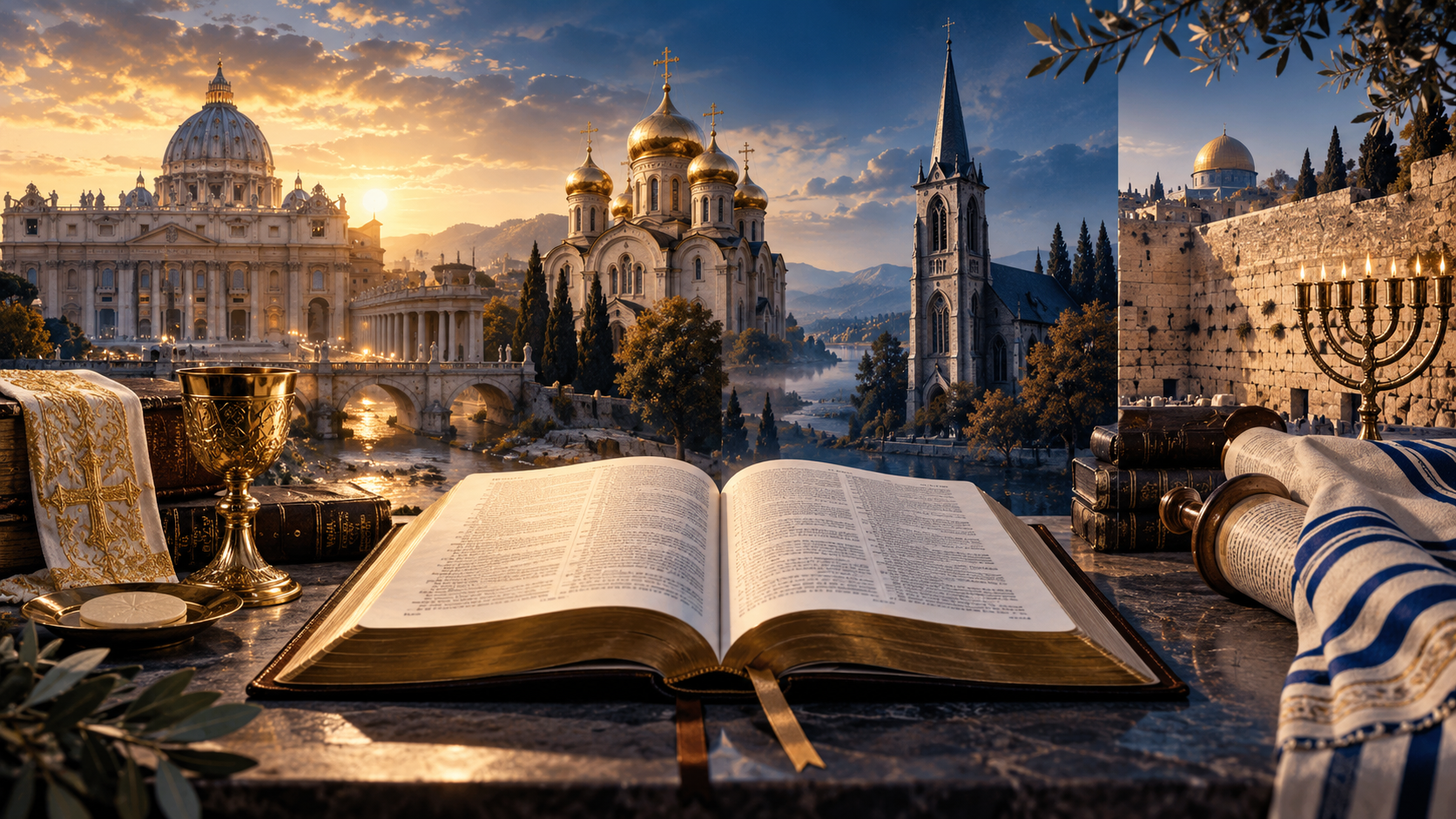

Jehovah’s Witnesses identify themselves as Christians and say that their aim is to follow the teachings of Jesus and the apostles on the basis of the Bible. They are known for public preaching, frequent use of the name Jehovah for God, and a number of doctrines and practices that distinguish them from the major historic Christian traditions.
Brief origin and history
The modern movement emerged from the Bible Student environment of the late nineteenth century. In 1931 it officially adopted the name “Jehovah’s Witnesses.” Its contemporary organization has an international structure and a clearly defined doctrinal identity.
The Bible
They regard the Bible as God’s inspired message and base their beliefs on the 66 books of the Old and New Testaments used in the Protestant canon. Their best-known translation is the New World Translation of the Holy Scriptures.
God
They worship one God, whom they call Jehovah, and believe his personal name should be known and used. They reject the classical doctrine of the Trinity. In their understanding, the Father is Almighty God.
Jesus Christ
They believe in Jesus, honor him as Savior and Son of God, and teach that salvation depends on him. However, they do not believe Jesus is Almighty God or a person equal to the Father within a Trinity.
They also teach that Jesus reigns as King of God’s heavenly Kingdom.
The Holy Spirit
They do not understand the Holy Spirit as a distinct divine Person. They describe it as God’s active force, the means by which God carries out his will.
The Kingdom of God
The Kingdom of God is central to their faith. They understand it as a real heavenly government headed by Jesus Christ, not merely an inward spiritual reality. Preaching about this Kingdom is one of the principal features of their public ministry.
Salvation
According to their official sources, salvation is possible because of Jesus’ sacrifice. To benefit from it, a person must exercise faith, repent, change conduct, and be baptized. They also teach that salvation is not simply earned by human merit but depends on God’s undeserved kindness.
Heavenly and earthly hope
A distinctive teaching is that 144,000 persons receive a heavenly hope and will rule with Christ. The great majority of faithful Witnesses instead hope to live forever on a restored earth under God’s Kingdom.
Baptism and congregational life
Baptism is by immersion after a period of instruction and personal commitment. Infant baptism is not practiced. Congregations meet for Bible study, instruction, and participation in preaching.
The Lord’s Evening Meal
They observe an annual Memorial of Christ’s death, which they regard as their most important religious observance. Not everyone present partakes of the bread and wine, in connection with their understanding of those who possess the heavenly hope.
Distinctive practices
Well-known features include public and house-to-house preaching, use of the name Jehovah, political neutrality, non-observance of certain holidays and birthdays, and religious refusal of blood transfusions.
Their refusal of blood transfusions is a religious position rather than a rejection of medicine in general; their own sources state that they accept medical care and treatments that do not conflict with their beliefs about blood.
The afterlife
They do not teach that all human beings possess an inherently immortal soul. Their hope centers on resurrection. They distinguish between those with a heavenly hope and those who hope for everlasting life on a restored earth.
What to keep in mind when comparing
Jehovah’s Witnesses describe themselves as Christians because they follow Jesus and believe salvation depends on him. At the same time, their teachings about God, Jesus, the Holy Spirit, God’s Kingdom, and future hope differ from the Trinitarian teachings of Catholicism, Orthodoxy, and most Protestant traditions.