After describing the construction of the temple, 1 Kings 7 turns to Solomon’s royal complex and then returns to the sanctuary to catalogue its furnishings. Civil and sacred building projects stand side by side. The result is a chapter that displays both the scale of the united monarchy and the extraordinary care invested in the objects used for worship.
The Royal Palace and the House of the Forest of Lebanon
Solomon spent thirteen years completing his royal complex. The account names the House of the Forest of Lebanon, the Hall of Pillars, the hall where judgment was administered, and a residence for Pharaoh’s daughter. Set beside the seven years previously devoted to the temple, the sequence highlights the scale of the king’s civil works without identifying them with the sanctuary. Government, judgment, and royal residence all received carefully planned architectural spaces built with costly materials.
1 Kings 7:1–12 · 1 Kings 6:37–38
Hiram of Tyre and the Pillars Jachin and Boaz
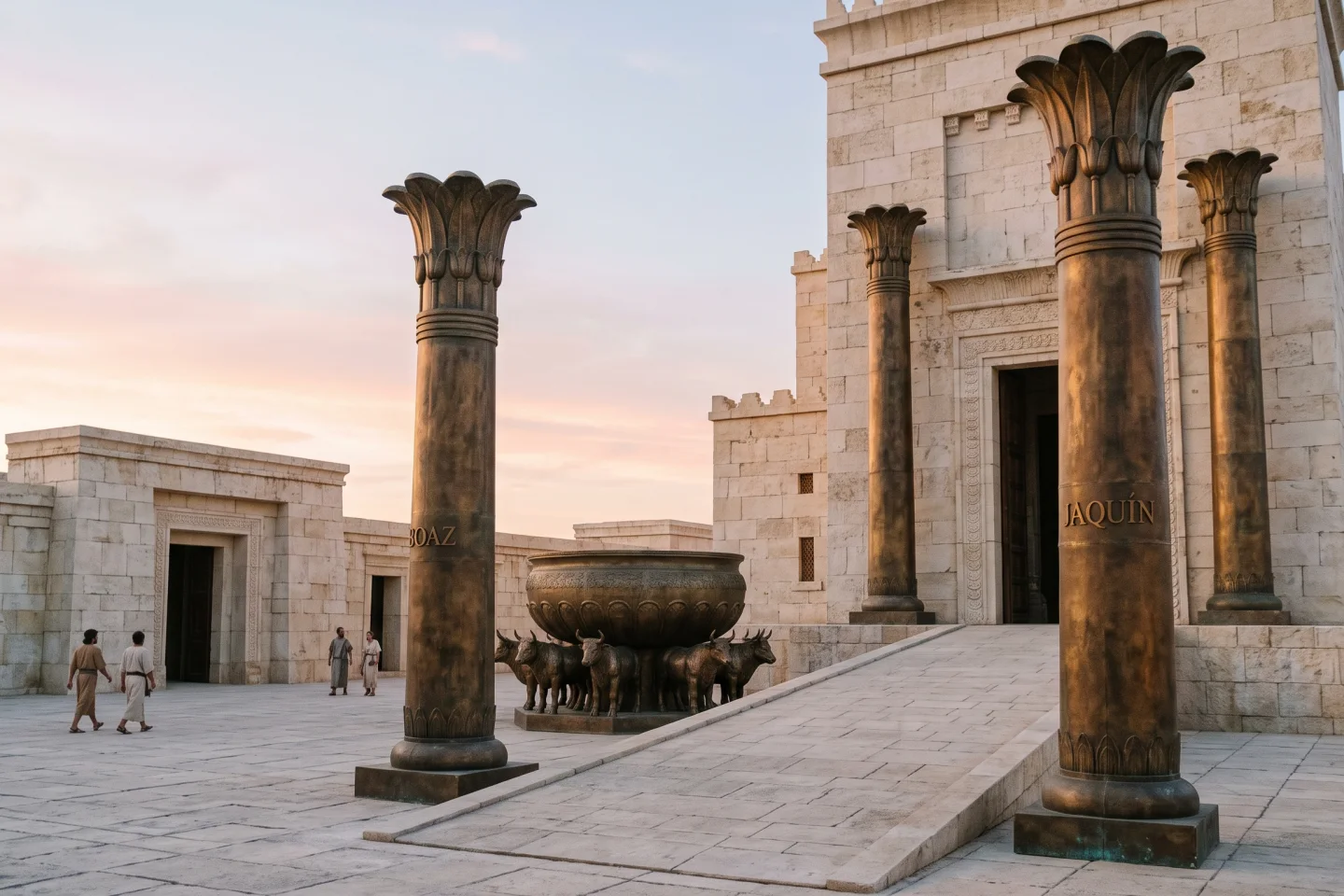
The narrative introduces Hiram of Tyre as a craftsman of exceptional skill in bronze. Among his most prominent works were the two pillars placed at the temple porch. Their capitals carried floral decoration and rows of pomegranates, and the pillars were named Jachin and Boaz. Their scale, finish, and position show that they were more than incidental decoration: the entrance to the sanctuary was framed by some of the most demanding metalwork in Solomon’s entire project.
1 Kings 7:13–22 · 2 Chronicles 3:15–17
The Bronze Sea, the Wheeled Stands, and the Jordan Foundry
Hiram also made the great bronze sea, a massive round basin resting on twelve bronze oxen facing the four directions. Ten wheeled stands, decorated with panels, animals, and cherubim, supported additional basins. The largest bronze pieces were cast in clay ground in the Jordan region between Succoth and Zarethan. The description joins function, mobility, and ornament, revealing the substantial metallurgical work required for the temple’s outer furnishings.
1 Kings 7:23–47
The Golden Furnishings and David’s Dedicated Treasures
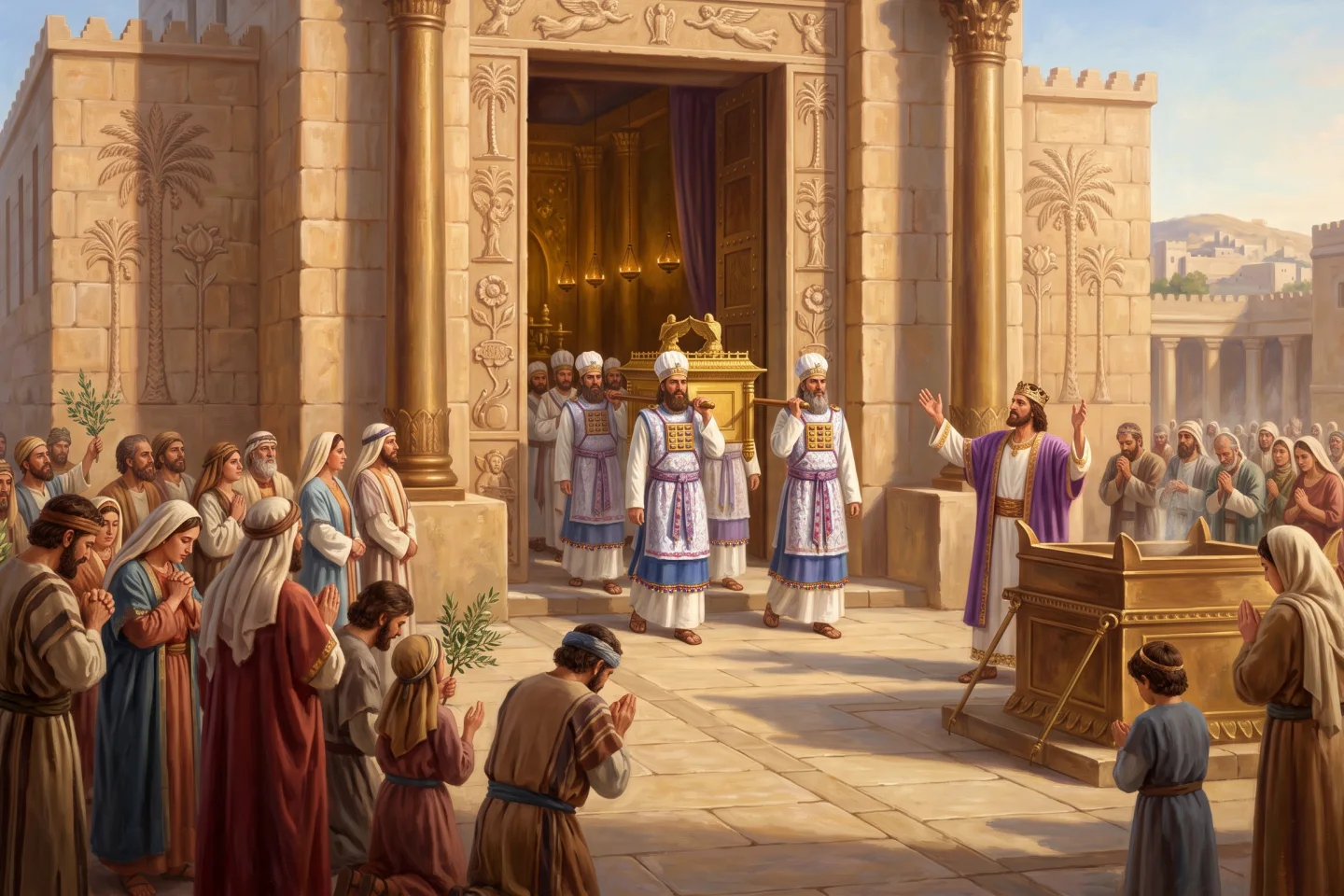
The final verses move from bronze to gold. They list the inner altar, the table for the bread, ten lampstands, and numerous smaller utensils for sanctuary service. When the work was complete, Solomon brought into the temple treasuries the silver, gold, and vessels that David had dedicated. The chapter therefore ends with the material preparation of the sanctuary complete, ready for the solemn dedication that follows in 1 Kings 8.
1 Kings 7:48–51
Conclusion
1 Kings 7 presents the breadth of Solomon’s building program and the precision with which the temple was furnished. It moves from royal halls to bronze pillars, basins, golden vessels, and dedicated treasures. By the end of the chapter, the sanctuary is materially complete and the narrative is ready to move from construction to dedication.
Biblical references
- 1 Kings 7:1–12
- 1 Kings 6:37–38
- 1 Kings 7:13–22
- 2 Chronicles 3:15–17
- 1 Kings 7:23–47
- 1 Kings 7:48–51